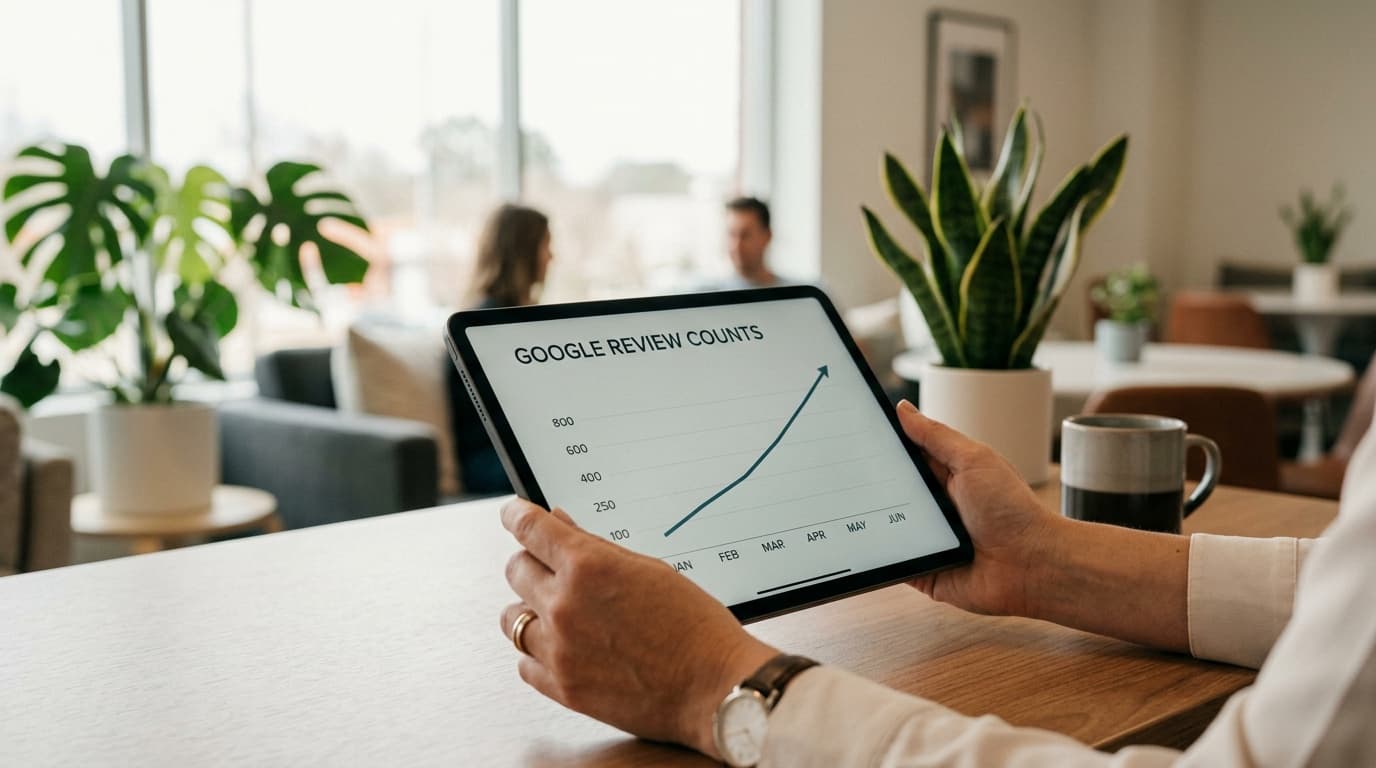
Most local business owners track their Google rating to stay competitive. Far fewer think of it as a pricing tool. But the relationship between your star average and what customers are willing to spend is more direct than most operators realize — and ignoring it leaves real money on the table.
Your Google Rating Is a Price Signal
When someone searches for a restaurant, hair salon, or hotel in your area, they're not just reading reviews to decide whether to visit. They're using your rating to calibrate how much they should expect to spend — and how much they're willing to pay.
A Harvard Business School study found that a one-star increase in a restaurant's Yelp rating leads to a 5–9% increase in revenue. Google operates on the same psychology. A business rated 4.7 or 4.8 stars creates a quality expectation before the customer even steps through the door. Customers walk in already primed to see value in what they're buying — not to search for the cheapest option.
By contrast, a business hovering around 3.9 stars is implicitly categorized as "fine, but nothing special." That triggers price-comparison behavior: customers look for deals, negotiate, and churn more easily when a competitor opens nearby.
The Psychology Behind Premium Reviews
Uncertainty has a real cost. When a customer has to choose between two similar businesses, they're making a decision with imperfect information. The risk of wasted money, a bad experience, or time lost all carry real weight in their decision-making.
Your Google reviews — especially when they're numerous, recent, and detailed — reduce that uncertainty. And reducing uncertainty has a measurable monetary value. Customers will reliably pay more to avoid a bad experience.
This is the same mechanism that makes organic certification worth a price premium, that explains why branded products outsell generics, and why a personal recommendation converts better than an ad. Your Google rating functions as a collective, public endorsement that works around the clock for every prospect who searches your category.
4 Practical Ways to Turn Your Rating Into Pricing Power
Display your rating beyond Google
Your Google rating only works for you if customers see it before, during, and after their interaction with your business. Put it on your website (Google's review badge widget makes this straightforward), on your menus, on business cards, on your storefront signage, and in booking confirmation emails.
A diner who sees "4.8 stars — 280 Google reviews" printed on a menu already perceives the meal differently. The number functions as social validation before any judgment of quality is made. That perception — built before the first bite, the first treatment, the first interaction — creates tolerance for premium pricing.
Collect reviews that mention quality, not just satisfaction
Not all reviews drive the same pricing signal. A review that says "good value for the price" locks you into budget positioning. A review that says "worth every penny — the best I've had in this city" moves you into premium territory.
You can't write customers' reviews for them, but you can influence the context in which they write. Ask for reviews right after your highest-quality experience moments: after a table compliments the food, after a treatment the customer called "amazing," after a checkout where the customer was clearly happy. The emotional state at the moment of asking directly shapes what they'll write.
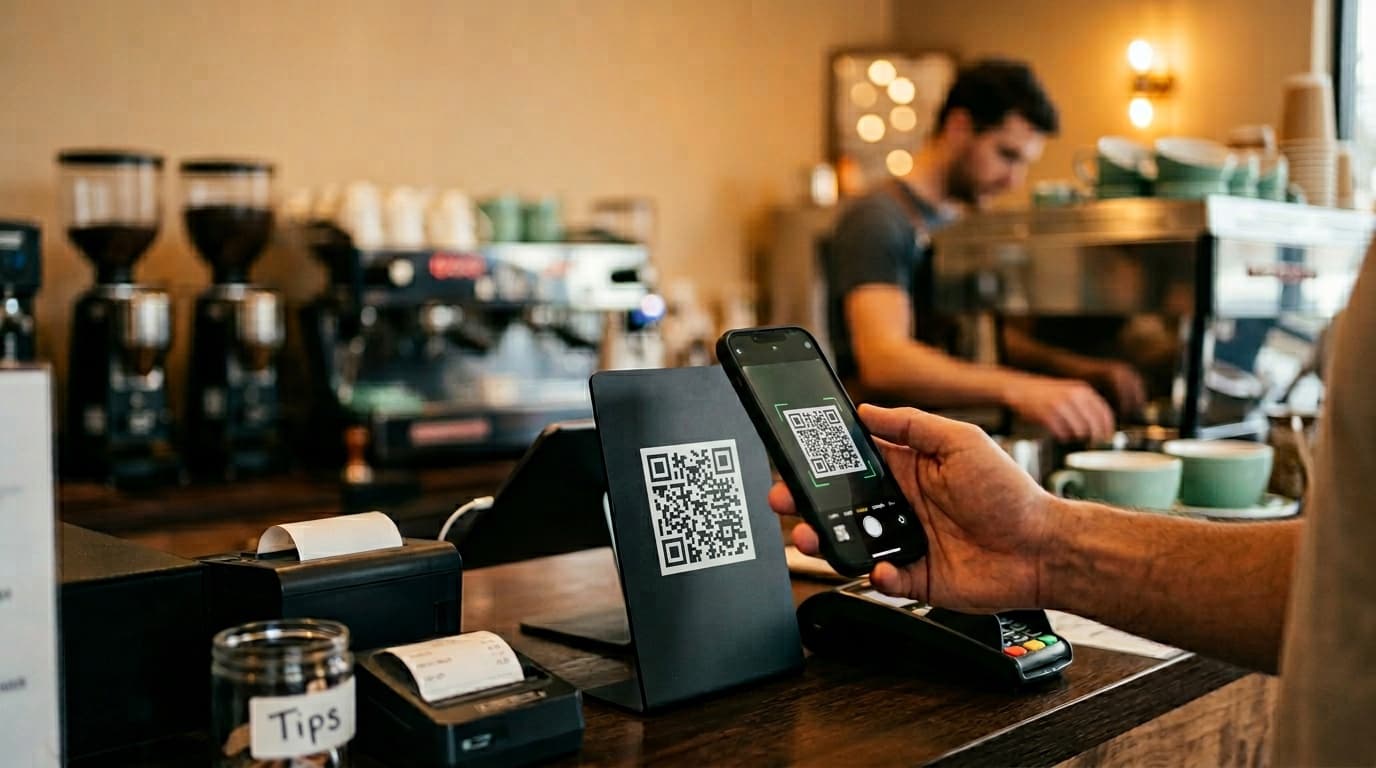
Gamified review tools — like a fortune wheel offered at checkout — work particularly well here because they trigger the review request at the peak of the customer experience. Customers who spin a wheel, win a small reward, and then write a review tend to write more enthusiastic, specific copy than customers asked days later via email.
Respond like a premium brand, not a defensive owner
How you respond to reviews — positive and negative — signals your brand positioning as clearly as your price list. Premium brands respond to all reviews with care, specificity, and composure.
Swap generic "Thanks for your feedback!" responses for ones that prove you actually read the review. Reference the specific experience described. Acknowledge details. Address any concerns without defensiveness. This posture signals that you take your craft seriously — and customers who value craftsmanship are willing to pay for it.
Mine your best reviews for positioning and marketing copy
Your top 20 or 30 Google reviews tell you exactly what customers find exceptional about your business. Most operators never read them systematically — which means they're sitting on free, validated market research they never use.
Look for recurring themes: the dish people come back for, the staff member mentioned by name, the atmosphere detail that shows up repeatedly. These are your real differentiators — the things premium customers are actually paying for. Build your marketing language, your service design, and your upsell offers around them.
What Not to Do When Moving Upmarket
Don't ignore negative reviews. High-quality brands handle criticism publicly and gracefully. Customers who pay premium prices aren't expecting perfection — they're expecting accountability. A business that handles a 2-star review professionally signals exactly that.
Don't raise prices before raising perceived value. If your pricing shifts before your experience does — better presentation, more attentive service, stronger follow-through — the disconnect will show up in your reviews and the strategy backfires fast.
Don't underestimate the role of volume. A 4.9-star average with 11 reviews doesn't carry the same weight as a 4.7-star average with 350 reviews. Premium positioning requires credibility, and credibility comes from review volume as much as from the score itself.
Put Your Reputation to Work
Your Google rating isn't just a metric to monitor — it's an asset to deploy. Managed deliberately, it lets you exit the race-to-the-bottom pricing dynamic, attract customers who value quality over cheapness, and build the kind of reputation that holds its own even when a competitor opens next door.
Tools like Ludofy are built specifically to accelerate authentic review collection at the right moment — through a gamified experience that gets customers to write reviews when their satisfaction is at its peak. The more quality reviews you accumulate, the more credible your premium positioning becomes, and the easier it is to defend your prices.
The most underused growth lever for most local businesses isn't a new promotion or a bigger ad budget. It's the rating already sitting on their Google profile — and learning how to put it to work.