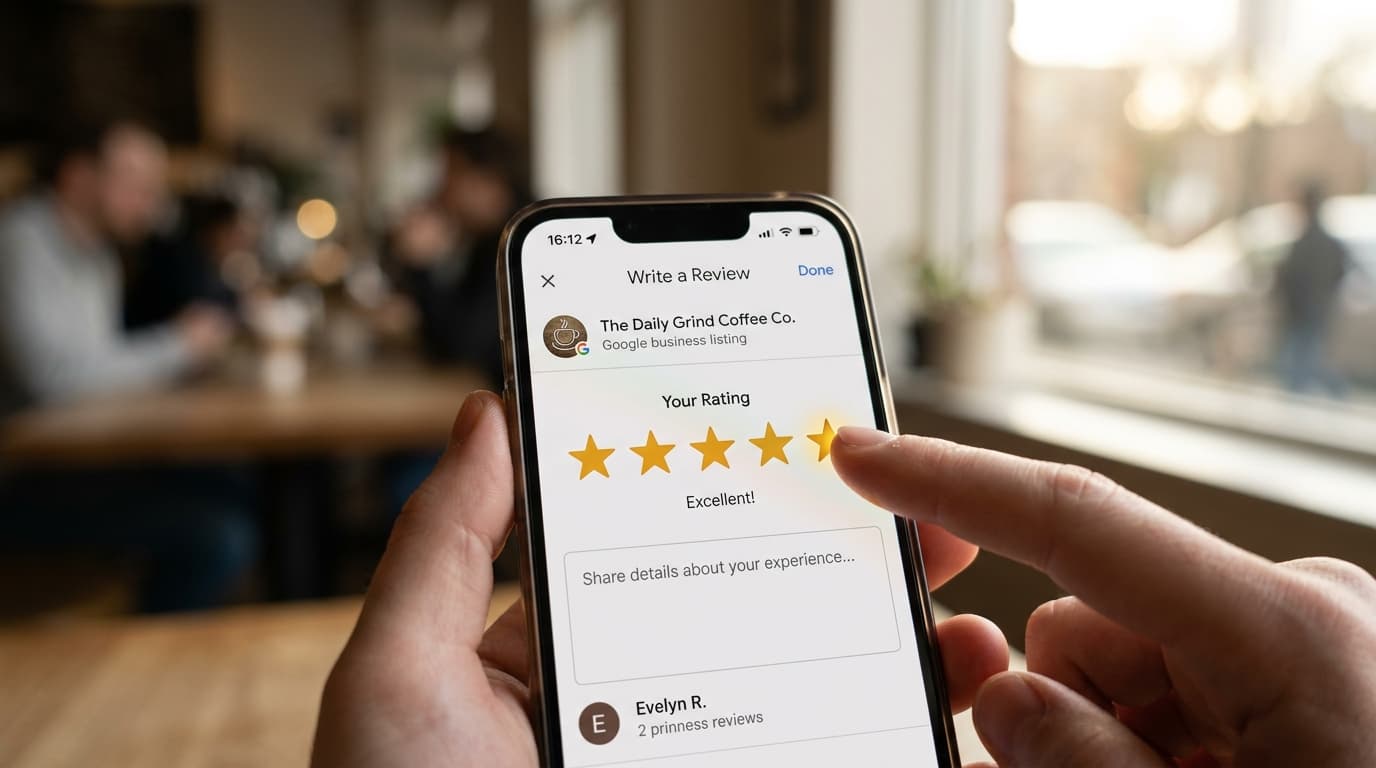
Independent bookshops compete in one of the most personal retail categories that exists. A customer who finds the right bookshop — one that stocks the titles they actually want, where the bookseller's recommendation means something — tends to stay loyal for years. That loyalty, however, is mostly invisible online. A shop with two hundred devoted regulars and forty-three Google reviews looks thinner than the chain down the street with a mediocre selection and three hundred reviews. The gap isn't about quality. It's about activation.
Why bookshops are unusually well-positioned for Google reviews
Bookshop customers are not average retail shoppers. They are, by definition, people who read — people who have a practiced relationship with language and who are accustomed to forming and expressing opinions. The same customer who walks out with three novels they're excited about is also the kind of person who will write a paragraph online if the right prompt reaches them at the right moment.
The average word count of a Google review for a bookshop is typically longer than for a restaurant or a pharmacy. This matters because Google's algorithm weighs review content, not just star count. Detailed reviews that mention specific genres, staff knowledge, atmosphere, and the curation of the stock signal to Google that this is a business worth surfacing to people searching for "bookshop near me" or "best independent bookstore in [city]."
The opportunity is not to manufacture enthusiasm — your customers already have it. It's to create a moment that channels that enthusiasm toward a review before it dissipates.
The specific challenges bookshops face in review collection
Despite the natural advantage, most independent bookshops collect reviews poorly. Three patterns tend to explain the gap.
The transaction is quiet. A bookshop sale often ends without the warmth of a restaurant meal or the satisfaction of a fresh haircut. The customer pays, the bookseller rings them through, and they leave. There's no natural closing moment — no "how was your meal?" — that creates an opening for a review request.
The dwell time is high but the exit is abrupt. Many bookshop visits last thirty minutes or longer. The customer browses, reads back covers, maybe asks a question, and then suddenly decides they're done. The purchase happens quickly after the decision, and the customer is out the door before any systematic review prompt has been made.
The regulars assume you already know they love the shop. Your most loyal customers — the ones most likely to write glowing reviews — often assume their loyalty speaks for itself. They don't write reviews because they think you know. This is a silent problem, and it's one that only a deliberate system can solve.
How to collect reviews consistently in a bookshop setting
The most reliable review collection systems for bookshops share one characteristic: they remove friction at the exact moment the customer is most satisfied.
QR codes at the point of sale
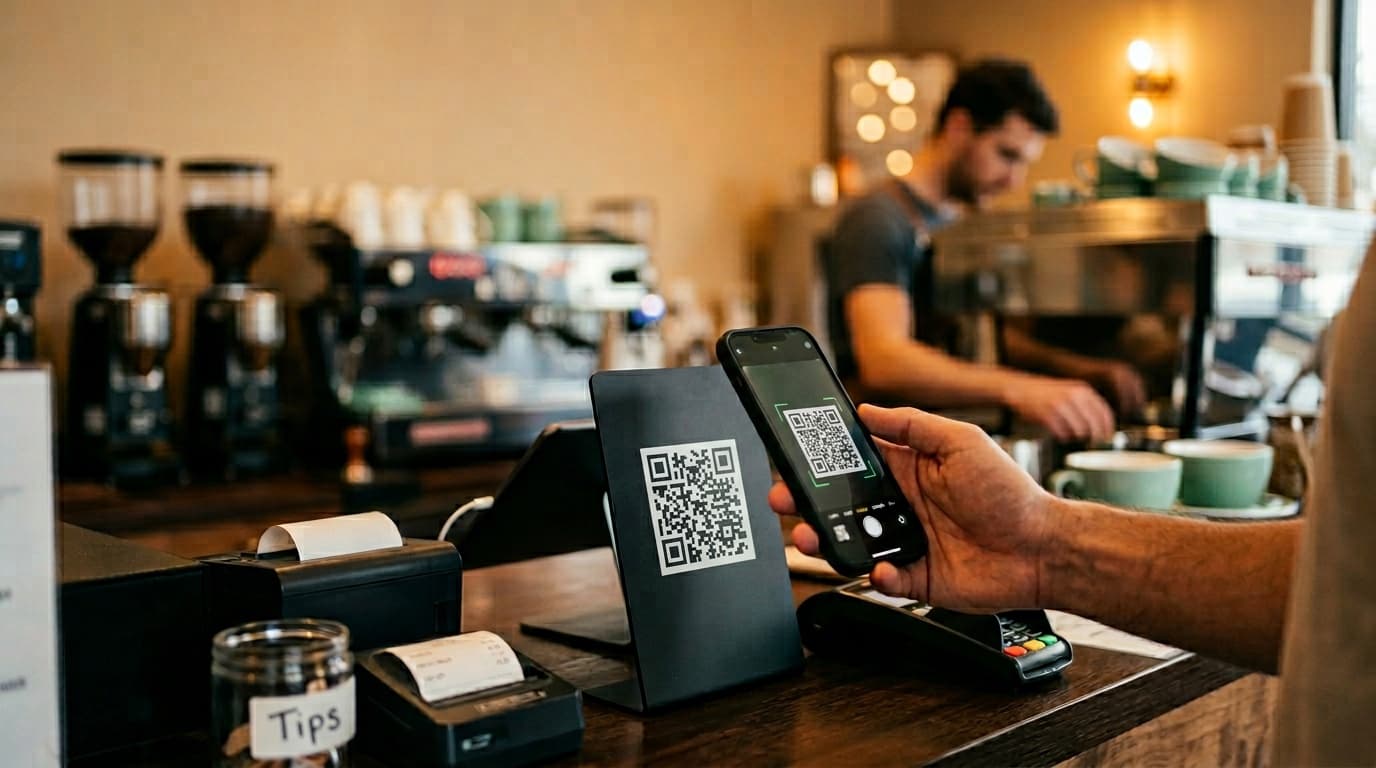
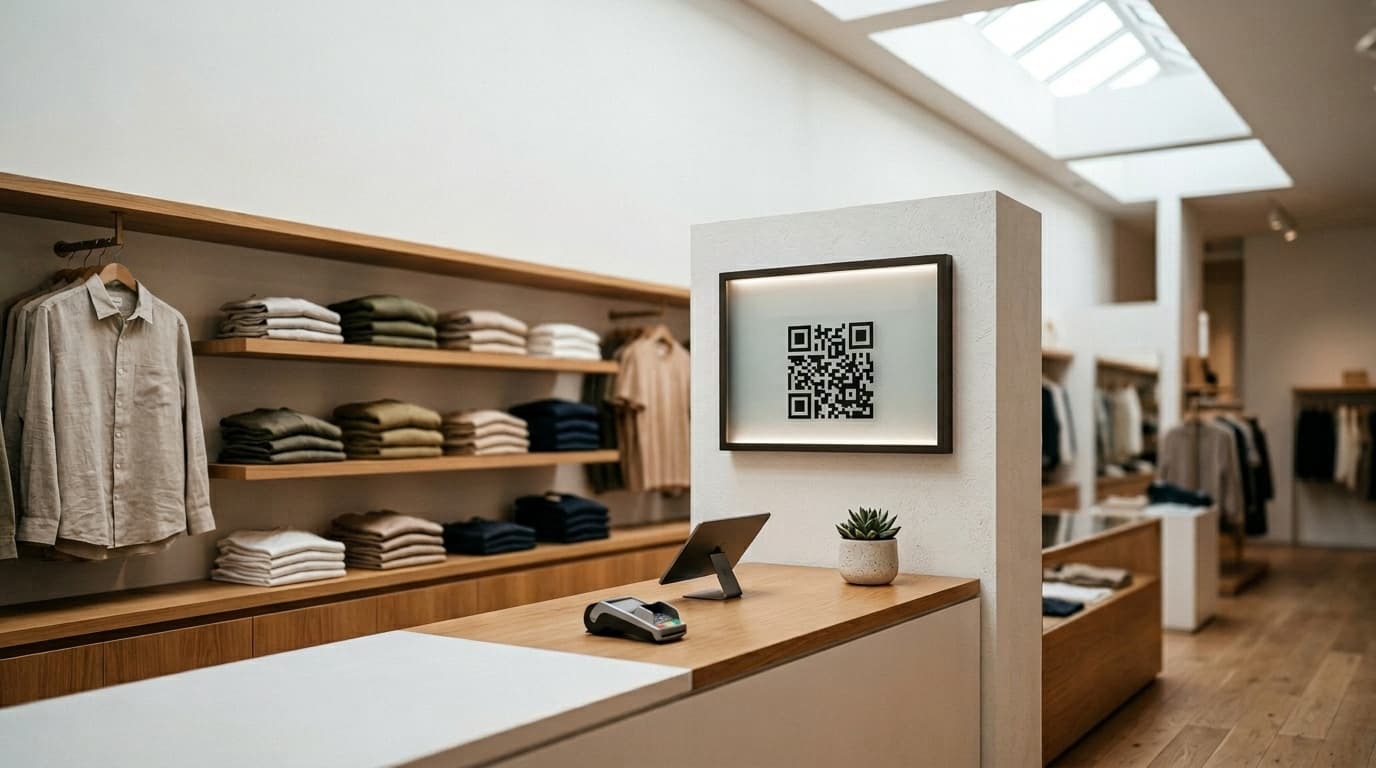
A QR code placed at the counter — ideally printed on a small card that customers pick up naturally — linking directly to your Google review page is the highest-leverage single action most bookshops can take. The key is placement: it needs to be visible during the payment process, when the customer's positive feeling about their purchase is at its peak. A brief, genuine prompt from the bookseller ("If you enjoyed your visit, a quick review helps us enormously") is enough. You're not asking them to do anything extraordinary; you're giving them a path to an action they already had a vague intention to take.
Receipts and bags as review touchpoints
Including a review prompt on your printed receipt or inside the bag is an underused opportunity. Many bookshop customers get home, start reading, and remember the experience fondly — but by then the impulse to review has passed. A card inside the bag with a QR code and a phrase like "Tell us which book you're reading next" creates a secondary touchpoint that catches customers at a different moment: when the pleasure of the purchase has been confirmed by the first chapter.
Staff-driven moments
Booksellers often have the deepest relationships with customers. Training staff to make a light, natural review ask — not scripted, not obligatory — can generate significantly more reviews than any passive placement. The most effective version is specific: "If you loved this one, I'd love to know what you thought once you've started it. A Google review would mean a lot to us." It's personal, it respects the customer's autonomy, and it works.
Turning bookshop reviews into local SEO leverage
The right review content does two things at once: it builds trust with future customers and it signals relevance to Google.
A review that mentions genres ("fantastic selection of contemporary fiction"), staff expertise ("the bookseller recommended something I'd never heard of and it was perfect"), and atmosphere ("quiet, beautifully organized, no pressure to buy") tells Google exactly what kind of search queries this business should appear for. When you collect reviews consistently — especially through structured prompts — you're not just building social proof. You're building a keyword-rich body of authentic content that improves your local ranking over time.
For bookshops near tourist areas, reviews mentioning accessibility, language availability, or suitability as a gift destination matter too. A phrase like "best place to find local authors and regional titles" in a review can put you in front of searches that no amount of paid advertising would reach at the same cost.
A gamified approach for bookshops
Gamification might seem counterintuitive for a business associated with quiet, deliberate reading. In practice, customers respond to it warmly because the mechanic is transparent and the interaction is brief.
The flow: a customer scans a QR code at the counter, leaves their Google review freely (any star rating, any content — you're not engineering the outcome), and then spins a digital fortune wheel for a chance to win a small prize. For a bookshop, that prize doesn't need to be expensive: a 10% discount on the next visit, a bookmark, a "staff pick" recommendation card, or a small gift from your curated selection all land well with a reading audience.
What gamification does in this setting is create a moment of permission. The customer feels like they're participating in something — "I left a review, and now I get to play" — rather than complying with a request. The interaction ends with a positive feeling layered on top of an already positive visit. Customers who leave having both bought a good book and won something small are measurably more likely to come back.
The key is sequencing: the review comes first, before the spin. This ensures you capture the feedback even if the customer doesn't complete the game, and it keeps the review authentic — the customer hasn't yet received their "reward" when they write it, so there's no psychological pressure to inflate their rating.
What a consistent review volume does to your Google Maps position
Google's local ranking algorithm weights both review volume and recency. A bookshop that collects eight new reviews per week consistently outranks a competitor with an identical rating but sporadic review activity.
The compounding effect is significant: after six months of consistent collection, the structural advantage in local search becomes very difficult for a competitor to close quickly, even if they suddenly start asking for reviews. The business that starts earliest and stays most consistent wins the long game — and independent bookshops, given their naturally loyal and articulate customer base, have every condition they need to win it.
Ludofy's digital fortune wheel was built for exactly this kind of operation: a QR code, a review, a spin, a small win, and a customer who leaves with a slightly warmer feeling about your shop than they walked in with. Setup takes under fifteen minutes, and the dashboard shows you in real time how your review count and Google rating are moving. For an independent bookshop competing on character, curation, and community — Ludofy gives you the mechanism to make that competition visible online where it counts.