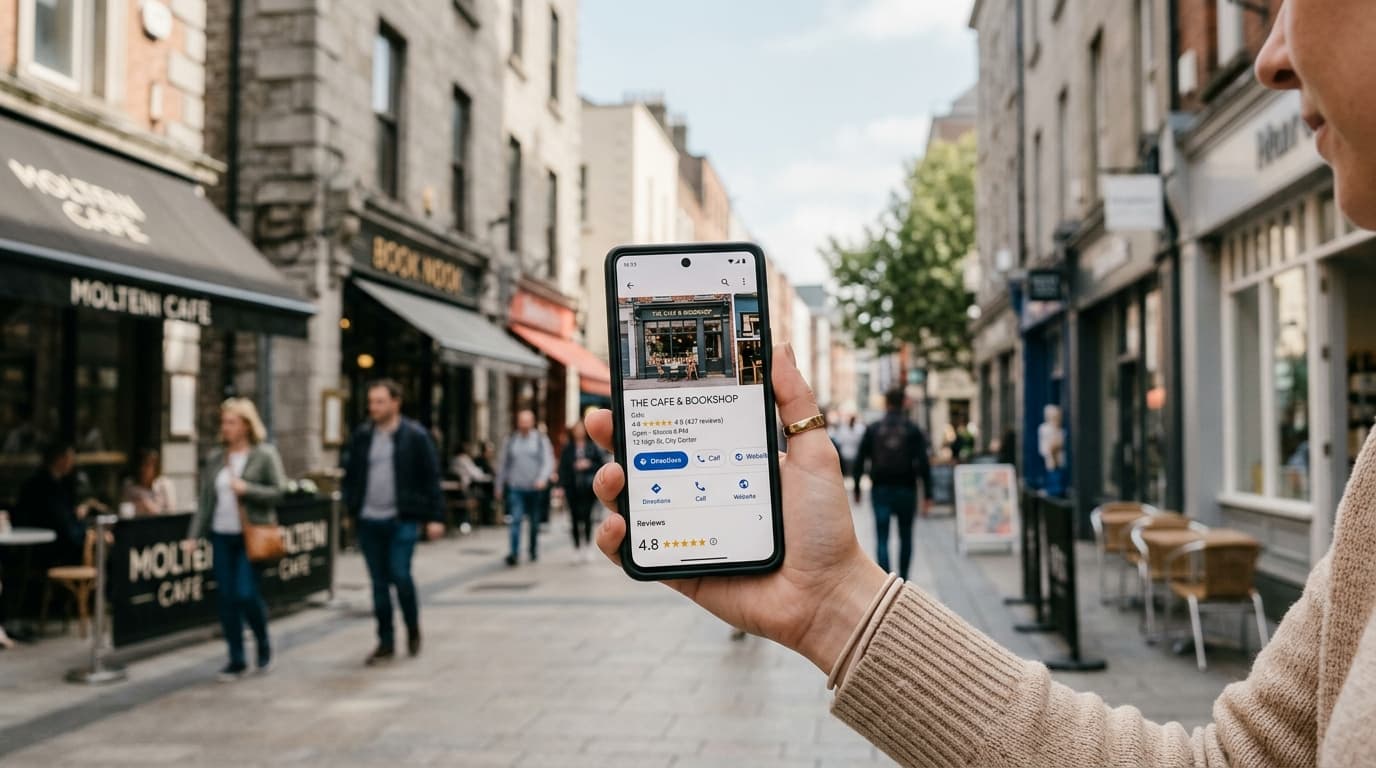
Open Google Maps in any city and search "burger." Within seconds you're looking at a wall of options, many within a few minutes of each other, all serving the same hungry customers who are making a decision right now. In this environment, Google Reviews aren't a nice-to-have — they determine whether your burger restaurant gets discovered or gets skipped.
A burger spot with 4.7 stars and 300 reviews consistently outperforms a competitor with 3.9 stars, regardless of who actually makes the better burger. Perception, built by reviews, precedes reality in local search. The challenge is that burger restaurants face some structural barriers to collecting reviews that most operators don't address systematically.
Why Google Reviews Are the Deciding Factor for Burger Customers
The burger category is unique in its mix of high customer volume, intense local competition, and impulse-driven decision-making. A family driving around deciding where to eat for lunch isn't going to call three places first — they're opening Google Maps, glancing at stars and review counts, and picking the one that feels trustworthy within 30 seconds.
This decision cycle is too fast for you to influence with marketing content or social media. By the time a potential customer is choosing between your restaurant and three competitors, your Google profile is the only salesperson you have in the room. The number of reviews signals legitimacy: if 400 people ate there and most had a good time, the risk of trying it seems low. If 12 people reviewed it eight months ago, the same logic flips.
Google also factors review volume, recency, and average rating directly into local ranking signals — meaning the restaurants with more consistent review activity appear higher in map results, above competitors who may have better food but worse review infrastructure.
Why Burger Restaurants Struggle More Than They Should
On paper, burger joints look like review-collection machines: high foot traffic, satisfied customers, quick transactions. In practice, most burger restaurants collect reviews at a fraction of their potential. Three structural problems explain why.
Short dwell time kills spontaneous reviews. Fast-casual burger spots see customers in and out in 15 to 20 minutes. By the time someone has eaten, paid, and stepped outside, the moment of peak satisfaction has already passed. The impulse to review fades with the appetite.
Counter service limits personal asks. Unlike table-service restaurants where a server builds rapport over the course of a meal and can make a natural, warm request for a review, counter service is transactional. Customers pay, get food, eat, leave. There's rarely a meaningful window for a staff member to connect personally and ask.
Review intent evaporates fast. Studies on review behavior consistently show that customers are most willing to leave a review in the 30 minutes immediately after a positive experience. Once they've walked out, back into their day, the impulse disappears. If your restaurant doesn't capture that window, you don't get the review — even from customers who genuinely intended to leave one.
QR Codes: Turning Every Surface Into a Review Trigger
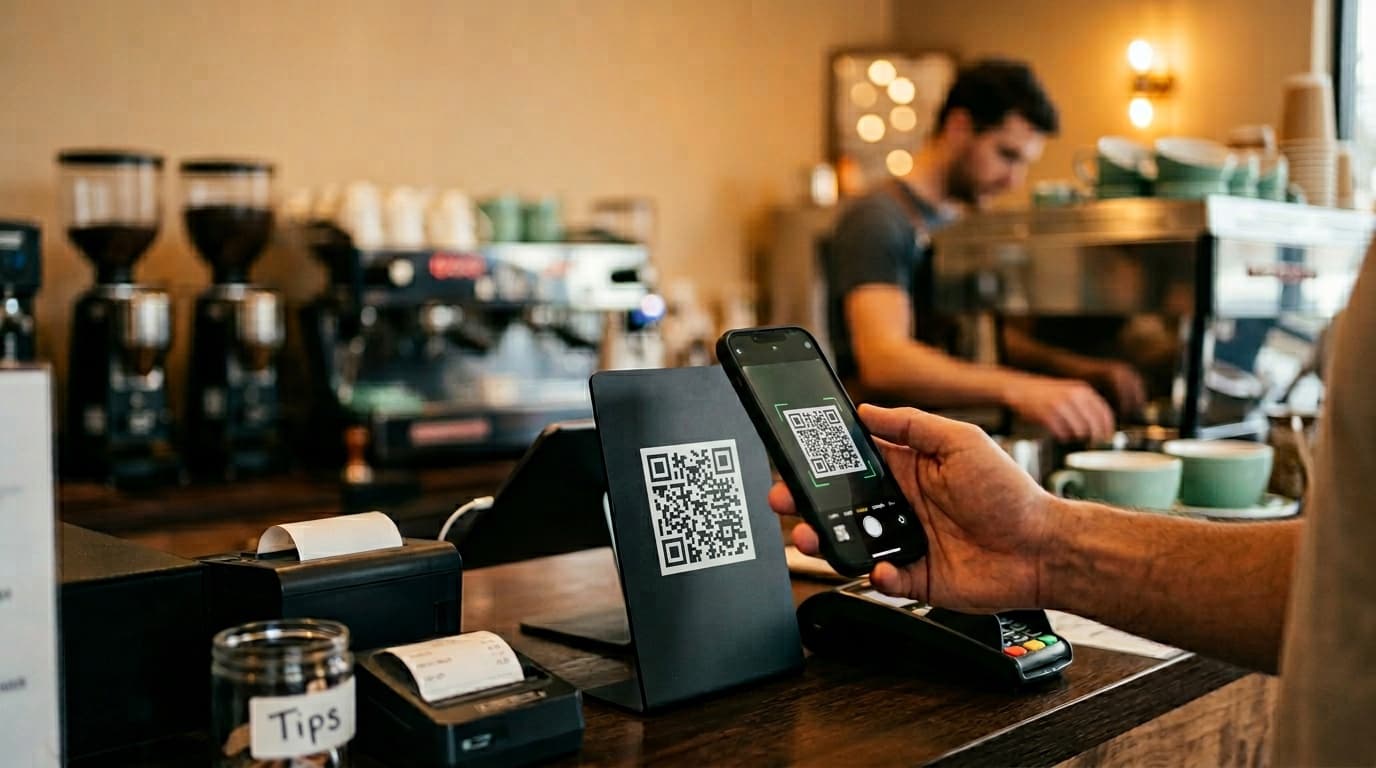
The solution to short dwell time and awkward in-person asks is to remove the need for a verbal request entirely. QR codes placed at the right touchpoints let customers engage with the review process at their own pace, without staff involvement, at the exact moment when they're still in a good mood.
Tray liners are one of the highest-impact placements available to a burger restaurant. Every customer with tray service sees the QR code for the full duration of their meal. At near-zero cost — it's printed paper — you're reaching every eat-in customer with a review invitation while they're actively enjoying their food.
Table tents and tabletop cards serve the same function without requiring tray service. A small card on every table with a QR code and a single line of copy ("Enjoyed your meal? Scan to share the love") keeps the prompt visible throughout the dining experience.
Takeaway packaging opens up the delivery and takeout audience — a segment that represents a growing proportion of burger restaurant revenue and is almost completely untapped for review collection. A QR code printed on burger boxes, bags, or drink cups follows the customer home. When they're eating their food and feeling good about it, the prompt is right there.
Point-of-sale screen or receipt is the simplest implementation. If your POS has a customer-facing display, configure it to show a review QR code while the order is being prepared. Customers stand at the counter waiting — they'll look at a screen. A QR code at the bottom of printed receipts works the same way, with customers physically handling the paper.
Gamification: The Conversion Rate Multiplier for Fast-Casual
Standard QR codes directing customers to a Google Review page see scan rates of 3 to 8 percent in most burger restaurant deployments. Gamification changes that math substantially.
A fortune wheel mechanic works like this: a customer scans the QR code and is taken to a branded landing page. Instead of being asked directly to leave a review, they're invited to spin a wheel for a prize. To unlock the spin, they submit a Google Review — any rating, no editorial direction. Once the review is posted, they spin and win an instant reward.
The psychology here is well understood. "Do us a favor" produces minimal action. "Here's something fun with a guaranteed reward" produces enthusiasm. The review becomes the entry ticket to a positive experience, not a chore. Burger restaurants using gamified review flows typically see participation rates between 20 and 35 percent — a 5 to 10x improvement over standard QR code placements.
The prize structure matters. Burger customers respond best to immediate, tangible food-related rewards: a free upgrade to large fries, a free drink on the next visit, 15% off the next order, a free dessert. The reward doesn't need to be expensive — it needs to feel exciting and concrete. A digital "spin" mechanic adds a layer of anticipation that makes even a small prize feel more rewarding than it would if handed over directly.
Responding to Reviews: The Part Most Burger Restaurants Skip
Collecting reviews is only half the job. How you respond to them shapes the perception of every future customer who views your profile — and most customers do read recent responses before deciding whether to visit.
For 5-star reviews, avoid generic replies. "Thanks for your review!" tells the next reader nothing. "Happy to hear the smash burger hit the spot — see you next time!" demonstrates that real people read and care about the feedback. Specific responses build authenticity.
For negative reviews, the goal is not to defend or explain. It's to demonstrate to future customers how you handle problems. "We're sorry to hear your experience didn't meet expectations — please reach out to us directly and we'll make it right" is more valuable than a detailed counter-argument. Future customers watching this exchange will be reassured by the response, even if the original experience was poor.
Google also factors review response activity into local ranking signals. Restaurants that consistently respond to reviews see modest but measurable improvements in local search visibility over those that don't engage at all.
A 90-Day Roadmap for Burger Restaurants Starting From Zero
Month 1 — Infrastructure: Set up QR codes at all eat-in tables, tray liners, takeaway packaging, and the POS screen. Brief staff on a simple verbal support line: "If you scan the code on the table, you can spin for a free treat." Respond to every existing review on your Google Business Profile, positive and negative.
Month 2 — Activate gamification: Deploy a fortune wheel landing page linked to your Google Review prompt. Settle on a prize structure that excites customers but works within your margin. Track weekly review counts and celebrate milestones with your team — review collection is a shared goal, not just a management metric.
Month 3 — Optimize and sustain: Identify which placements are driving the most scans (tray liner vs. table tent vs. packaging) by varying the QR code URLs. Double down on high-performing placements. Refine the prize structure based on what's generating the most excitement. Reach out to loyal regulars via WhatsApp or SMS — with their permission — to ask directly.
A burger restaurant executing this plan consistently should see 40 to 80 new reviews in 90 days from a standing start, and meaningful improvement in Google Maps visibility within the same window.
Closing: Reviews Are the Only Marketing That Works at Decision Time
Your burger restaurant competes at the exact moment a customer is deciding where to eat. That moment is not influenced by your Instagram feed, your loyalty app, or your promotional flyers. It's influenced by what strangers wrote about their last meal.
Ludofy's QR-based fortune wheel mechanic was designed for exactly this use case: high-volume, fast-casual environments where the review window is short and the competitive stakes are high. If your burger restaurant is ready to stop losing potential customers to competitors who've simply figured out review collection before you did, we can help you close that gap faster than you might expect.