Your paintball facility fills up every weekend. Groups come in, have a blast, leave pumped. And yet, your Google Business Profile sits at 34 reviews while the competing venue across town — arguably with less terrain and older equipment — shows 220.
The gameplay gap isn't the problem. The visibility gap is.
Why Google Reviews drive booking decisions in paintball
Paintball and airsoft venues operate in a discovery-driven market. Nobody searches for your business by name until they already know you. They search "paintball near me," "birthday activity for adults," "corporate team building outdoor." Google Maps surfaces the top results — and in a category where pricing is competitive and facilities are hard to compare without visiting, review volume and rating become the primary decision signal.
This matters especially for group bookings. The person organizing a birthday, a stag party, or a company outing has to justify their choice to 10–20 other people. They default to the venue with the most visible social proof. High review counts signal safety: enough people came here and thought it was worth documenting.
The math is simple but brutal. A first-time organizer comparing two paintball venues at similar distances and prices will choose the one with more reviews in the vast majority of cases — even if the higher-reviewed venue has a slightly lower average rating. Volume communicates legitimacy in a way that a perfect 5.0 from 11 people cannot.
Why paintball venues structurally under-collect reviews
The same factors that make paintball a compelling experience work against review collection.
Group dynamics suppress individual behavior. When people are with friends, they don't pull out their phones to leave reviews — they stay in the moment. Asking a group of 12 to individually leave a Google review is asking each person to break away from the group experience, which almost none of them will do. The social cost of stopping to type while your friends are laughing and reliving the game is real.
Post-game energy goes outward, not inward. The 20 minutes after the last game are the most socially active of the visit: retelling moments, comparing hits, posing for group photos. That energy is interpersonal. It's not a window for individual, reflective action like writing a review.
Equipment return and checkout are chaotic. Returning gear, getting deposits back, sorting personal belongings — your exit flow is a compressed series of micro-tasks. Verbal review requests land in that chaos and evaporate. Staff members who remember to ask get polite "sure, definitely" responses that convert into actual reviews at around 2–3%.
The result: a facility serving 200 players on a Saturday might collect 8–12 reviews from that entire day. A coffee shop serving 150 customers could collect the same number from a single morning.
Finding the moments that actually convert
The strategy for paintball review collection is about identifying the specific gaps in your flow where players are still on-site, satisfied, and not mid-task.
End-of-game cool-down area
The 10–15 minutes between the last game and equipment return is often overlooked. Players are sitting, adrenaline is normalizing, conversations are naturally winding down. A QR code on a visible board, banner, or wall panel in this space — framed as a chance to win a reward — catches players when they're still present and not yet in exit mode. No staff interaction required: the QR code does the work.
Food and drink area
If your venue has a snack bar, bar area, or lounge, this is your highest-converting touchpoint. Players are seated, drinks in hand, phones already out. A table tent or counter card with a QR code is easy to notice and scan without breaking any social rhythm. If you're only going to place QR codes in one area, make it here.
Checkout and deposit return
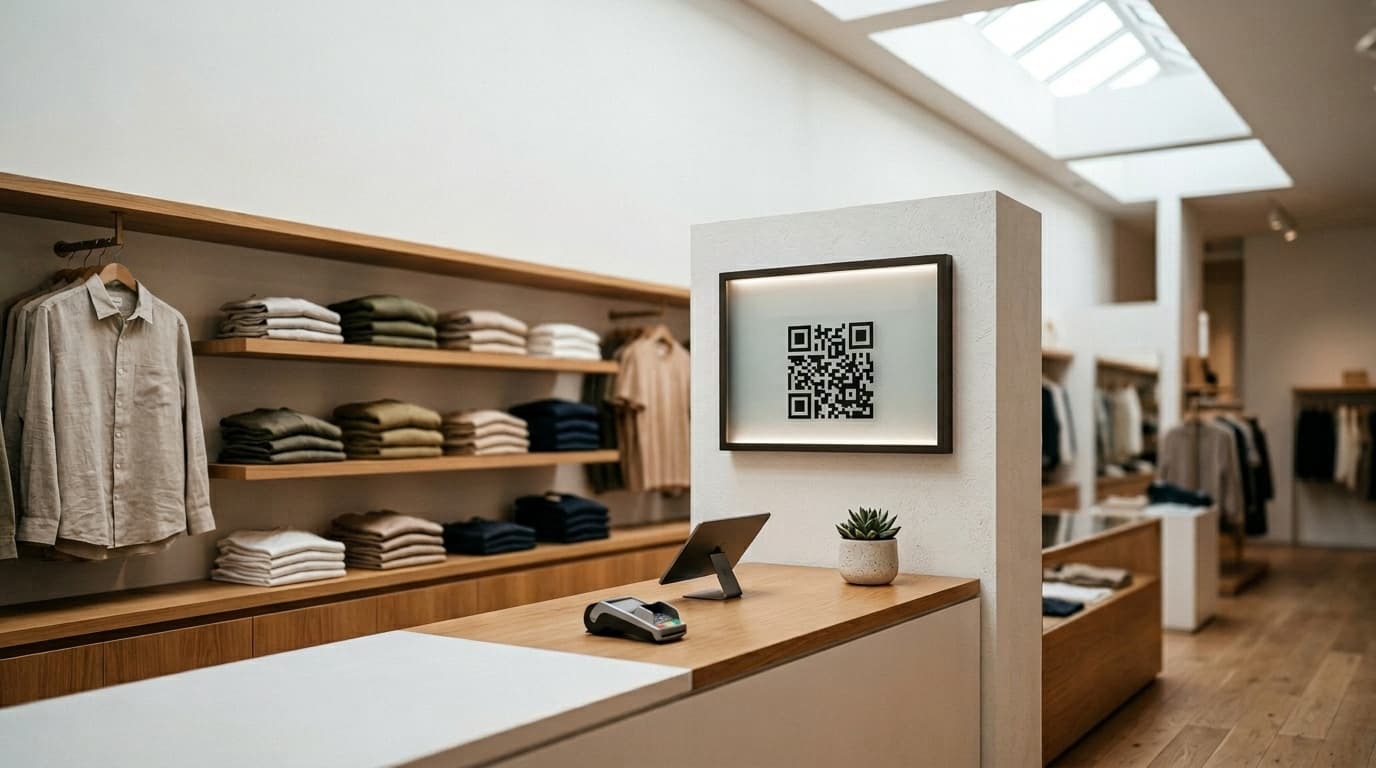
When a group leader settles the final bill or retrieves the deposit, there's a natural moment of one-on-one attention with your staff. A counter display next to the payment terminal, combined with a low-pressure mention from your team member ("if you had a good time, there's a prize wheel you can spin — takes 30 seconds"), is effective without being pushy.
Post-visit email or text follow-up
For groups who booked online, a follow-up message sent 2–4 hours after the session consistently outperforms on-site requests for review conversion. The group has dispersed, everyone is back on their phones sharing photos in the group chat — it's a natural moment to click a review link. Keep the message short: one line of thanks, one sentence about the prize spin, one link. Nothing more.
Gamification and the group multiplier effect
Gamified review requests — where the customer spins a digital fortune wheel to win a prize after submitting their review — perform significantly better in group contexts than anywhere else.
Here's why: in a group setting, the visible excitement of one person spinning the wheel creates immediate peer pressure to participate. When someone in a group of 12 scans, spins, and wins a prize, the people around them want to try too. This cascade effect is essentially absent from individual review channels. It turns a solo ask into a shared activity — which fits naturally into the social energy of a paintball group.
Effective prize structures for paintball venues:
- Discounted rebooking (15–20% off a future group session) — encourages return visits with new groups
- Equipment upgrade (premium marker or tactical gear at next visit) — high perceived value, near-zero marginal cost
- Priority booking access (reserve before general availability opens) — uniquely valuable for groups who plan ahead
- Bonus game (one additional round added to their next session) — feels generous, costs only if the slot exists anyway
The prize should feel genuinely valuable to your core demographic while remaining low-cost for you. Upgrade-tier prizes often work best on both dimensions.
Making your reviews work harder for local SEO
Volume matters, but review content influences your local search rankings too. A few practices that move the needle without directing what customers write.
Surface your activity types visually. If you offer speedball, woodland scenarios, close-quarters combat, and VIP packages, display these terms prominently in your venue. Players who see the words will use them in their reviews — building a keyword-rich review corpus that strengthens your map listing for activity-specific searches like "speedball arena" or "woodland paintball."
Create a photo moment before the game. Full gear, before the adrenaline kicks in, is when group photos happen naturally. A well-lit spot with your venue name or branding visible in the background generates photo reviews automatically. Photo reviews outperform text-only reviews in both click-through and booking conversion. These photos also spread organically across social media with location tags.
Respond to every review within 48 hours. Active response behavior signals to Google that your listing is maintained. For negative reviews, a measured, specific response ("we're sorry your group had to wait — we've since adjusted our check-in flow for peak hours") demonstrates professionalism and limits reputational damage for future readers.
Don't skip low-star reviews. A one-star review with a thoughtful, non-defensive response often reassures prospective customers more than a page of five-stars alone. It shows the business is real, responsive, and accountable.
From satisfied players to a compounding local advantage
The gap between your current review count and your competitor's isn't a reflection of who runs a better venue. It's a reflection of who has a system.
Satisfied paintball customers don't leave reviews because the friction is too high and the moment never lines up: they're in a group, they're in motion, they're not thinking about Google. The fix isn't better verbal persuasion from your staff — it's removing friction and adding a reason to act, at the right moment, automatically.
Ludofy is built specifically for the kind of venue where in-the-moment satisfaction is high but conversion to reviews is low. The QR-based fortune wheel flow removes friction, adds motivation, and works with the group dynamics of your visitors rather than against them. Setup takes a matter of days, the QR codes are print-ready, and the wheel prizes are fully configurable to match your pricing and margin.
If you're averaging 10 reviews per weekend today, there's no structural reason you can't be at 40–50. The players are already there. The satisfaction already exists. The only missing piece is the system that captures it — consistently, automatically, and without depending on anyone remembering to ask.