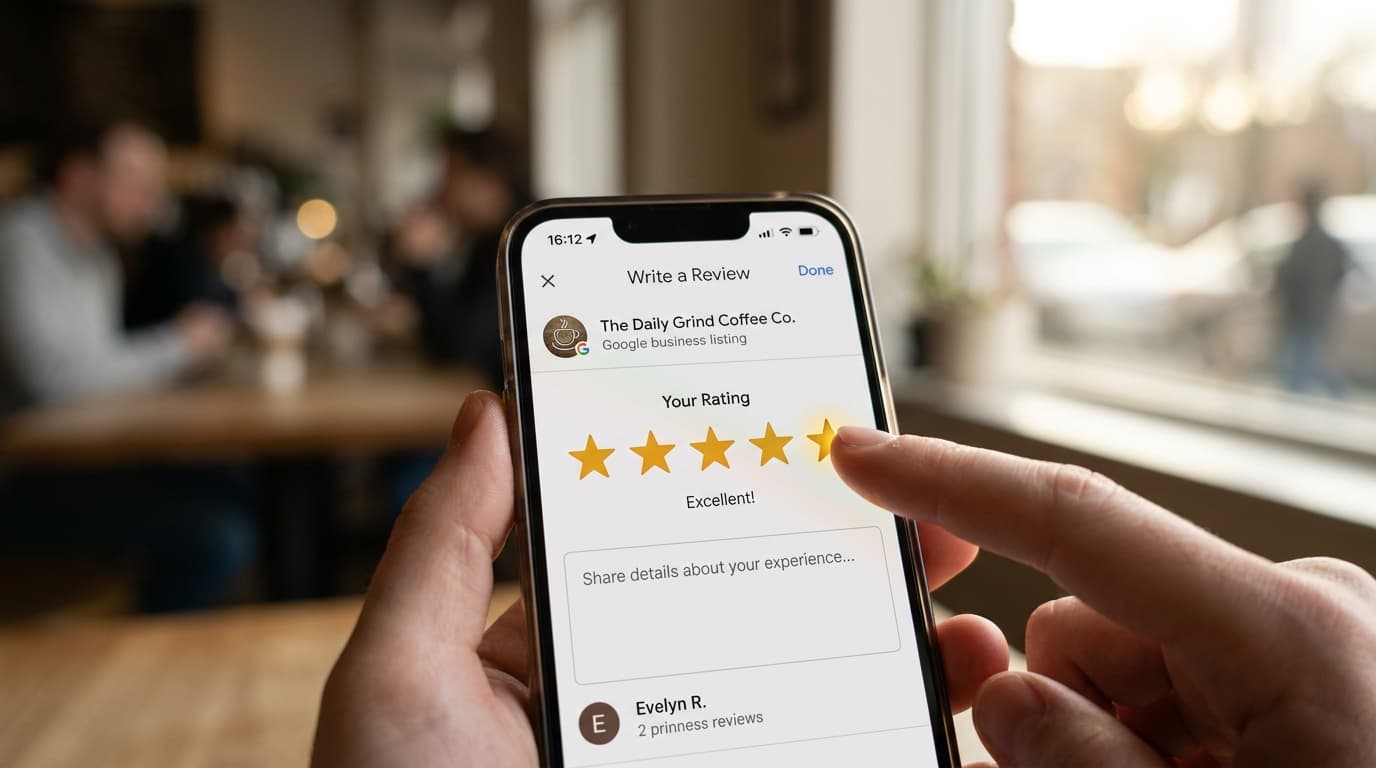
Buying a car is one of the biggest financial decisions most people make. It's not impulse-driven — it's researched. Before a prospect walks into your showroom, they've likely spent hours comparing inventory, reading specs, and most importantly, reading your Google Reviews.
A 2024 BrightLocal survey found that 98% of consumers read online reviews before visiting a local business. In automotive, that number carries even more weight: car buyers consult an average of 14 information sources before signing, and Google Reviews consistently rank among the top three.
Yet most dealerships treat their Google Reviews as an afterthought — reactive rather than proactive, hoping satisfied customers leave a review on their own. That gap is your competitive opportunity.
Why Google Reviews Hit Differently in Automotive
The price tag amplifies every signal
When someone buys a $4 cup of coffee and it's mediocre, they move on. When someone is about to commit to a $35,000 vehicle, every signal matters. A 4.2-star rating with 42 reviews signals risk. A 4.7-star rating with 240 reviews signals confidence. That gap in perception can determine whether a prospect calls you or drives past you to the dealership down the road.
Customers review the experience, not the car
Here's something dealerships often miss: your buyers aren't reviewing the Chevrolet or Toyota they purchased. They know the car is the same wherever they buy it. They're reviewing you — how the salesperson treated them, whether the finance process was transparent, how painlessly the delivery went, and how the service department handled their first issue.
These are entirely within your control. And they're exactly what differentiates high-review dealerships from low-review ones.
Local pack visibility is a direct sales driver
When someone searches "Ford dealership near me" or "used car lots in [city]," the three businesses that appear in Google's Local Pack capture the lion's share of clicks. Volume, recency, and rating of your Google Reviews are among the most influential factors in landing in that pack.
Dealerships that move from 40 reviews to 180+ reviews in six months consistently report meaningful increases in inbound calls and walk-ins from organic search — no advertising budget required.
Five High-Value Moments to Request a Review
Most dealerships that struggle with review volume are asking at the wrong time, or not asking at all. Here are the moments when customers are most receptive:
1. Vehicle delivery
This is peak customer happiness. The buyer has been waiting for this moment — the anticipation, the paperwork, and now their keys. As you walk them through the vehicle's features and hand over the documentation, slip in a simple ask: "We put a lot of care into making this experience right. If you've enjoyed your time with us, a quick Google Review would mean a lot — here's a QR code to make it easy."
No pressure. Just a natural, human ask at the best possible moment.
2. The follow-up call
Two to three days after delivery, a brief check-in call — "How's the new car treating you?" — is standard practice at top-performing dealerships. If the customer is happy, that's the moment to remind them of the review invitation. If something's off, you're in front of the problem before it becomes a public complaint.
3. First service visit
When a customer returns to your service department for their first oil change or scheduled maintenance, that's a strong signal of trust. They chose to bring their car back to you. Train your service advisors to recognize this moment and make the ask.
4. Problem resolution
Counterintuitively, customers who had a problem that you resolved well often write better reviews than customers who had no friction at all. They've seen your team under pressure. If a warranty issue was handled quickly and professionally, ask: "We're really glad we could sort that out — if your experience was good overall, would you be willing to share it on Google?"
5. Repeat purchase
A customer who comes back to buy a second vehicle is your most powerful advocate. If they haven't left a review yet, this is the moment.
Common Mistakes Dealerships Make
Leaving it to individual salespeople
"We ask when we remember" isn't a strategy. When review collection is ad hoc, you get inconsistent results. Make it a defined step in your delivery process — documented, trained, and followed by everyone, not dependent on individual initiative.
Ignoring the service department
Most dealerships focus review efforts on vehicle sales. But the service department generates far more customer interactions annually. A service department that runs a systematic review request process at checkout can easily triple the dealership's total review volume. This is one of the most underused levers in automotive reputation management.
Leaving negative reviews unanswered
A one-star review with no response tells every reader that you don't care. A professional, empathetic response — even to an unfair review — demonstrates accountability and turns a liability into an asset. Prospects reading reviews often pay as much attention to how businesses respond as to the reviews themselves.
Friction in the request process
Sending a customer a five-step email with screenshots of how to find your Google profile is a fast track to zero response. The request needs to be instant: one QR code scan, one tap, and they're looking at the review form. Every extra step cuts your conversion rate dramatically.
Deploying QR Codes Strategically Across Your Dealership
QR codes are the best tool for frictionless review collection in a dealership environment. Here's where to place them:
Delivery station: A quality printed card — ideally branded with your dealership identity — slipped into the owner's manual or vehicle packet. Walk the customer through it during handover.
Service department checkout counter: A standing display at eye level, with a short message: "30 seconds to share your experience." Customers waiting to pay are perfectly positioned for a quick scan.
Customer waiting lounge: If customers wait during oil changes or inspections, posters or table cards with QR codes convert dead time into review opportunities.
Email signatures: Every follow-up email from sales and service advisors should include a direct link to your Google review page. No hunting through search results required.
Booking confirmation messages: If you send SMS or email appointment reminders, add a note at the bottom — "After your visit, we'd love to hear how it went."
Using Gamification to Make the Ask Memorable
One of the most effective approaches for dealerships looking to differentiate their review process is gamification: giving customers a chance to win something in exchange for participating.
Google's policies are clear: you can't condition a reward on a positive review, and you can't buy reviews. But you can offer a spin of a digital fortune wheel or a prize draw entry to customers who've left any review — content and rating entirely their choice.
Prize ideas that work well in automotive:
- Free oil change or service voucher
- Car wash bundle or detailing discount
- Fuel gift card
- Branded accessories (mats, phone mount kit, emergency kit)
- Entry into a quarterly prize draw for a larger item
The gamified approach does two things: it gives the customer an unexpected positive moment at the end of their buying experience, and it eliminates the awkwardness of a straight request. You're not asking for a favor — you're offering them a chance at a reward as a thank-you for their time.
Tracking What Matters
Collecting reviews is step one. Using them strategically is step two. Here are the metrics worth monitoring:
Monthly review volume: Aim for at least 10–20 new reviews per month for an average-size dealership. Below that, your profile starts to look stagnant.
Average rating trend: Are you trending up, flat, or down? A decline in rating over 30–60 days often signals an operational issue before it becomes a customer complaint pattern.
Review-to-visit ratio: Of every ten customers who take delivery or pick up their vehicle from service, how many leave a review? Tracking this helps you identify whether the problem is volume (not asking enough) or conversion (the ask isn't working).
Keyword mentions: What words appear most in your reviews? "Fast," "friendly," "no pressure," "clean"? This is free customer research. If "wait time" shows up repeatedly as a negative, that's your next operational priority.
Response rate: Are you responding to every review, positive and negative? Google notices, and so do readers.
Making It Part of Your Process, Not an Afterthought
The dealerships that consistently accumulate 4.7-star ratings with hundreds of reviews don't have better cars or better prices. They have better processes. Review collection is built into their delivery checklist, their service department closing routine, and their follow-up sequence.
Here's a simple framework to start with:
- Add review request to your delivery checklist — it's a step, not a suggestion
- Print and stock QR code cards at every customer touchpoint
- Brief your team on how to ask without being pushy (one clear, friendly line is enough)
- Monitor your inbox weekly and respond to every review within 48 hours
- Review your metrics monthly and adjust your touchpoints based on what's converting
From Reactive to Proactive
If your dealership currently has fewer than 100 Google Reviews, you have an urgent opportunity. Buyers comparison-shopping in your market are making decisions based on review volume and recency right now. A competitor with 200 recent, high-quality reviews will capture shoppers you never get a chance to speak to.
Ludofy was built precisely for this: a QR code-powered review collection system with a gamified fortune wheel that makes the ask natural, memorable, and consistently executed across your team. Automotive businesses are already using it to turn every delivery — sales and service — into a reliable review touchpoint, without adding work to their team's plate.
The car stays the same whether bought here or down the street. Your reputation doesn't.