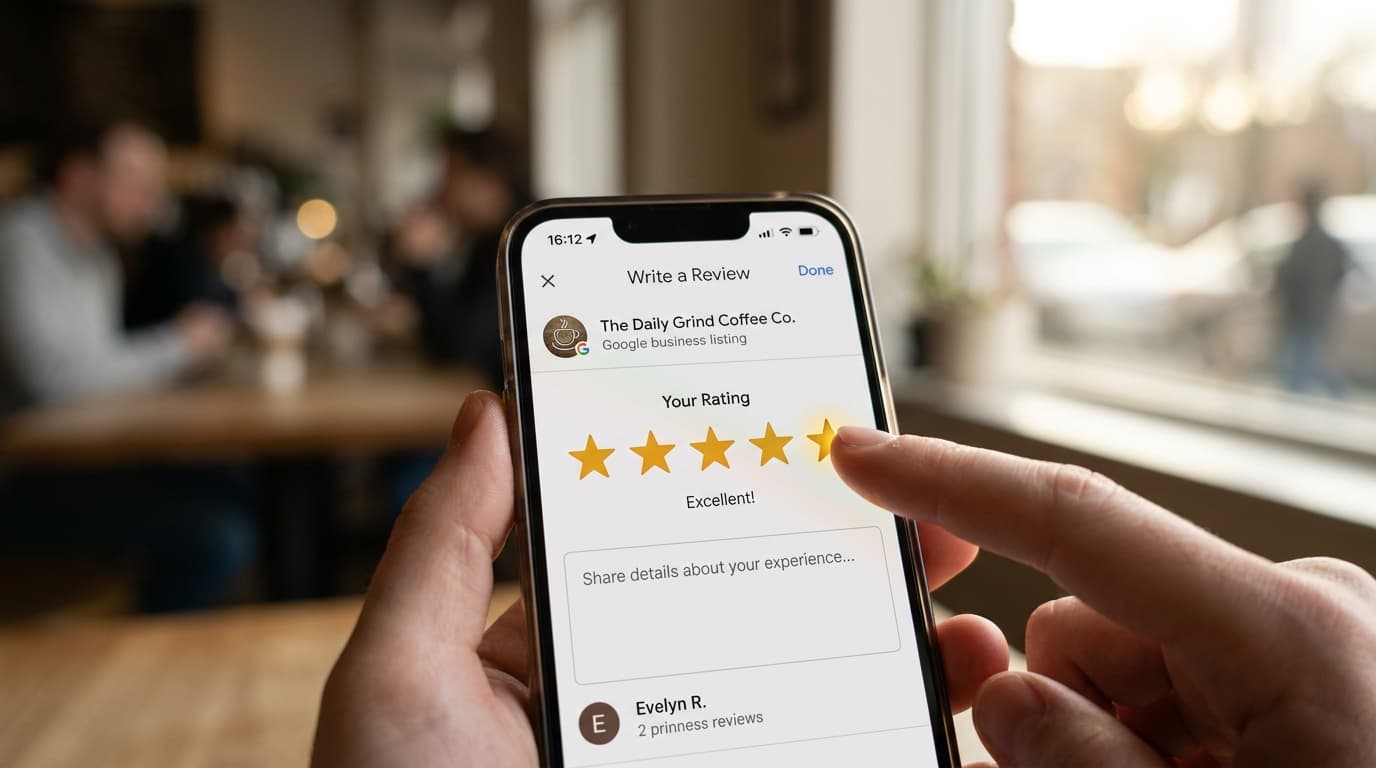
Think about how a parent chooses a daycare center. They ask friends, maybe visit two or three places — but before any of that, they open Google. They read reviews. They look at the star rating. They check how recently the last review was posted. For childcare businesses, your Google Business Profile is doing sales work before your phone ever rings.
The problem? Most nurseries and daycare centers have a fraction of the reviews they deserve. Parents love the facility, trust the staff, recommend it to neighbors — and almost never leave a review. This article explains why that happens and how to change it.
Why Childcare Centers Struggle to Collect Reviews
Childcare is a high-trust, deeply personal service. That creates dynamics you don't find in restaurants or retail:
The relationship is ongoing, not episodic. With a restaurant, there's a natural end point to the experience — the moment you pay — where a review feels appropriate. With childcare, parents have a continuous relationship. Asking for a review in the middle of that relationship can feel awkward or uncertain ("Are they asking because things are going well? Or because they need to boost their rating?").
Parents are genuinely busy. Morning drop-offs happen at 7:45am in a rush. Evening pick-ups happen when everyone is tired. The moments when parents interact with your center are exactly the moments when they have no mental bandwidth for "additional tasks."
Satisfied parents feel they're already showing support. A family that's been with you for three years, pays on time, refers their friends, and thanks the educators every day already feels like a loyal patron. They haven't consciously withheld a review — they just never had a reason to write one.
The stakes feel higher. Parents are wary about anything that looks transactional around their children. A generic mass email asking for reviews can land poorly. Tone and timing matter much more here than they would for a pizza restaurant.
Understanding these dynamics is the starting point for any review strategy that actually works.
The Three Moments That Convert Parents Into Reviewers
The goal isn't to ask every parent for a review at random. It's to identify the specific moments in the parent journey where satisfaction is highest and friction is lowest.
After the settling-in period
The most emotionally loaded moment in any childcare relationship is when a child finally settles in — usually somewhere between week two and week four of enrollment. The parent, who spent weeks anxious about the transition, is now visibly relieved and grateful. This is your highest-value review moment.
A short, personal message from the lead educator — not an automated system email — acknowledging the milestone and mentioning that a Google review would mean a lot to the center converts at a remarkable rate. It feels like a natural continuation of the relationship, not a marketing push.
After a milestone or visible delight moment
A child's first artwork sent home. A holiday show where every family left beaming. An exceptional piece of feedback at a parent-teacher meeting. These moments spike satisfaction and create a natural opening. Following up with a review request while that feeling is fresh — same day or next day — captures emotion before it fades.
During annual reviews and meetings
If your center holds periodic progress meetings with families, these are structured positive moments. Ending a meeting where you've celebrated a child's growth with a soft mention of Google reviews — and a QR code on the information sheet you hand over — is highly effective.
Making the Request Frictionless
Knowing when to ask is half the battle. The other half is removing the friction that stops willing parents from completing the action.
The single most effective tool is a QR code linked directly to your Google review form. No searching, no navigating through your website, no copying links — two taps and they're writing.
Place QR codes where parents spend natural dwell time:
- The reception desk, visible during sign-in and sign-out
- The entrance bulletin board, alongside weekly newsletters and activity photos
- The parent information pack distributed at onboarding
- In your parent communication app messages, as a clickable link
A small printed tent card on the reception desk with the message "Loved what you saw today? Let other parents know" and a QR code below it works quietly in the background every single day without any staff effort.
Training Your Team on the Ask
Your educators are your most credible ambassadors. A brief, warm verbal mention from a trusted educator — "If you're happy with how Maya has settled in, I'd love a Google review — it makes a huge difference for us" — is far more powerful than any email.
Train your front-of-house staff and lead educators on two things:
-
Which families to approach. Not every family at every moment. Focus on parents who are visibly happy, who have mentioned their satisfaction recently, or who have just experienced a milestone.
-
How to frame it. The request should feel personal and specific ("You mentioned how happy you were with how he settled into the new room — could I ask you to share that on Google?"), never scripted or generic.
One personal mention from a trusted educator is worth ten automated emails.
Responding to Reviews Like a Childcare Professional
In an industry built on trust, your public responses to reviews are scrutinized by every prospective parent who finds your listing. How you respond tells them far more about your culture than the review itself.
For positive reviews: Address the parent by first name if possible, reference something specific ("We love watching Ella in the garden space — she's a natural explorer"), and close warmly. Avoid generic responses that could apply to any business.
For critical or negative reviews: Respond with genuine empathy, not defensiveness. Acknowledge the concern, invite an offline conversation, and resist any impulse to explain, justify, or counter-argue publicly. Never share identifying details about the child or the family. A thoughtful, caring response to a negative review regularly converts skeptical parents into inquiries.
Remember: prospective parents reading your reviews are also reading your responses. They're not just checking whether customers are happy — they're checking whether you're the kind of organization that listens.
Building Consistent Review Velocity
A pattern that harms childcare centers is the periodic review blitz: a push that generates twenty reviews in two weeks, followed by nothing for eight months. Google's algorithm rewards consistent, recent activity. Prospective parents notice when the last review was from last autumn.
The goal is steady: three to five new reviews per month, across the year.
To achieve this without it feeling like ongoing work:
- Identify your "natural recommenders" — the 10-15% of families who are genuinely enthusiastic advocates — and make sure they've reviewed you first
- Build one review touchpoint into your standard enrollment journey, so every new family receives a personalized request at their four-week mark
- Set a simple monthly reminder for your center director to send two to three personal requests to families who've recently had positive interactions
This low-effort routine produces a healthy, authentic-looking profile that builds over time rather than spiking and stalling.
How Ludofy Fits the Childcare Context
Ludofy was designed for exactly the kind of high-trust, relationship-sensitive environment that childcare represents. Instead of cold, transactional review request emails, Ludofy's fortune wheel mechanic gives parents a moment of lightness — they scan a QR code at the entrance, spin the wheel for a small reward, and are guided to leave a Google review.
The gamification element is carefully calibrated to the emotional register of the childcare experience. It's warm, low-pressure, and feels like a gesture of appreciation rather than a corporate ask. Centers using Ludofy report four to six times the review volume they achieved through manual outreach alone, with no extra burden on educators or administrative staff.
If your enrollment list isn't as full as it should be, and your Google rating doesn't reflect the quality of care you deliver, Ludofy gives your childcare center a systematic, respectful way to close that gap.