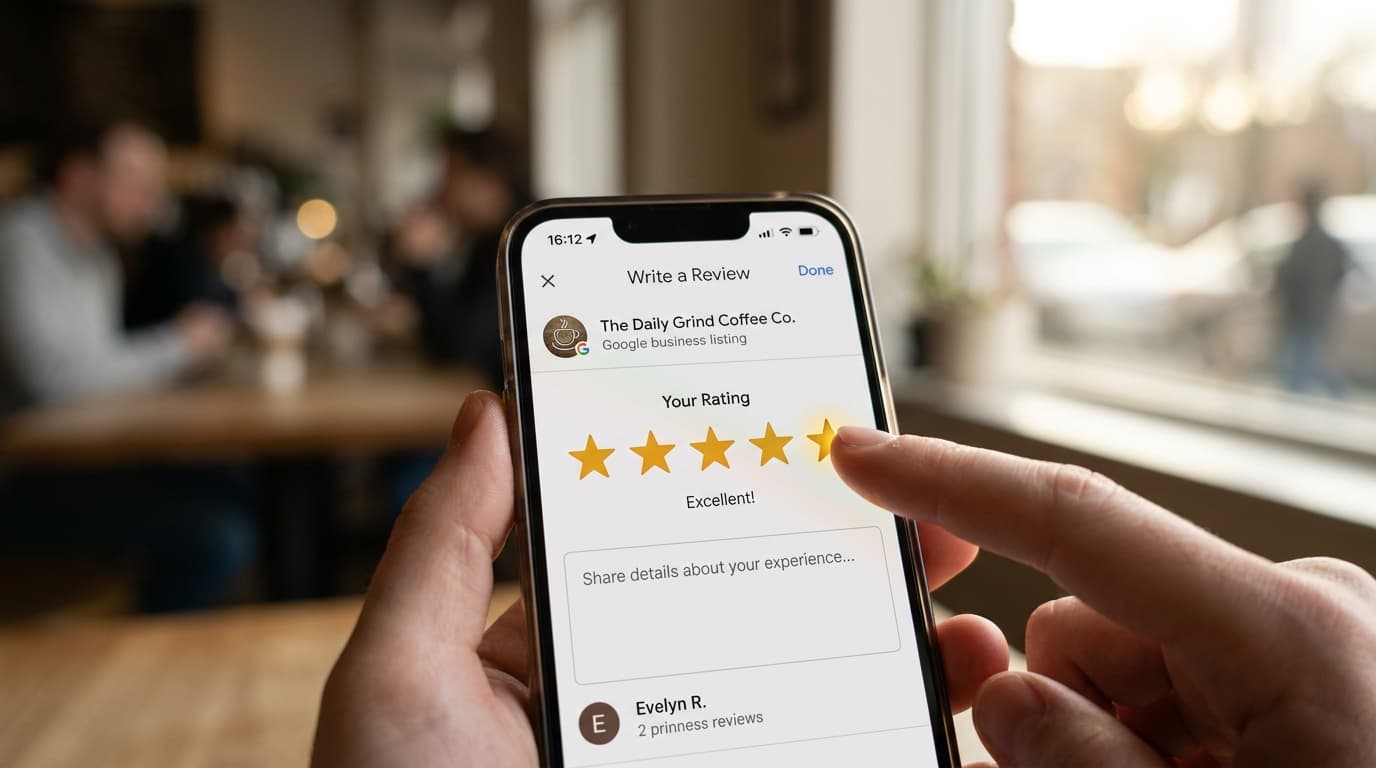
Walk into any independent garden center on a busy Saturday in April and you'll see the same thing: customers deep in conversation with staff about soil pH, sun exposure, and which tomato variety will survive a late frost. The expertise in the room is extraordinary. The Google review profile, however, often tells a different story — a thin collection of ratings, some from years ago, none of which capture the depth of knowledge or care that just played out in the houseplant aisle.
That gap between real-world quality and online reputation is the defining problem for most independent garden centers. Big-box stores accumulate reviews by sheer volume. You accumulate them by building a system. This guide explains how to build one.
Why Google reviews hit differently for garden centers
Garden centers face a distribution problem that most businesses don't. A customer walking into a pharmacy or coffee shop has already decided they want what you sell. A customer searching "garden center near me" is often deciding between you, the DIY superstore on the retail park, and an online delivery service. That three-way comparison happens entirely on a screen before they ever leave home.
At that screen-based moment, Google reviews do more work than any other signal.
Expertise is invisible online unless reviews make it visible. A first-time customer has no way of knowing whether your team actually understands plants or just stacks them. But a review that says "they talked me through exactly what to do with my shaded north-facing garden" does communicate that — and converts searchers into visitors at a far higher rate than star averages alone.
The seasons create concentrated decision windows. Spring planting, summer bedding, autumn bulb planting, Christmas trees and wreaths — each season produces a burst of first-time searchers who have never been to your center. These customers cannot rely on a friend's recommendation. They rely on Google. A garden center with 200 reviews averaging 4.7 stars reaches that customer at exactly the right moment. One with 18 reviews averaging 3.9 does not.
You are competing with competitors who spend heavily on advertising. Large chains invest in national TV, catalogues, and loyalty app promotions. Independent garden centers rarely can. Google reviews cost nothing to generate (only the time to build a system) and appear directly alongside those chains in local search results, creating an instant credibility comparison that you can win.
The right moments to ask in a garden center
Timing is everything. In a garden center, three moments consistently produce the highest conversion rate for review requests.
After expert advice, not just at checkout
The peak moment of perceived value in a garden center isn't when the customer pays — it's when a knowledgeable staff member solves their problem. The customer who was worried about their dying hydrangea and walked away with a clear diagnosis and a care plan is at maximum emotional investment in your business.
Train staff to end those conversations with a natural transition: "If that works well for you, I'd really appreciate a Google review — it helps people with the same questions find us." That request lands naturally because the value exchange has just happened. Asking the same question at an anonymous checkout where no one can remember who helped them produces a fraction of the response.
At the checkout for high-value purchases
Large purchases — a mature specimen tree, a full set of raised bed materials, a complete pond installation kit — carry natural review triggers. The customer has made a considered decision and is emotionally committed to the outcome. A QR code card included with the receipt, or a sign at the payment terminal that reads "Loving your new garden? Share it on Google," catches them at exactly the right level of investment.
On plant care cards and instruction sheets
Many garden centers already include plant care instructions with purchases. A QR code on that card — with a single line that reads "Did this plant thrive? Let others know on Google" — converts the moment of success (when the plant blooms three weeks later) into a review. This delayed-trigger approach is uniquely effective for garden centers because the customer's satisfaction is proven over time, not just at the point of sale.
What a strong review profile looks like for garden centers
The quantity of reviews matters. So does the content. For a garden center specifically, reviews that mention staff knowledge, plant health, and specific product categories ("the indoor plant section is incredible") have a compounding effect — they tell future customers what to expect at a level of detail that generic five-star ratings cannot.
Respond to every review, positive or negative. A response to a positive review that mentions specific plants ("so glad the Japanese maple is doing well in your garden!") signals to future customers that your team cares about outcomes beyond the transaction. A response to a critical review that explains what happened and offers to make it right signals accountability — something first-time customers value greatly when buying living plants, which carry inherent risk of failure.
Use your review profile seasonally. A consistent stream of fresh reviews — rather than 200 reviews from three years ago — signals to Google's local algorithm that your business is active and worth ranking. Aim for at least 10–15 new reviews per month during peak season, tapering to 4–5 in quieter months. This is achievable without gimmicks if the ask is built into staff routine.
How gamification removes the friction from review collection
The single biggest obstacle between a happy customer and a written review is friction — the gap between "I should really leave them a review" and actually opening Google and doing it. For most customers, that gap is permanent.
Gamification removes the gap by creating an immediate reason to act. At the point of purchase, customers scan a QR code that spins a digital fortune wheel — offering prizes like a voucher for their next visit, a free packet of seeds, or a plant care kit. The entry requirement is a Google review. Within seconds, the customer has opened Google, written a review, and claimed their prize.
This approach works especially well for garden centers because:
- The prize catalogue fits naturally. Seed packets, plant food sachets, gardening gloves — low-cost prizes that feel genuinely useful to your customers.
- Seasonal peaks are the highest-leverage moment. Spring weekends when footfall is highest are exactly when you want to accelerate review volume. A fortune wheel at the checkout queue during a busy April weekend can generate 30–50 reviews in a single day.
- It creates a talking point. Customers who spin the wheel and win something are more likely to share the experience with friends, generating word-of-mouth about both the prize and the garden center itself.
Common mistakes garden centers make with review collection
Asking online instead of in person. Follow-up emails requesting reviews perform significantly worse than in-person asks at the moment of peak satisfaction. If your primary review strategy is a post-purchase email, you are leaving most of your potential reviews on the table.
Treating all purchases the same. A customer buying three bedding plants for £12 is not in the same emotional state as someone spending £180 on a Japanese maple. Segment your ask accordingly — not every transaction warrants the same level of review request, and staff energy should be directed toward the interactions that matter most.
Ignoring the winter lull. Many garden centers effectively stop thinking about reviews between November and February. This is a mistake. A consistent review cadence throughout the year — even at lower volume — protects your Google ranking during the off-season and means you enter spring with momentum rather than starting from scratch.
Letting negative reviews sit unanswered. A single unanswered one-star review about a dead plant visible on your profile costs you customers every week. A response that shows empathy and offers a resolution costs you nothing and demonstrates the kind of accountability that converts hesitant visitors.
Building a system, not a moment
The garden centers with the strongest Google profiles are not the ones that ran a review drive once and moved on. They are the ones that built a repeatable system: trained staff on when and how to ask, placed QR codes at high-visibility points, responded to every review within 24 hours, and refreshed their approach at the start of each season.
Tools like Ludofy make that system easier to operate. The QR-code-activated fortune wheel handles the friction problem automatically, delivers prizes that feel meaningful to your customers, and feeds a steady stream of reviews to your profile throughout the year — not just when someone remembers to ask. For independent garden centers looking to compete with chains that spend thousands on advertising, a consistent review strategy is one of the highest-return investments available. Your reputation, unlike a seasonal plant, keeps growing all year.