Korean BBQ has become one of the most popular restaurant experiences in cities worldwide. The combination of interactive grilling, shared plates, unlimited meat options, and the social energy of cooking together creates something most restaurants can't replicate: an experience people genuinely want to talk about.
Yet most Korean BBQ restaurants — even excellent, consistently busy ones — have a Google profile that doesn't reflect their actual reputation. It's not uncommon to find a packed Korean BBQ spot in a major city center with fewer than 80 Google reviews, while a quieter bistro nearby has 500. This gap is fixable, and the unique dynamics of Korean BBQ dining make it an ideal environment for building a strong review presence.
Why Korean BBQ Restaurants Are Underrepresented on Google
There are two specific reasons why Korean BBQ restaurants tend to collect fewer reviews than their customer satisfaction would suggest.
The first is service intensity. Running a Korean BBQ restaurant requires constant table attention: managing grill temperatures, bringing fresh meat cuts, replacing charcoal or gas, cutting meat with scissors, swapping grill grates. Staff are genuinely busy. Unlike a café where a team member can glance up and hand a QR code to someone at the counter, Korean BBQ service is distributed across the floor throughout the entire meal. There's no natural, low-friction moment for the team to make a review request.
The second reason is group dynamics at checkout. Most Korean BBQ meals are group experiences — birthdays, friend gatherings, work celebrations. When the check arrives, the group is typically mid-conversation, collecting cash, dividing the bill. The moment passes quickly. Unless the review request is embedded in the physical environment, it simply doesn't happen.
The Table Is Your Best Asset
Instead of relying on staff to ask at the right moment, Korean BBQ restaurants should build the review request into the table setup itself.
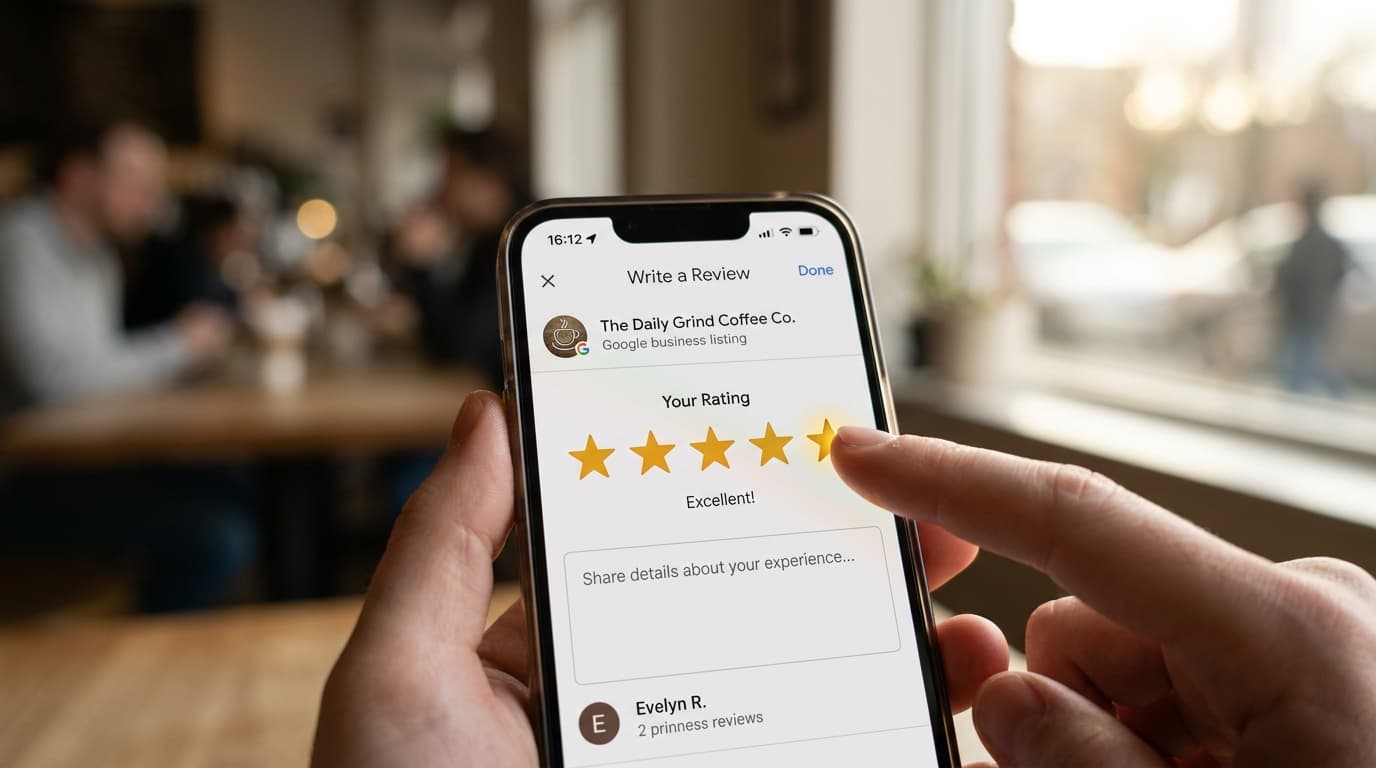
A small tent card or branded table stand with a QR code placed at each grill station does two things: it's visible throughout the entire meal, not just at checkout, and it doesn't require staff to interrupt service to make the ask. The message can be simple and direct: "Loved the experience? Scan to leave us a review — and spin our prize wheel."
The key placement insight for Korean BBQ specifically is timing within the meal. Customers are most receptive to review requests after the meat has been eaten and they've moved into the drinks-and-conversation phase. This is the natural wind-down before the check arrives. During the grill-heavy portion of the meal, they're focused on cooking, eating, and talking. Afterward, when energy is relaxed and satisfaction is high, a visible QR code on the table gets noticed and scanned.
Why Group Dining Creates a Multiplier Effect
Korean BBQ's group dining format is actually one of its biggest advantages for review generation — if you know how to use it.
When one person at a table of six scans the QR code and announces they're spinning a prize wheel to potentially win a free round of soju, curiosity drives the rest of the table to scan too. Group settings create peer momentum: what one person does, others follow. A restaurant that might have expected one review per table can realistically see two, three, or even four reviews from a single visit — without any extra effort from the team.
Prizes that work particularly well for Korean BBQ include:
- A free round of drinks (soju, beer, soft drinks) redeemable on the next visit
- A free starter — pajeon (Korean pancake), steamed eggs, or cold noodles — at the next booking
- A discount on the next group reservation
- A free dessert course (ice cream, bingsu) at the next visit
These prizes are deliberately designed to generate return visits, not just to reward the immediate interaction. A group that wins a free round of soju has a concrete reason to book their next dinner at the same restaurant rather than trying somewhere new.
What a Strong Korean BBQ Google Profile Looks Like
Volume matters, but the content of the reviews matters almost as much. A Korean BBQ restaurant benefits from reviews that describe the experience specifically: the meat quality, the banchan (side dishes), how the grill was managed, the energy of the room. These kinds of detailed text reviews help new customers self-select — they understand what to expect and arrive with the right mindset.
Respond to every review. For positive reviews, acknowledge specific details. For negative ones, address the specific complaint and invite them to return. Korean BBQ experiences can vary based on many factors — how busy the service was, which cuts were ordered, whether the grill grate was changed at the right time — and a thoughtful response to a critical review shows that you take the experience seriously.
If you have Korean-speaking staff or Korean-origin ownership, consider responding in Korean for Korean-language reviews. In cities with significant Korean communities, this signals authenticity and cultural credibility.
Photo Reviews: Letting the Food Do the Talking
Korean BBQ is one of the most visually compelling dining experiences available. Sizzling meat on a grill, beautifully arranged banchan, the spectacle of the cooking process — these elements photograph exceptionally well. When customers leave reviews with photos, they're providing future customers with exactly the kind of social proof that converts curiosity into a booking.
You can encourage photo reviews directly. A note at the bottom of the QR code tent card suggesting that customers share a photo of their spread adds minimal friction and drives significantly more visual content to your profile. A row of grill photos in a Google profile transforms it from a text listing into an experience preview.
Building Consistency Into Your System
The biggest mistake Korean BBQ restaurants make with their Google review strategy is treating it as a one-time effort. A review push that gets 50 reviews in two weeks but then stops produces a profile that looks stale within months. Google's local algorithm weighs recency heavily — a restaurant with 20 reviews in the past 30 days ranks better than one with 200 reviews from two years ago.
The tent card QR system is designed to be passive and ongoing. Once placed, it collects reviews continuously without requiring staff action every service. Combined with a fortune wheel gamification mechanic, it becomes self-sustaining: customers are motivated to scan, the prize creates a return visit incentive, and the return visit creates another opportunity to scan.
Track your review count monthly. Set a realistic target — 15 new reviews per month for a busy restaurant — and review your progress quarterly. If results slow down, refresh the prizes on the wheel to re-spark interest.
Turning the Grill Into a Growth Engine
Ludofy's QR code fortune wheel system is built for exactly this kind of ongoing deployment. It requires no app download from customers, works directly in the browser at the moment of scan, and can be customized with prizes that match your specific menu and margin structure. Setup takes less than an hour, and the first reviews typically arrive within the first few days of placing the tent cards.
Korean BBQ already delivers the kind of high-emotion, memorable experience that customers want to share. The only missing piece is a system that consistently captures that enthusiasm and directs it to your Google profile — before the group splits the bill and heads home.
Give your tables a reason to review, and watch your rating reflect the restaurant you've actually built.