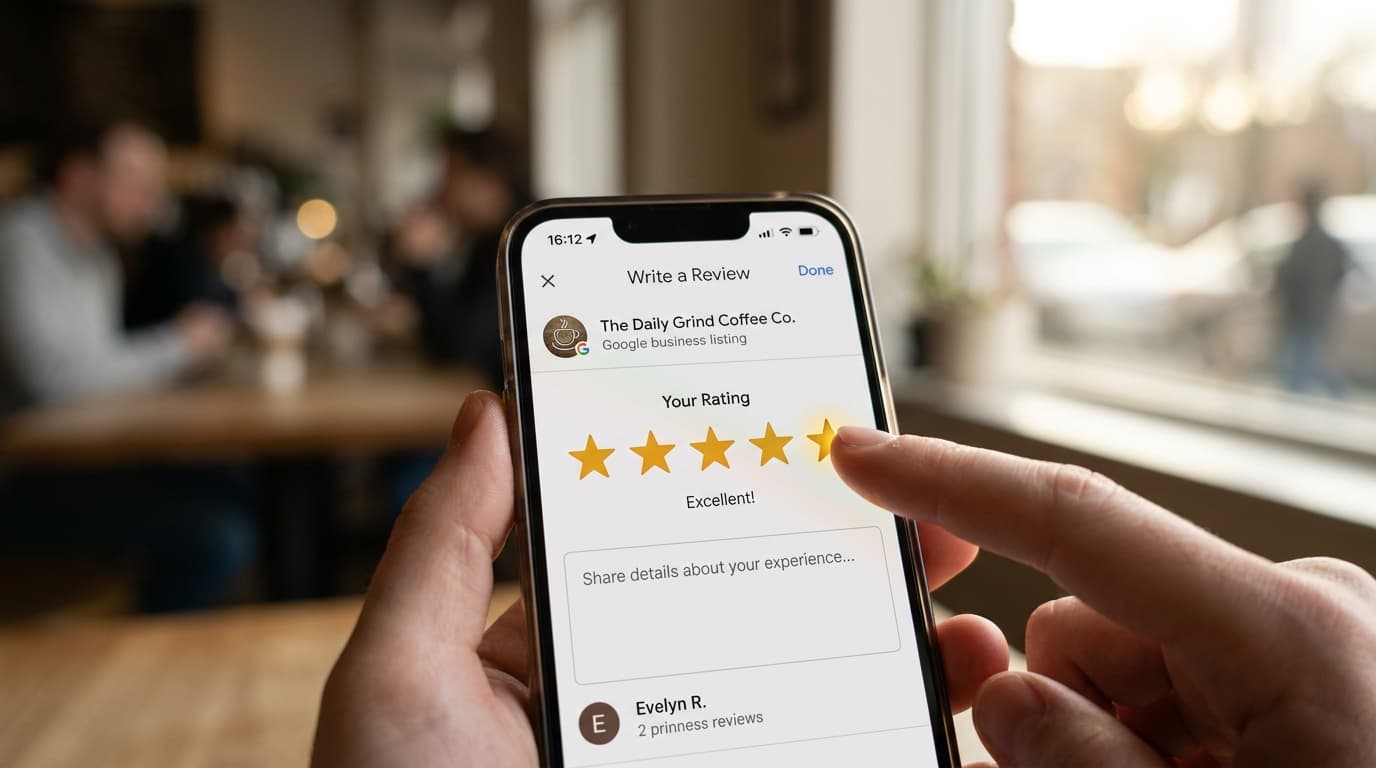
You've poured months of work into opening your business. The space looks great, the team is trained, and the first customers are coming through the door. Then you check your Google Business Profile and see it: zero reviews. Maybe one — left by a family member with a different last name.
This is the cold start problem every new local business faces, and it matters more than most owners realize at launch. In competitive local markets, a business with 4 reviews and a 4.2-star rating loses foot traffic every single day to a competitor with 180 reviews and a 4.5-star rating — even when the product and service are identical. Customers default to the one that looks established.
The good news: the path from 0 to 100 reviews is entirely learnable, and the first year is the most important one you'll ever have for building your online reputation.
Why the First 10 Reviews Are Your Biggest Leverage Point
Google's local algorithm treats new listings differently from established ones. When your profile has fewer than 10 reviews, Google doesn't have enough signal to rank you with confidence — so it hedges by showing you less often, or lower down the results.
Crossing the 10-review threshold triggers a meaningful ranking improvement for most new businesses. It's not a published rule, but it's observable across hundreds of local businesses: the jump from 8 reviews to 12 reviews often moves a listing further up Google Maps than the jump from 40 to 60.
This means your immediate goal when you open is not 100 reviews — it's 10. Focus there first.
The fastest path to your first 10 is through people who already know and like you: your staff's social networks, vendors, loyal regulars from a previous location if you have them, and anyone who attended a soft-opening event. Ask these people directly and specifically — not "leave us a review if you get a chance" but "would you mind leaving a Google review right now? It takes 90 seconds and it would help us a lot in the first few weeks."
Direct requests to people who genuinely support you will convert. Generic requests to strangers will not.
Month 1: Lay the Foundation Before You Optimize
Your first 30 days should be focused on two things: claiming and completing your Google Business Profile, and establishing a physical review-request touchpoint in your space.
Complete your GBP fully. A profile with missing hours, no photos, and a sparse description tells Google you don't care about your listing — and it shows customers the same thing. Add at minimum: business name, address, phone, accurate hours, a cover photo, 10+ interior and product photos, a business description that includes your category and location naturally, and your website link.
Set up a QR code linked to your Google review page. Place it at every natural exit and waiting point: counter, checkout, table, waiting area. The goal is to eliminate friction entirely — customers shouldn't need to search for you, type your name, or navigate Google. One scan should open the review form directly.
This physical QR code touchpoint is the single highest-ROI action you can take in month one. Unlike email or SMS follow-ups, it reaches customers at peak satisfaction — right after they've just had a good experience.
Create a simple internal system. Decide who on your team is responsible for mentioning the review QR code each shift, and make it part of your standard service flow. "Thanks for coming in — we have a QR code by the door if you'd like to share your experience" is enough. Consistency matters more than the perfect script.
Months 2–6: Build Consistency Over Volume
The most common mistake new businesses make is a burst of review requests at launch followed by silence. Reviews stop coming in. The rating stagnates. The Google algorithm notices the inactivity and deprioritizes the listing.
Google actively rewards consistent review collection. A business receiving 5 reviews per week over 3 months outperforms a business that received 60 reviews in one week and then nothing. This is called review velocity, and it's one of the most underappreciated factors in local SEO.
To maintain consistency through months 2–6:
Make the review request part of every service interaction, not a campaign. Campaigns have start and end dates. A QR code on the counter runs 24/7 with no mental overhead.
Track your weekly review count. You don't need a dashboard — a simple note in your phone works. Watching the number go from 1/week to 3/week to 7/week is genuinely motivating, and it helps you spot when something is working.
Respond to every review, including short ones. Responding to reviews signals to Google that your listing is active and managed. More importantly, a thoughtful response to a 4-star review shows prospective customers that you pay attention — which often converts them more effectively than five 5-star reviews with no responses.
Take negative reviews seriously, not personally. If you receive a critical review in your first few months, treat it as free market research. Respond calmly, acknowledge the experience, and explain what you've changed or would do differently. Potential customers read negative reviews more carefully than positive ones — a professional response turns a liability into a trust signal.
Months 7–12: Accelerate with Gamification
By month six, if you've maintained the basics, you likely have somewhere between 30 and 60 reviews. That's a solid foundation, and you're now ready to accelerate.
This is where gamification changes the math. A standard QR code asking customers to leave a review converts at somewhere between 3% and 8% of people who scan it. A QR code that launches an interactive fortune wheel — where spinning the wheel requires leaving a Google review first — converts at 15% to 25% and above in well-run implementations.
The difference is psychological. An ask creates an obligation. A game creates an opportunity. Customers who play feel like they won something; the review is the price of entry, not a favor they're doing you.
Gamified review collection systems work especially well in months 7–12 because you already have some social proof to show and your team is comfortable with the service flow. You're not asking customers to trust an unknown business — you're giving regulars a fun reason to do something they already intended to do.
The compounding effect is significant: a business collecting 20–30 reviews per month doesn't just outrank competitors in local search, it builds a self-reinforcing reputation cycle. More reviews bring more visibility, which brings more customers, who leave more reviews.
What Not to Do
Don't buy reviews. Google has become increasingly aggressive at detecting and removing purchased reviews, and the penalties for review manipulation can include suspension of your Google Business Profile — which effectively deletes your local presence. It's not worth it.
Don't offer direct incentives for reviews. "Leave us a review and get 10% off your next visit" violates Google's terms of service. Fortune wheel mechanics work legally because the reward comes from playing the game, not from leaving a specific type of review — but offering discounts directly in exchange for 5-star reviews is prohibited.
Don't ask employees to leave reviews. Google detects device and IP patterns. Multiple reviews from the same WiFi network or accounts with no prior review history get flagged.
Don't gate reviews by asking for only positive ones. Sending customers to a feedback form and only forwarding the happy responses to Google is review gating, which Google explicitly prohibits.
Don't neglect your profile after a strong month. Consistency across the full 12 months matters more than a single strong sprint.
The 12-Month Benchmark
A realistic but ambitious target for a well-run new local business:
- End of month 1: 15–25 reviews
- End of month 3: 40–60 reviews
- End of month 6: 80–120 reviews
- End of month 12: 150–250+ reviews
Businesses that hit these benchmarks typically rank on the first page of Google Maps results in their local area within 6–9 months of opening — without paid advertising.
The businesses that fall short are almost always the ones that had a strong launch month and then let review collection become an afterthought.
If you're launching a new restaurant, café, retail store, or local service business, Ludofy gives you the gamified QR code system you need to collect Google reviews consistently from day one. Customers spin the fortune wheel, you receive authentic reviews — and you build the local ranking that makes year two dramatically easier than year one. A strong start in your first year sets the foundation for everything that follows.