If you run an independent optical store, you already know the feeling: your customers trust you, return year after year, and leave your shop satisfied — but almost none of them leave a Google review. Meanwhile, the chain optician that opened across the street six months ago already has 200 reviews and consistently appears first when someone searches locally. They are not necessarily better. They just figured out the system.
This guide explains the review gap that most opticians face and gives you a practical, repeatable way to close it — without adding anything burdensome to your daily workflow.
Why Google Reviews Matter More Than Ever for Optical Stores
When someone moves to a new area, gets their first prescription, or decides to switch opticians, their first move is to search Google. They type "optician near me" or "optician [town name]" and make their choice based almost entirely on what they see in the next few seconds.
Google's Local Pack — the map-based results at the top of local searches — captures over 60% of all clicks. Businesses that appear in that top three earn dramatically more foot traffic than those further down. And the primary factor that determines who makes the cut? Review count and rating, weighted heavily by how recent those reviews are.
An independent optician with 150 reviews at 4.7 stars will consistently outrank a competitor with a 20-year history but only 35 reviews. In a trust-based profession where patients are making decisions about their eyesight and spending several hundred pounds on frames and lenses, social proof carries the same weight as a personal recommendation — sometimes more, because it reaches people before they even step through your door.
The Optician's Review Gap: Loyal Customers, Silent Advocates
So why don't satisfied customers leave reviews on their own? Three structural factors work against optical stores in ways that do not apply to restaurants or coffee shops.
Visit frequency is low. Patients come in once or twice a year, sometimes less. Unlike a great dining experience — where the urge to share is immediate and social — a visit to the optician fades from memory quickly once life moves on. By the time someone thinks about leaving a review, the moment has passed.
The experience lacks an obvious emotional peak. Reviews are triggered by strong emotion: genuine delight, unexpected gratitude, or frustration. A smooth, professional appointment is satisfying but rarely produces the "I have to tell people about this" response on its own. Without a prompt at the right moment, the opportunity disappears.
Nobody asks. The simplest explanation is often the correct one. Most opticians do not have a structured system for requesting reviews. Customers do not offer them unprompted, and without a consistent process, the habit never forms.
The Three Best Moments to Ask for a Review
Timing your request is as important as making it. Ask at the wrong moment and you feel intrusive. Ask at the right moment and most customers are happy to help.
When the customer collects their glasses. This is the golden window. Your patient tries on their new frames, looks in the mirror, and sees clearly for the first time in months. The emotional state in that moment — relief, pleasure, sometimes genuine gratitude — is at its highest. This is precisely when a review request converts best, and every minute after that the emotion fades.
After an unexpected act of service. You repaired a broken hinge in five minutes without an appointment. You tracked down an out-of-stock frame in their exact size. You spent extra time helping a self-conscious customer find something they actually felt confident wearing. Small acts of excellence, when acknowledged by the customer, are powerful triggers — but only if you activate them explicitly.
After a thorough eye test. New patients who receive a careful, reassuring eye examination leave with a strong first impression and a heightened sense of trust. That trust, built during the consultation, is the ideal foundation for a review request.
When equipping a child for the first time. Parents who see their child's face light up when they can see clearly for the first time are often in a particularly warm emotional state. That moment of parental gratitude is a natural review trigger.
QR Codes and Gamification: Removing the Friction Completely
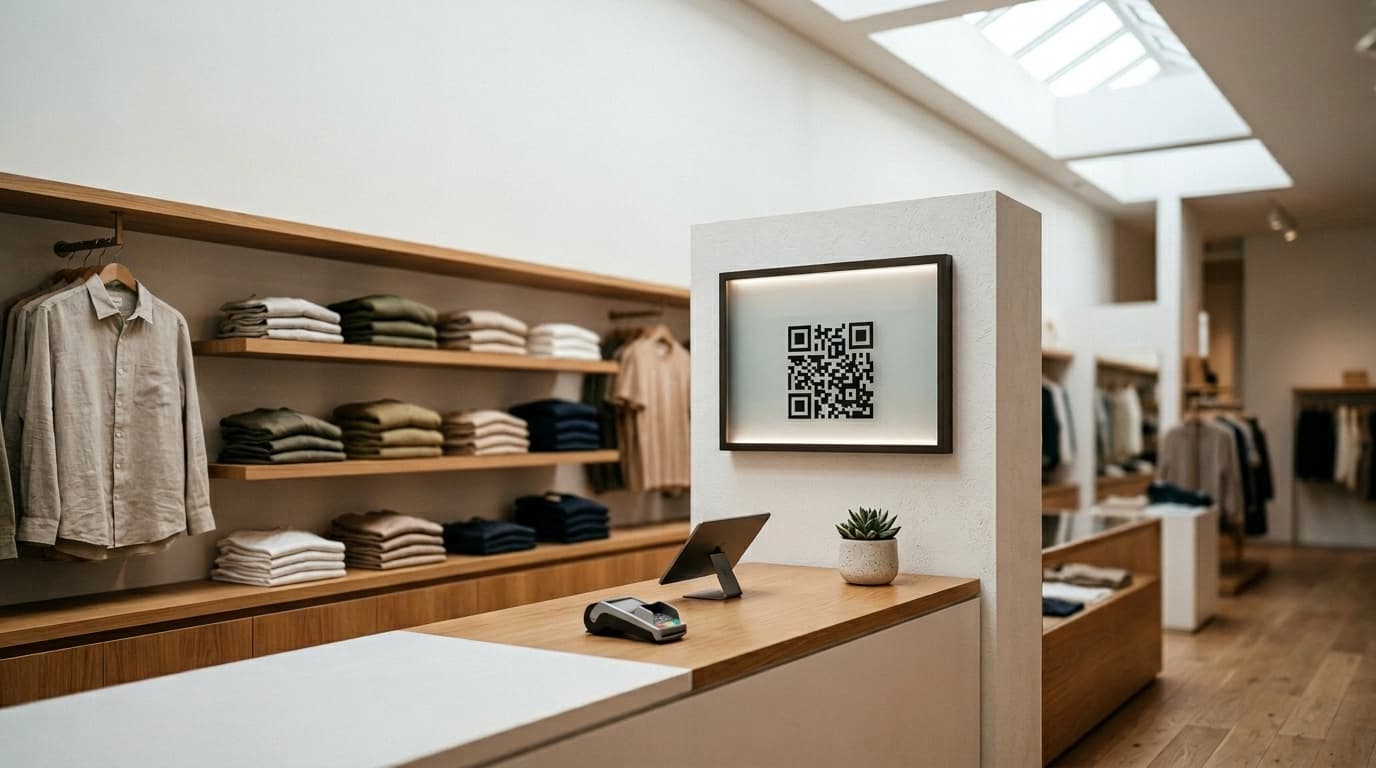
The gap between wanting to leave a review and actually doing it is surprisingly wide. Most customers need to be taken most of the way there. QR codes eliminate almost all of the practical friction: one scan takes them directly to your Google review form, with no searching, no navigating, no typing the name of your business.
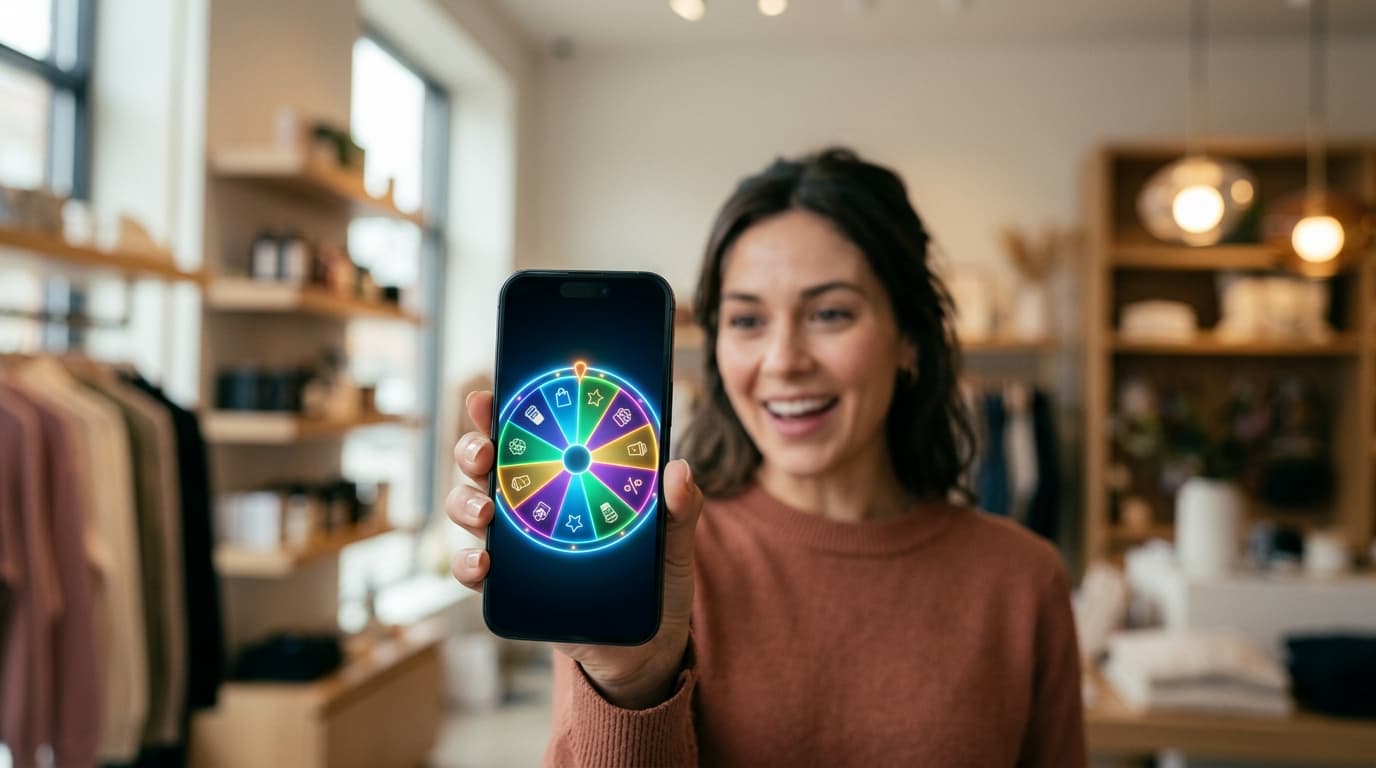
Gamification closes the remaining gap by adding a reward and an element of fun. The mechanism is straightforward: the customer scans a QR code, completes a Google review, and then spins a digital fortune wheel to win a prize. That prize might be a discount on their next purchase, a free glasses case, a promotion on sunglasses, or a voucher toward contact lenses.
The critical detail: the prize only unlocks after the review is submitted. This ensures completion happens before redemption, with no ambiguity.
Why this works especially well for opticians:
The prize drives return visits. A 10–15% discount on a future purchase brings the customer back to you rather than to a competitor when they next need glasses or lenses. The review mechanism and the loyalty mechanism work together, reinforcing each other.
The game creates a memorable moment. Optical store visits tend to be functional and serious. A playful spin-the-wheel moment cuts through that atmosphere. Customers remember it, and they sometimes mention it to friends — which is its own form of word-of-mouth.
Conversion rates are dramatically higher. A verbal request to "please leave us a Google review" converts at roughly 3–5% of customers who receive it. A QR code with a fortune wheel consistently converts at 30–50% of customers who engage with it. That difference compounds week over week.
Where to Place Your QR Codes in the Store
Placement determines whether your review system gets used or goes unnoticed. The goal is to put the QR code in the customer's field of view at exactly the moments of highest emotional engagement.
The collection counter. The single most effective location. Your QR code should be clearly visible right where patients try on their new glasses — a small counter card or branded stand works perfectly.
The checkout desk. A secondary placement that catches customers who move quickly through the store. An A5 card or small standee alongside the card machine is sufficient.
The waiting area. Patients who wait while their lenses are prepared have time and are in a receptive, expectant mood. A display with a QR code and a brief explanation converts well here.
Inside the carrier bag. A small card or sticker placed in the bag reminds customers to leave a review once they are home and wearing their new glasses for the first time — another high-satisfaction moment that can be captured even if the in-store opportunity was missed.
The window. For prospects who are standing outside and checking reviews before deciding whether to come in, a QR code visible through the glass is an unexpected but effective touch.
Consistency Is What Separates Good Stores from Great Ones
The most common mistake opticians make is treating Google reviews as a campaign rather than a system. A burst of 40 reviews in a single month followed by silence is actually worse than five reviews every week for a year, because Google's algorithm weights recency heavily. Fresh reviews signal consistent quality. A steady stream also protects your rating against the occasional dissatisfied patient — one three-star review has far less impact when it lands among a continuous flow of five-star ones.
The fix is simple: make the review request a standard part of the glasses collection process, exactly like explaining care instructions or warranty terms. When it becomes a protocol step rather than a personal favour, it happens consistently.
Train your team to frame the fortune wheel as a benefit they are offering, not a favour they are asking. "We have a lucky wheel for customers who leave us a review — would you like to give it a spin?" is very different in tone from "could you please leave us a review?" The response rate reflects that difference immediately.
Ludofy Makes the System Turnkey
Ludofy is built for exactly this kind of local business. You set up your fortune wheel, customise the prizes to match what your customers value, print your QR code, and the system handles everything else — routing customers from the QR scan to your Google review form, then delivering the prize automatically once the review is confirmed.
Optical stores using Ludofy typically see their Google review count grow four to five times faster than before. And because reviews compound, the gap between you and your nearest competitor widens every single week.
Your appointment book fills when new patients find you first. That starts with appearing at the top of Google. And that starts with a system that earns reviews consistently, not occasionally.