In almost every other industry, a customer decides in minutes. In real estate, the decision takes weeks — and it begins long before anyone picks up the phone.
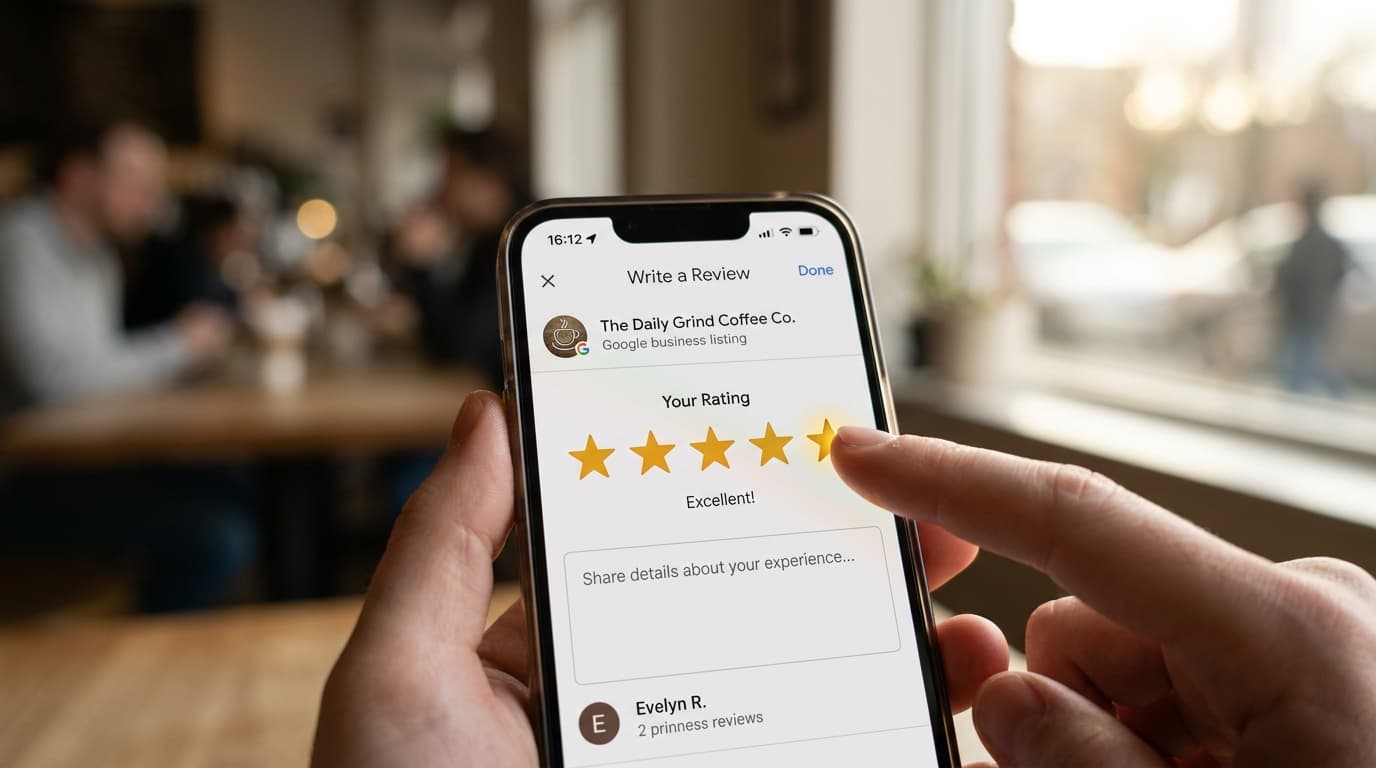
Before a buyer chooses an agency, before a seller invites an agent to value their property, they search. They compare. And increasingly, the first filter they apply isn't your logo, your number of listings, or your years in business. It's your Google rating, and what the people behind those stars actually said.
This creates both a problem and a structural opportunity for estate agencies that understand how reputation compounds over time.
Why Google Reviews matter more in real estate than almost anywhere else
The transaction size in real estate is enormous — often the single largest financial decision a person makes in their life. The stakes amplify every trust signal. A buyer or seller isn't gambling on whether a café is worth visiting; they're deciding who to trust with their home.
Research on high-consideration purchases consistently shows that people seek more social proof, read reviews more carefully, and weight negative signals more heavily as transaction value increases. In real estate, that means:
- A prospective seller comparing two agencies of similar size will almost always contact the one with more recent, detailed reviews first
- A buyer relocating to a new city with no local knowledge uses Google reviews as a proxy for local reputation — they can't ask friends; the internet has to do
- Agencies with under 10 reviews or a rating below 4.3 are frequently filtered out before any contact is made
The implication is clear: Google reviews aren't a vanity metric in real estate. They are a direct driver of qualified inbound inquiries.
What clients actually look for in real estate reviews
Unlike a restaurant, where most reviews center on food or service speed, real estate reviews are typically detailed and relationship-driven. Potential clients reading your reviews are not just looking for stars — they're scanning for specific patterns.
Communication quality. Did the agent respond quickly? Were they reachable when needed? Did they explain the process clearly? This comes up in the vast majority of positive real estate reviews and is the single quality buyers and sellers fear getting wrong.
Market knowledge. Reviews that mention accurate pricing, local expertise, or genuine insight into the neighborhood carry disproportionate weight with clients who feel uncertain about their own knowledge of the market.
Negotiation outcomes. "Got us £12,000 above asking" or "negotiated a price reduction we didn't think was possible" — these reviews convert readers into inquiries faster than almost anything else. They demonstrate tangible, measurable value.
Process management. Real estate transactions involve solicitors or notaries, banks, surveys, and tight timelines. Reviews that praise an agency for making a stressful process smooth signal reliability and competence to everyone who reads them.
The strategic insight: don't just chase five stars. Identify the moments in your client relationships where you deliver on these four dimensions, and time your review requests to land when those moments are freshest.
The best moments to ask for a Google review
Timing defines everything in real estate review collection. The window of maximum willingness sits immediately after a significant positive milestone — and real estate transactions provide several.
After a successful viewing. A buyer who has just seen a property they genuinely love is at peak emotional engagement. A brief follow-up text or a business card with a QR code handed at the end of the visit captures that energy before it fades.
After an accepted offer. The moment a seller's offer is accepted, or a buyer's offer is confirmed, is a relief event. Gratitude is high, stress momentarily lifts, and the agent who delivered that news is seen in the most positive light of the entire relationship.
At signing. The actual transaction completion — whether at the solicitor's office, the notary, or back at the agency — is the emotional peak of the entire process. This is the most productive moment to ask, or better, to have a QR code present in the closing folder or on the signing table.
After key handover. A brief follow-up message a few days after the buyer receives the keys, when the experience is still fresh and positive emotions are at their height, converts reliably. The client is settled, relieved, and thinking of you with genuine warmth.
QR codes: the infrastructure for distributed review collection
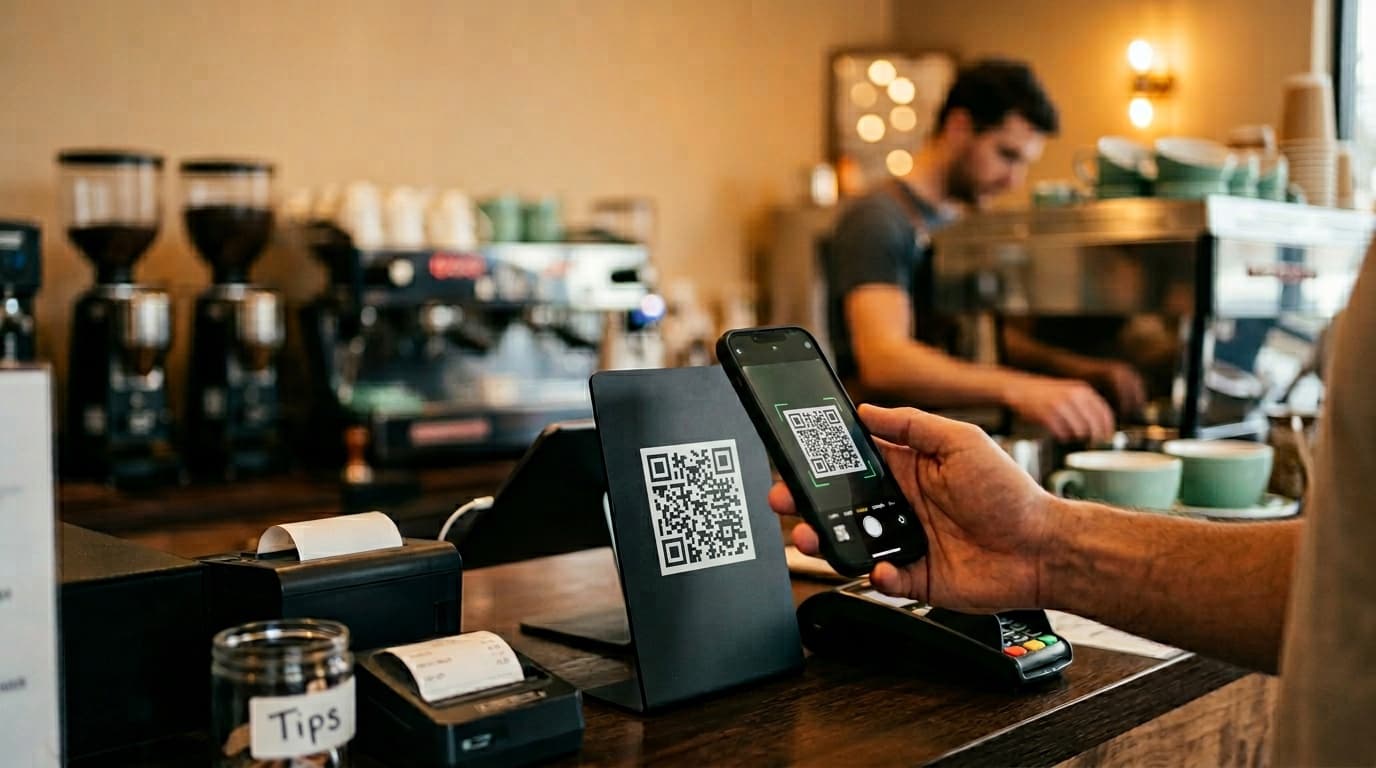
The challenge in real estate is that review collection needs to happen across multiple locations and touchpoints — at the agency, at property viewings, at the notary's office, or via remote follow-up. QR codes solve this distribution problem.
A QR code printed on each agent's business card gives every client a low-friction, persistent path to your review page. The client scans whenever it suits them, rather than searching for the agency name and navigating manually to the reviews section.
At the agency front desk, a small display with a QR code captures walk-ins and clients who come in to collect or drop off documents. Some agencies include the QR code in their closing folder or buyer welcome pack — it becomes part of standard transaction documentation, not an afterthought.
The mechanic that dramatically increases participation: when the review request is bundled with a gamified experience — a fortune wheel spin that can yield a small reward after the review is submitted — clients who are satisfied but might not have taken the initiative on their own are far more likely to engage. The reward doesn't need to be large: a coffee voucher, a gift card, or even just the novelty of the spin is enough to tip the balance from good intention to completed action.
How many reviews do you need to outrank local competitors?
The bar varies significantly by market. In a smaller town, 40–70 detailed, recent reviews may be sufficient to rank at or near the top of Google Maps results for "estate agent [town]." In a major city, the bar is substantially higher — agencies ranking well in competitive neighborhoods often show 100–300 reviews with consistent recent activity.
The more decisive variable, however, is recency. Google's local ranking algorithm weights fresh reviews heavily. An agency that collected 80 reviews over five years and stopped is frequently outranked by a competitor with 40 reviews collected consistently over the past twelve months.
This is why infrastructure matters as much as effort. A one-off push to collect reviews provides a temporary lift. A systematic process — QR codes deployed at every touchpoint, team briefed, collection moments defined — produces a consistent flow of new reviews that compounds into a durable ranking advantage over time.
Making review collection a team behavior, not an individual one
Unlike a café or retail shop where review collection happens at a single physical moment, real estate review collection is distributed across individual agents, different locations, and extended timelines. The agencies that excel treat it as a team behavior, not a personal initiative.
Brief every agent on the two or three highest-leverage moments in their specific workflow. Give each agent their own business card with an integrated QR code — participation increases meaningfully when the request comes from the specific person who did the work rather than a generic agency follow-up email.
Track results weekly. A simple dashboard showing new review count, current rating, and participation rate keeps the behavior alive across the team. Agencies that review this data in their weekly team meeting sustain their programs for months; those that set it up and forget it see the behavior fade within weeks.
Ludofy gives estate agencies a complete, branded review collection infrastructure: a customizable fortune wheel, printable QR codes for every agent, and a live dashboard tracking review volume and rating trends. Setup takes under fifteen minutes, and unlike ad hoc verbal asks, the gamified mechanic converts satisfied clients at rates that compound meaningfully over time.
If your agency serves clients through one of the most significant transactions of their lives — and your Google review count doesn't yet reflect that quality of service — the gap isn't in your work. It's in the moment where your work ends and the review request never comes.