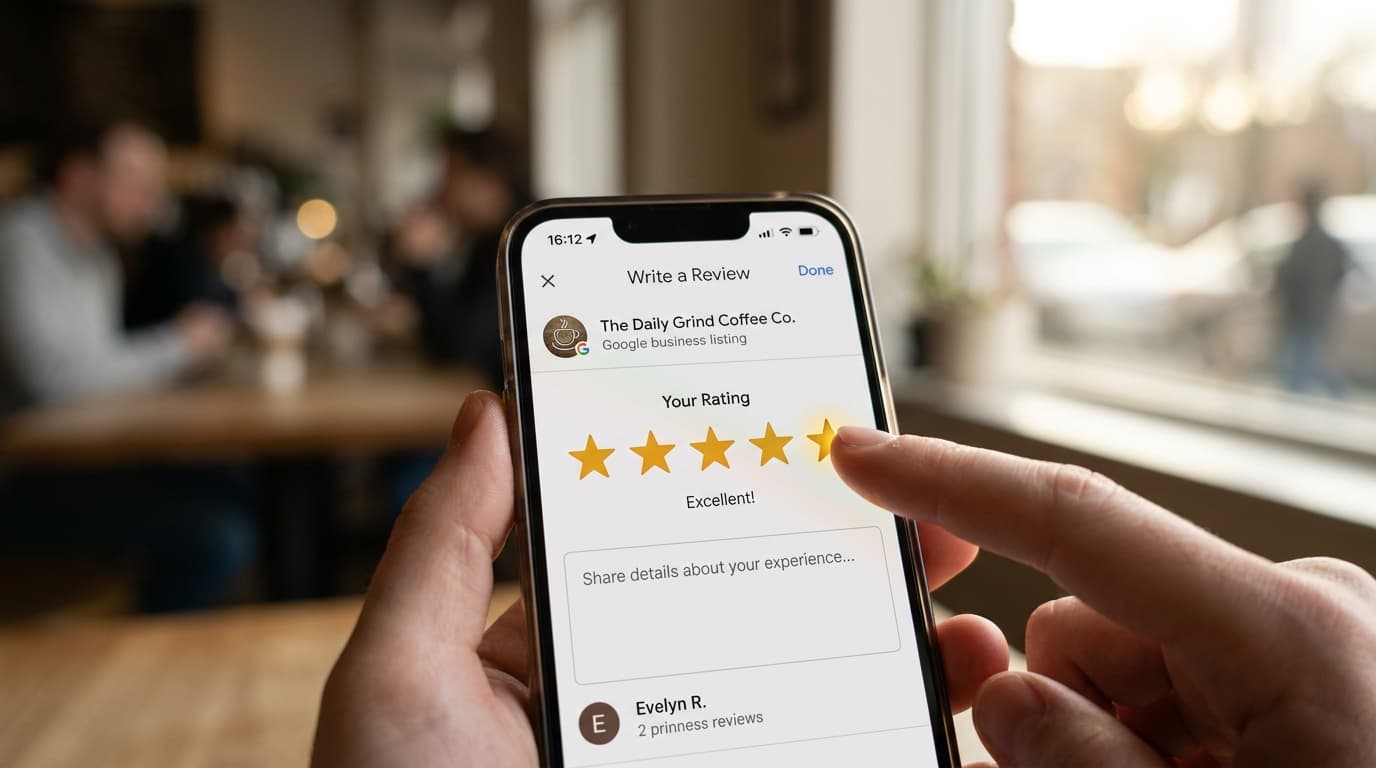
Running an independent shoe store in 2026 is an exercise in resilience. You compete not just with the boutique two streets over, but with same-day delivery platforms, aggressive return policies from online retailers, and algorithms that push branded chains to the top of every search result. In this environment, your Google review score is one of the few levers entirely within your control — and it has an outsized impact on who walks through your door.
This guide covers everything a shoe retailer needs to know about collecting, managing, and leveraging Google reviews to grow foot traffic and outperform the competition.
Why Google Reviews Hit Differently for Shoe Stores
Footwear is a considered purchase. Unlike a coffee or a haircut, buying shoes involves fit-testing, comparison shopping, and real anxiety about whether the pair will hold up — or even fit right once worn at home. Before visiting a store, the majority of potential customers check Google Maps first. That star rating acts as a proxy for trust before they've ever set foot inside.
A store showing 4.7 stars and 200 reviews sends an unambiguous signal: people come here, they're happy, and they come back. A competitor sitting at 3.9 stars with 15 reviews — no matter how skilled the staff — struggles to overcome that first impression.
What shoe store customers specifically look for in reviews:
- Staff knowledge and fitting expertise
- Range of sizes, including hard-to-find sizes
- Whether the store honors exchanges or returns graciously
- Atmosphere and ease of browsing
- Value for money relative to online prices
These are exactly the qualities your best regulars already notice during their visit. You just need to give them a reason to say it in writing.
The Three Golden Moments to Ask for a Review
In a shoe store, timing is everything. Ask too early — while the customer is still trying things on — and it feels presumptuous. Send an email three days after the purchase and the moment of joy has already faded. There are three windows where a review request converts reliably:
At the fitting success moment. When a customer finds the perfect pair — that visible satisfaction as they walk a few steps, look in the floor mirror, and say "yes, I'll take these" — they are at peak emotional engagement. A natural, warm comment from the staff member fitting them works here: "If you enjoy wearing them, we'd love it if you left us a quick Google review. It makes a real difference for small shops like ours."
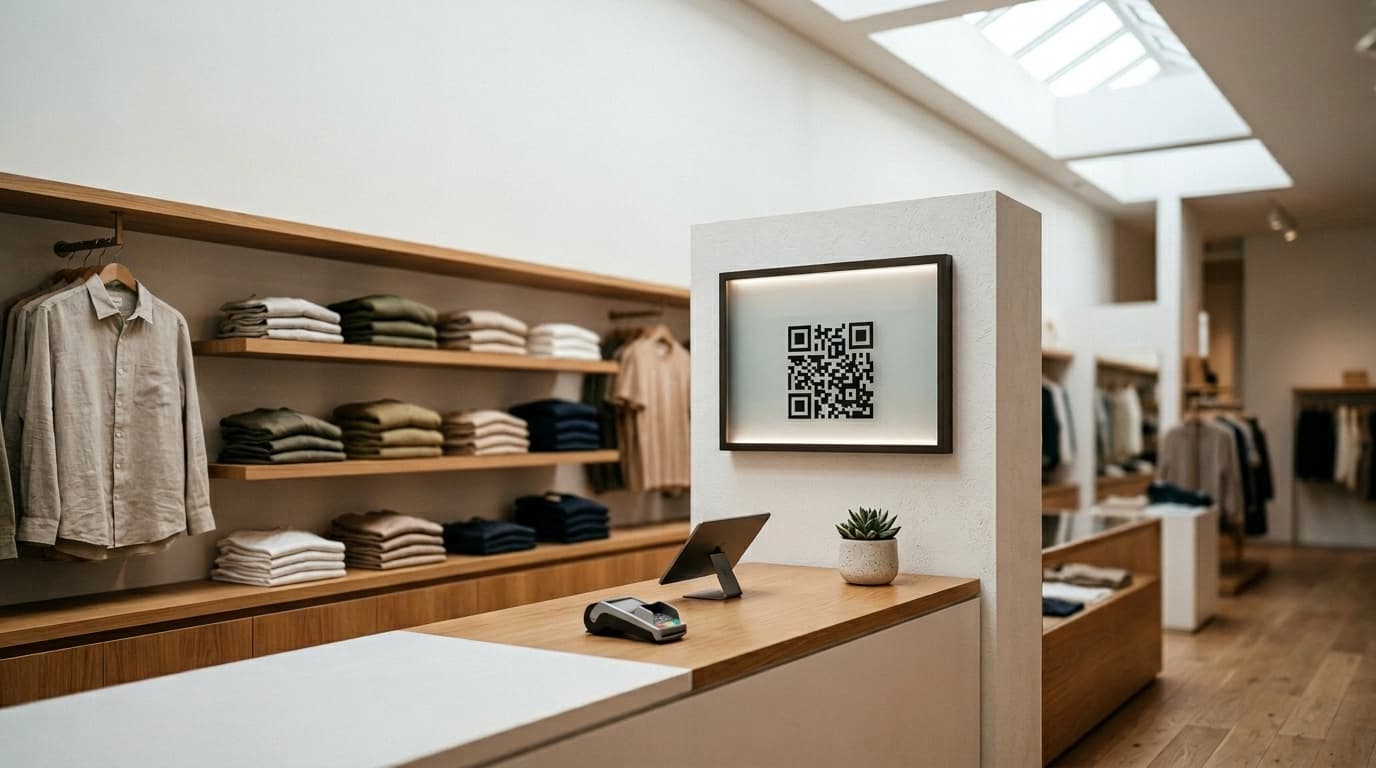
At the checkout counter. This is the most reliable touchpoint. The transaction is complete, the customer is holding their purchase, and their phone is already in hand from contactless payment. A QR code stand on the counter, printed on the receipt, or on a small card tucked into the bag creates a frictionless path from that satisfied moment to a published review.
Through a follow-up message. If you collect contact details through a loyalty program or in-store sign-up, a WhatsApp or SMS message sent 48 hours after purchase — timed to when the customer has likely worn the shoes for the first time — can produce remarkably honest, detailed reviews. Keep the message brief and personal, never automated-sounding.
How QR Codes Work in a Shoe Store Context
A QR code linking directly to your Google review page eliminates the biggest obstacle to review collection: the effort of navigating to the right place. Most customers genuinely intend to leave a review and simply forget, or don't know how to find the listing on their phone.
Effective placements for shoe stores:
- Counter QR stand positioned next to the card reader, visible while the customer pays
- Printed on the bag or box so the customer sees it again when they get home
- Inside the shoebox on a small card — catches the customer at the moment of first wear
- On a hook in the fitting area alongside your sizing guide or care instructions
The highest-converting placement is consistently the checkout counter. The customer is stationary, their phone is already unlocked, and the emotional high of finding a great pair hasn't worn off.
Gamification: Why a Fortune Wheel Outperforms a Plain Request
A static QR code asking for a review converts — but at a modest rate. The ask is one-directional: you're requesting effort from the customer without offering anything in return.
Gamification shifts the dynamic. When a QR code leads to a spinning fortune wheel — where the customer might win a discount on their next purchase, a pair of premium insoles, a shoe care product, or a free shoelace upgrade — the review becomes the entry ticket to something entertaining. Participation rates climb dramatically.
This approach works especially well for shoe stores because:
- The prizes are a natural fit (accessories, care products, loyalty credit, seasonal vouchers)
- Customers who win a prize are more likely to return and redeem it, creating a second purchase opportunity
- The experience is memorable and creates a shareable moment
One important compliance point: Google's policies prohibit incentivizing positive reviews specifically. The gamification model handles this cleanly — the prize is given for leaving a review, not for what the review says. An honest three-star review earns the same spin as a five-star one, which keeps your review profile authentic and your practices within Google's guidelines.
Responding to Reviews: The Footwear Retailer's Approach
How you respond to reviews is as important as the reviews themselves. Prospective customers read your responses as carefully as they read praise — perhaps more so.
For positive reviews: Avoid boilerplate copy-pasted responses. Reference something the customer specifically mentioned — the brand they bought, the staff member they praised, the occasion they're wearing the shoes for. This signals to future readers that you genuinely engage with your customers.
For negative reviews about fit or comfort: This is where shoe stores can genuinely distinguish themselves. A thoughtful public response that acknowledges the frustration, offers an exchange or a complimentary fitting session, and explains your return policy positions your store as one that stands behind its product. Future customers reading that exchange often come away more confident, not less.
For reviews mentioning out-of-stock sizes: Use your public reply to note that you can order specific sizes, take reservations for incoming stock, or arrange special orders. What reads as a complaint is actually a sales opportunity waiting to be captured.
Building Review Momentum Month After Month
The difference between a shoe store with 20 reviews and one with 200 isn't the quality of shoes sold — it's the consistency of asking. Build a simple rhythm into daily operations:
- Train every staff member to mention the QR code at checkout, naturally, not as a script
- Set a monthly review target your team can actually hit (15 new reviews per month compounds into 180 in a year)
- Celebrate milestones with your team — 50, 100, 200 reviews — so the effort feels worthwhile
Consistent monthly reviews also signal to Google's local ranking algorithm that your business is active and engaged, which factors into where you appear when potential customers search nearby.
Putting It All Together with Ludofy
Ludofy gives shoe stores a QR-powered fortune wheel that automates the mechanics of this entire process. The customer scans, spins, wins their prize, and is guided to leave a Google review — all in under 30 seconds. The platform tracks prizes distributed, monitors your review growth, and gives you a clean dashboard to see your reputation in real time.
For shoe retailers competing in a market that rewards visibility, consistency, and trust, Ludofy turns a great in-store experience into a growing body of social proof. Your next hundred reviews are already in the room — you just need the right moment and the right system to capture them. Start collecting the smart way, one spin at a time.