
If someone searches "vintage clothing near me" tonight, your boutique needs to appear — and appear with enough reviews to look credible. Second-hand retail runs on discovery, but discovery requires visibility, and visibility on Google means reviews.
This guide breaks down exactly how thrift stores and vintage boutiques can build a consistent Google review strategy, from the first QR code you place at the register to the gamified moments that turn one-time treasure hunters into regulars.
Why Google Reviews Matter More for Vintage and Second-Hand Shops
For most retail categories, customers already know what they want before they walk in. Vintage and thrift shopping is different — it is inherently a browsing experience driven by curiosity rather than a planned purchase. That means your window for capturing intent is narrow, and Google reviews are what bridge the gap between a great in-store experience and a new customer finding you online.
A 4.6-star rating with 80 reviews signals three things simultaneously: the shop is legitimate, the stock is worth the trip, and other people found it worth noting. For a category where shoppers are already taking a risk on undiscovered pieces, that social proof is invaluable.
Photo reviews are particularly powerful in this context. A customer posting a photo of their €12 vintage Levi's jacket or a 1980s silk blouse does more for your visibility than any paid ad. Google indexes those images, and they appear in search results for anyone looking for vintage clothing in your area.
The Specific Challenges of Review Collection in Thrift Retail
Three things make review collection harder for second-hand shops than for cafes or restaurants.
Long browse times without a transaction. A customer who spends 45 minutes in your store but leaves empty-handed had a real experience — but no receipt, no natural conversation-ender, and no obvious moment to ask for a review.
The "find" feeling is personal and fast-fading. When someone discovers a rare vinyl record or a perfect 90s windbreaker, the joy is immediate. But that emotion fades quickly, and the link between "I had a great time" and "I should leave a Google review" needs to be made explicit while the feeling is still fresh.
Irregular visit patterns from loyal regulars. Many of your best customers return weekly. They have never reviewed you because they assume you already know they love the place. Building a systematic ask — not just a one-time request — is the only way to capture these people.
When and How to Ask for a Review
The best moment to request a review is at the peak of emotional engagement: when a customer says "I can't believe I found this," when they are at the counter with an armful of pieces, or as they are counting out payment for a great find.
Train your staff with a simple, non-awkward script:
"So glad you found something you love! If you have a moment, a Google review would mean the world to us — it's really how independent shops like ours stay discoverable."
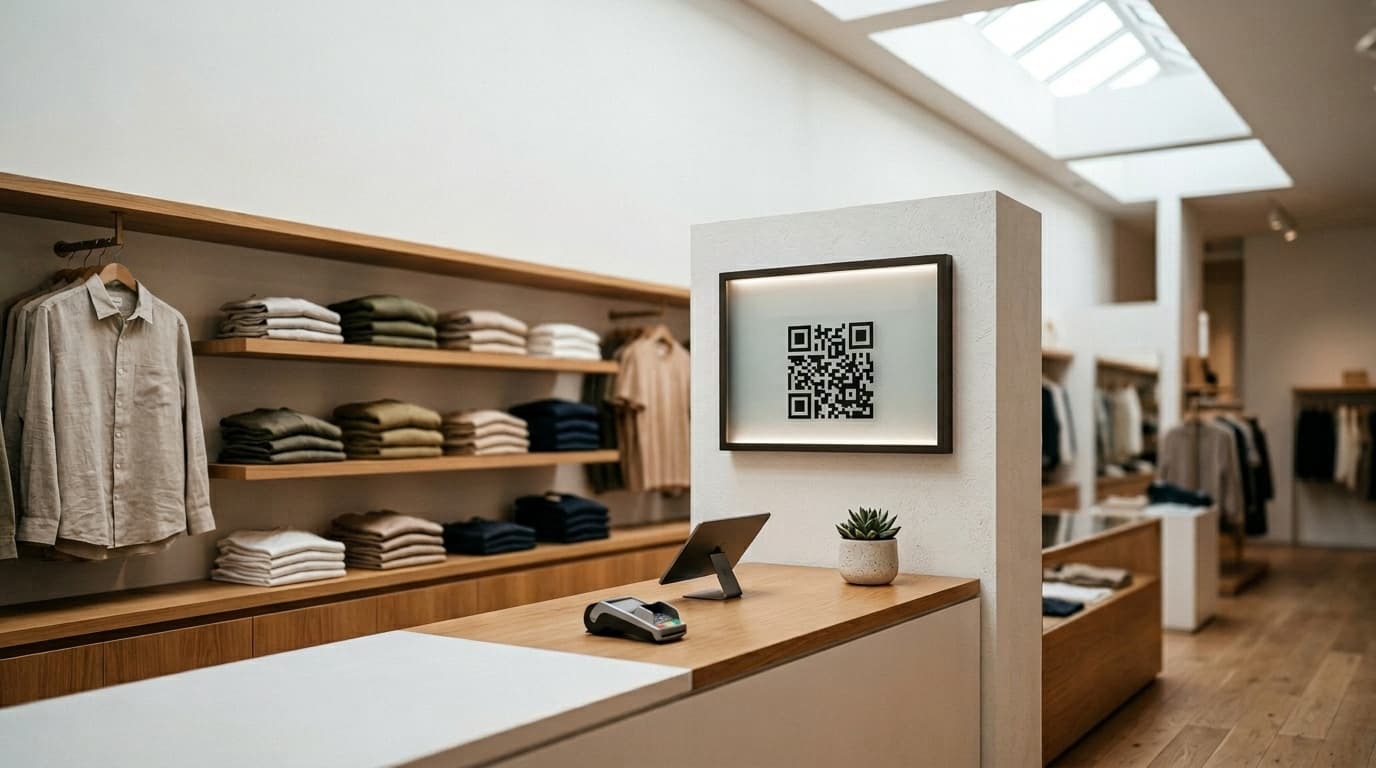
Then hand them a small card with your review QR code, or point to the QR display at the register.
The QR code placement matters. In a vintage boutique, three placements consistently outperform others:
- At the register: eye-level and unavoidable during checkout
- In shopping bags: a small card tucked inside, so they see it when they get home and unpack their finds
- Near your most-photographed displays: customers already have their phones out to capture an outfit on a rack — that is the moment to surface a review prompt
Gamification: The Vintage Shopping Advantage
One of the most effective tools for vintage boutiques is a digital fortune wheel at checkout. The mechanic is simple: after leaving a Google review (verified via QR scan), the customer spins the wheel for a chance to win a discount on their next visit, early access to new stock drops, or a small branded gift.
This works exceptionally well in vintage and thrift contexts for two reasons. First, your customers are already primed for the thrill of chance — the entire shopping experience is a form of gamble, and the fortune wheel extends that feeling into the review moment. Second, the prize of "early access to new arrivals" is genuinely appealing to your core audience and costs you nothing to offer.
A vintage boutique in Lyon reported tripling their monthly review volume within two months of installing a gamified review station. More importantly, the customers who engaged with the wheel returned an average of 1.4 more times per month than before.
Encouraging Photo Reviews
A written review is valuable. A review with photos is worth four times as much for local SEO purposes.
When you ask for a review, specifically invite the photo: "If you snapped a picture of your find today, posting it in the review makes a huge difference — it helps people see what we actually carry."
Install a small mirror near the register with good natural light. Customers who want to try things on will naturally take selfies — a gentle reminder to tag your store or include the photo in a Google review captures that existing behavior without asking for anything extra.
Responding to Reviews: Write Like a Curator, Not a Manager
Your review responses tell potential customers as much as the reviews themselves. In vintage retail, the voice you use matters: warm, knowledgeable, slightly editorial.
For a glowing review: "Finding a 1970s Cardin piece was exactly the kind of discovery we live for — so happy you spotted it before anyone else did. See you on the next drop!"
For a neutral review: thank them specifically for the detail they gave, and address any friction they mentioned without being defensive about your pricing or stock quality.
For a negative review: acknowledge the experience, explain without making excuses, and invite them back. A well-handled negative review often converts a dissatisfied visitor into a loyal regular.
Building Review Consistency Over Time
The most common mistake vintage boutiques make is running a review push for two weeks, collecting 15 reviews, then forgetting about it for six months. Google's local ranking algorithm rewards recency as much as volume. A shop with 12 reviews spread over the last three months will often outrank a shop with 80 reviews all written two years ago.
Aim for one to two new reviews per week as a minimum baseline. That means building the ask into your checkout routine permanently — not as a campaign, but as a habit.
Ludofy automates this consistency. The QR code system tracks review capture rates by day and time, identifies when you are most likely to receive a review (typically Friday afternoons and Saturday mornings for vintage retail), and helps staff build the request naturally into their checkout routine without it ever feeling like a sales pitch.
The Bottom Line
Your vintage boutique is already a destination. The goal now is to make it discoverable — to be the first result for every treasure hunter opening Google Maps in your city. That starts with reviews, and reviews start with a system: the right ask, at the right moment, with a little gamified magic to make the experience memorable and the habit sustainable.
With Ludofy's fortune wheel and QR code system, independent thrift and vintage shops have everything they need to compete with the visibility of larger retailers — one spin at a time.
