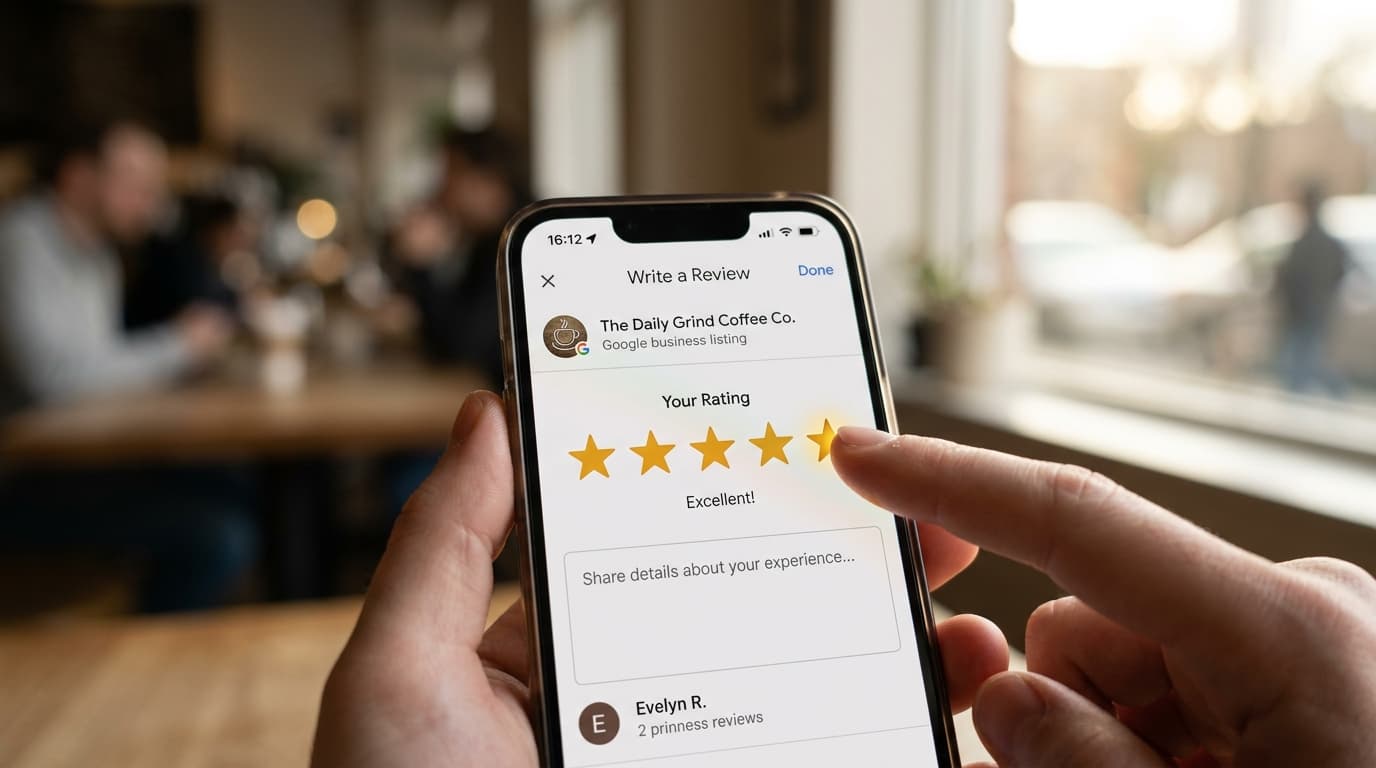
Your customers leave your trampoline park red-cheeked, breathing hard, and buzzing with adrenaline. That post-session state — warm, happy, slightly exhausted — is one of the most review-receptive moments in all of retail. Yet most trampoline park operators let that window close without ever asking.
This guide is about fixing that. We'll walk through the specific dynamics of indoor adventure venues, the moments that trigger reviews, and the concrete tactics — from QR code placement to gamified incentives — that turn a jumping session into a five-star Google review.
Why Google Reviews Matter More for Trampoline Parks Than You Think
Families searching for weekend activities rarely scroll past the first three results in Google Maps. A park with 200 reviews and a 4.6 rating will consistently beat a competitor with better facilities but only 40 reviews. Google's local ranking algorithm treats review count, recency, and rating as direct signals of relevance and trustworthiness.
For trampoline parks, this matters even more because:
- Purchase decisions are spontaneous and local. Parents search "trampoline park near me" on a Friday evening. The park that shows up first with strong social proof wins the weekend booking.
- Groups amplify the value of each visit. A birthday party of 12 children means 12 families who could all leave a review. Most operators convert zero of them.
- Competition is growing fast. Indoor entertainment centers, escape rooms, laser tag, and climbing walls are all competing for the same weekend wallet. Reviews differentiate you.
The Golden Window: Catching Customers at the Right Moment
In high-energy venues, timing is everything. The best moment to ask for a review from trampoline park customers is immediately after they've paid and collected their gear — or at the exit point as they leave the jumping area.
This is when:
- The endorphin high is still active
- Children are visibly excited (making parents feel positive and generous)
- The effort of leaving a review feels minimal compared to the joy just experienced
Avoid asking at the front desk during intake — people are distracted, anxious about waiver forms, and thinking about their activity, not how to rate it.
QR Code Placement That Works in a Trampoline Park
QR codes are the most effective touchpoint for trampoline parks, but placement strategy matters enormously in a high-footfall, physically active environment.
The exit corridor: Place a high-visibility QR code panel at the exit of the jump zone, at eye level (adult height). Add a single line of copy: "Had fun? Take 10 seconds to leave us a Google review." This catches customers in the transition moment between activity and street clothes.
The shoe-swap area: Most parks require jumpers to wear grip socks. The bench area where guests change shoes before and after is a natural pause point. A small placard with a QR code here captures the post-session moment while customers are already stationary.
On birthday party tables: If you offer birthday party packages, QR code tent cards on the table convert naturally. Parents sitting down for cake are relaxed, kids are happy, and the emotional peak of the party has already delivered maximum satisfaction.
Receipts and booking confirmations: Add a review link directly in your email confirmation and on printed receipts. Customers who pre-book online and return home often want to share their experience on social media anyway — a review link right there redirects some of that energy to Google.
Gamification: Turning the Review Ask Into Part of the Fun
Trampoline parks already have a gamification mindset baked in. Leaderboards, time-limited passes, challenge courses — this is an environment where spinning a wheel to win a prize feels natural, not gimmicky.
One high-conversion approach is to install a digital fortune wheel at the exit kiosk. After scanning the QR code and leaving a Google review, guests spin the wheel to win a small prize: a free grip sock pair, a 10% discount on their next visit, or a free soft drink upgrade. The key is that the spin happens after the review, not as a condition for it — this keeps you fully compliant with Google's review policies.
This works especially well at birthday party checkouts, where parents are already in a generous, celebratory mood and the prize wheel adds a final moment of excitement for the children watching.
What Makes the Fortune Wheel Work Here
The format mirrors the venue's existing promise: the experience of play, reward, and surprise. Customers don't feel marketed to — they feel like the game never quite ended. Venues that implement this consistently report review collection rates 3–5× higher than static QR code placards alone.
Handling the Reviews That Come Back Negative
Trampoline parks attract a review type that most café owners never see: safety-related feedback. A child who bumped their knee, a queue that felt too long, a staff member who seemed inattentive — these surface in reviews and, if left unanswered, become a deterrent for new families.
Responding to negative reviews in this context requires a specific approach:
- Never get defensive about safety. Acknowledge the concern, express genuine care, and explain what you've done or are doing about it.
- Respond quickly — ideally within 24 hours. A fast response signals that you take feedback seriously.
- Invite them back privately. End your response with a direct contact (email or phone) rather than offering compensation publicly, which can invite manufactured complaints.
Well-handled negative reviews are often more persuasive than clusters of five-stars. They show prospective customers that you're human, responsive, and take your guests' safety seriously.
Getting Reviews From Groups and Corporate Bookings
Groups are the highest-leverage review opportunity in the trampoline park business, and the most systematically ignored.
For birthday parties: send a follow-up email to the booking organizer 48 hours after the party. Keep it short — one sentence of thanks, one sentence about how much it means to your team, a direct review link. Conversion rates on these emails are consistently higher than generic blast campaigns because the recipient has a strong emotional stake in the event.
For corporate team-building bookings: the same logic applies, but the right person to contact is the HR manager or office coordinator who organized the event. A timely, personal follow-up — not a generic newsletter — captures that window before the memory fades.
The Compounding Effect of Review Consistency
One strong month of reviews is good. A sustained programme where you consistently collect 15–20 new reviews per month for a year is transformative. Google's algorithm rewards recency: a park with 100 reviews from the past six months will outrank one with 500 reviews spread over four years.
The operators who win on Google Maps aren't doing anything heroic — they've simply built a system. QR codes in the right places, a post-visit email sequence, and a team trained to make the ask naturally at the right moment.
How Ludofy Helps Trampoline Parks Get More Reviews
Ludofy is a platform built for exactly this kind of business: high-energy, high-footfall venues that generate real customer enthusiasm but struggle to convert it into Google reviews.
With Ludofy, you can deploy a QR code fortune wheel system in under 20 minutes. Customers scan, leave a Google review, and spin for a reward — no app required, no personal data collected, no complex integration needed. The platform tracks your review velocity and flags reviews that need a response.
For trampoline parks, the fortune wheel format is a particularly natural fit. Your customers already came to play. Giving them one final spin as they leave doesn't feel like marketing — it feels like the game never quite ended.
Start your free trial at ludofy.io and have your first QR code live before your next weekend session.