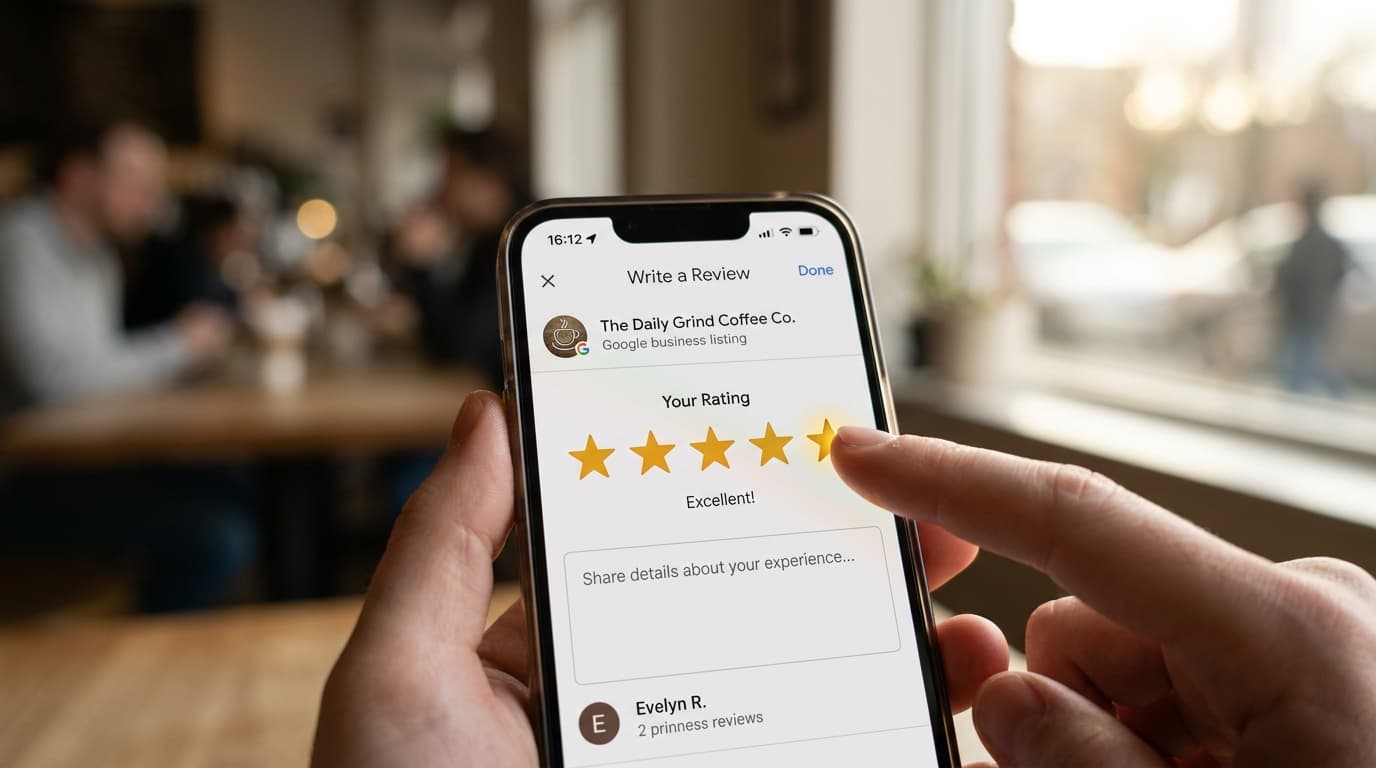
When a pet owner moves to a new city, their cat needs a checkup, or their dog swallows something suspicious at 9pm, the first thing they do is open Google. They type "vet near me," scan the top three results on the map, look at the star ratings, read a few reviews — and book an appointment within the next two minutes.
Your clinical skills, your years of experience, the quality of your equipment: none of it matters if your Google presence doesn't reflect it. A clinic with 8 reviews and a 3.9-star average will lose almost every cold prospect to the competitor across town with 120 reviews and a 4.8.
The good news: most veterinary practices are sitting on a goldmine of satisfied clients who simply never thought to leave a review. With the right system at the right moment, you can change that consistently — without awkward conversations, without incentivizing dishonest ratings, and without any meaningful extra effort from your team.
Why Google Reviews Matter More for Vets Than for Most Businesses
Pet care is a trust-first decision
Choosing a veterinarian isn't like choosing a restaurant or a coffee shop. Pet owners are handing over a family member. The emotional stakes are high, the fear of making the wrong choice is real, and the decision is often made under stress. In that context, a large number of genuine, recent reviews from fellow pet owners carries enormous persuasive weight — far more than a polished website or a Facebook ad.
Studies consistently show that over 80% of consumers read online reviews before choosing a local service provider. For healthcare and veterinary services, that number is even higher. Most people read at least four to six reviews before making a decision, and many filter out any business with fewer than 4 stars regardless of price or location.
Google's algorithm rewards freshness, not just volume
Here's what many clinic owners don't realize: Google doesn't just count total reviews. It weighs how recent they are. A clinic that earned 200 reviews between 2019 and 2022 but has collected nothing since will rank lower in local search results than a competitor with 50 reviews — if those 50 are from the past six months.
This means a one-time push for reviews is never enough. You need a system that generates a steady drip of new reviews week after week, integrated into your normal checkout process so it runs on autopilot.
The Silent Majority Problem
Your happiest clients are almost certainly not leaving reviews. This isn't a failure of loyalty — it's a failure of friction.
Think about what it takes for a satisfied client to leave a Google review without being prompted:
- They have to remember to do it — hours after the visit, at home, when they're no longer thinking about your clinic
- They have to open Google and search for your clinic by name
- They have to find the review section and tap "write a review"
- They have to write something coherent
- They have to submit it
Each of those steps is a drop-off point. Between intention and action, most people give up — not because they don't care, but because the path is too long and there's no trigger to start it.
The spontaneous review rate for most veterinary clinics sits between 1% and 4% of all visits. With a systematic ask at the right moment, that rate can climb to 25–40%.
Timing the Ask: When to Request a Review
The timing of your review request matters as much as the method.
Best moments to ask
After routine wellness visits — vaccinations, annual checkups, prescription refills. The animal is healthy, the owner is calm, and the interaction with your staff has been pleasant. This is your ideal window.
At checkout, during payment — the client is already in front of your reception desk, phone often in hand for the card payment. A QR code stand right at the counter catches them at peak availability with minimal friction.
Post-recovery follow-up — if a pet has had surgery or a serious illness, don't ask at discharge. Instead, send a brief SMS or email three to five days later when the owner can see their pet is recovering well. Emotional relief translates into gratitude, and gratitude produces your most detailed and enthusiastic reviews.
Moments to avoid
Never ask for a review immediately after delivering serious news — a cancer diagnosis, a needed euthanasia conversation, or unexpected complications. In those moments, any review request feels tone-deaf and can generate exactly the negative outcome you were trying to avoid.
The Mechanics: How to Collect Reviews at Scale
The verbal ask — "If you're happy with your visit, we'd love a Google review!" — seems natural but produces terrible results. It puts both the client and your staff in an awkward position, and it generates a conversion rate under 5%.
The system that works combines three elements: a QR code, a gamified incentive, and zero friction.
Here's the setup: place a small, attractive QR code stand at your checkout counter. When clients come to pay, the stand is simply there. Your receptionist can mention it casually — "Scan this to enter our little prize draw!" — or let clients notice it on their own.
When scanned, the QR code opens a mobile-friendly page with a digital fortune wheel. The client spins the wheel and wins a small reward — a discount on their next visit, a free nail trim, a sample bag of pet food, or a similar low-cost but high-perceived-value prize. After spinning, they're invited to leave a Google review to claim their reward.
The entire flow takes under two minutes. There's no app to download, no account to create, no searching required. Your Google review page opens directly from the QR link.
Why Gamification Works: The Psychology Behind It
Turning a review request into a game isn't gimmicky — it's grounded in well-documented behavioral principles.
Reciprocity. When someone gives you something, even just a chance to win something, you feel a natural urge to give something back. A Google review costs the client nothing but takes two minutes. The perceived exchange is fair — and feels positive on both sides.
Variable reward. Not knowing what you'll win is more engaging than a fixed discount. The uncertainty of the wheel outcome creates a small dopamine spike that makes the whole interaction memorable, and clients occasionally mention it to friends or family.
Commitment and consistency. Once a client has scanned the code and engaged with the wheel, they've already invested micro-effort. The psychological pull to complete the action — leaving the review — is much stronger than if they'd received a cold text asking for one.
Clinics using this system typically see a 5x to 10x increase in monthly review volume within the first two months, with no additional effort from their team and no coaching required.
Choosing the Right Rewards for a Vet Clinic
The best rewards aren't necessarily the most expensive — they're the ones with the highest perceived value relative to their actual cost. For veterinary practices, strong options include:
- 10–20% off the next visit — high perceived value, encourages return appointments
- One free nail trim — a service clients always want but rarely book separately
- A sample bag of prescription or premium pet food — near-zero cost if you stock it anyway
- A free heartworm or tick preventive sample — useful, memorable, and brand-reinforcing
The key rule: reward the act of leaving a review, never the act of leaving a five-star review. Tying rewards to ratings violates Google's policies and puts your entire review profile at risk of removal.
Handling Negative Reviews the Right Way
Many clinic owners avoid systematically asking for reviews because they fear triggering negative ones. The opposite is actually true. When you invite all satisfied clients to review, their voices dominate the conversation — and your average rating either stays the same or improves, because you're no longer leaving the floor exclusively to the handful of dissatisfied clients who would have reviewed anyway.
When a negative review does come in, the playbook is simple:
- Respond promptly, calmly, and without defensiveness
- Thank the reviewer for their feedback
- Acknowledge their experience without confirming or denying clinical specifics
- Invite them to contact you directly to resolve the issue
Never include any medical details or identifiable information about the patient's animal in a public response — this is both an ethical and a legal consideration. A well-written, professional response to a negative review often wins more trust from potential clients reading it than a dozen positive reviews alone.
What Consistent Review Collection Looks Like Over 12 Months
For a veterinary clinic doing roughly 20 to 30 consultations per day, a systematic QR-code-plus-gamification approach typically produces:
- Month 1–2: 30–60 new reviews, a significant jump from baseline
- Month 3–6: Consistent weekly additions; Google Maps ranking improvement begins to show for "vet near me" and neighborhood-level searches
- Month 6–12: Established position in the Local Pack; new client inquiries increase noticeably without any additional ad spend
The compounding effect is real. Each review makes your profile more visible, which drives more visits, which creates more opportunities for reviews. The flywheel starts slowly and builds momentum over time.
Veterinary clinics that begin this process today are building a local search advantage that competitors without a systematic approach won't be able to close for years. Every week without a review collection system is a week of visibility left on the table.
Ludofy gives veterinary clinics a turnkey version of this system — QR code, digital fortune wheel, direct Google integration — that's live in under an hour with no technical setup required. If your clinic isn't collecting reviews systematically today, that's the fastest fix available for your local growth.