In the wellness industry, trust is everything. Before a new client steps onto your mat for the first time, they've already formed an opinion about your studio — based almost entirely on what strangers have written about you online.
The stakes are high: yoga and pilates clients aren't just buying a fitness class. They're choosing a sanctuary. A community. A teacher they'll trust with their body and sometimes their mental health. No paid ad can replace the authentic voice of a satisfied member saying "this studio changed my life."
Google reviews are the modern equivalent of a neighbor recommending their favourite yoga class. According to BrightLocal, 93% of consumers say online reviews influence their purchasing decisions. For wellness businesses, that number climbs even higher — people are especially cautious about who they entrust with their wellbeing.
From a visibility standpoint, studios with more reviews and a higher rating rank higher in Google Maps searches for terms like "yoga studio near me" or "pilates class [your city]". In practice, this means the difference between being discovered by a potential client at 7am on a Tuesday when they decide to start a wellness routine — or being invisible while your competitor gets the sign-up.
What Clients Actually Look For in Yoga and Pilates Reviews
Before asking for reviews, it helps to understand what future clients want to read. Wellness seekers pay close attention to:
Instructor quality and communication style: Is the teacher patient with beginners? Can they adapt classes for injuries or physical limitations? Do they explain the why behind each posture?
Atmosphere and cleanliness: Is the space calm, clean, and welcoming? Do members feel comfortable in their bodies regardless of experience level?
Class variety and scheduling flexibility: Do the timetables work for working adults with demanding schedules?
Community feel: Do members feel like they belong to something beyond a transactional fitness membership?
Value for money: Is the price justified by the experience compared to a generic gym?
When training your front desk team and thinking about review prompts, keep these dimensions in mind. A client who mentions instructor quality, atmosphere, and community in a single review is worth far more in conversion terms than five generic "great class!" reviews.
The Best Moments to Ask for a Review
Timing is everything in the wellness industry. The worst moment to ask for a review is right after a challenging class when someone is breathless and reaching for their water bottle. The best moments are natural peaks of satisfaction:
After the first three to five sessions: New clients have overcome initial hesitation and are beginning to feel the benefits. This is the sweet spot of enthusiasm before regular attendance becomes routine habit. A short conversation at the desk — "How are you finding the classes?" — naturally leads to an invitation to share that experience online.
After a personal milestone: Did a client finally nail a pose they'd been working toward for months? Did they complete a 30-day challenge or a 10-class package? Emotional peaks are natural moments for reflection. Ask them to write down what they felt.
At membership renewal: When someone renews, they've already voted with their wallet. Ask them to vote publicly too.
When someone refers a friend: A person who recommends you verbally is the ideal review writer. A gentle "would you mind putting that into a Google review?" converts with remarkable ease.
QR Code Placement That Respects the Atmosphere
One of the most effective tactics for wellness studios is strategic QR code placement. Unlike a restaurant checkout where asking for a review is normalized, yoga and pilates studios need to respect the contemplative energy of the space.
Here's where QR codes work well without breaking the atmosphere:
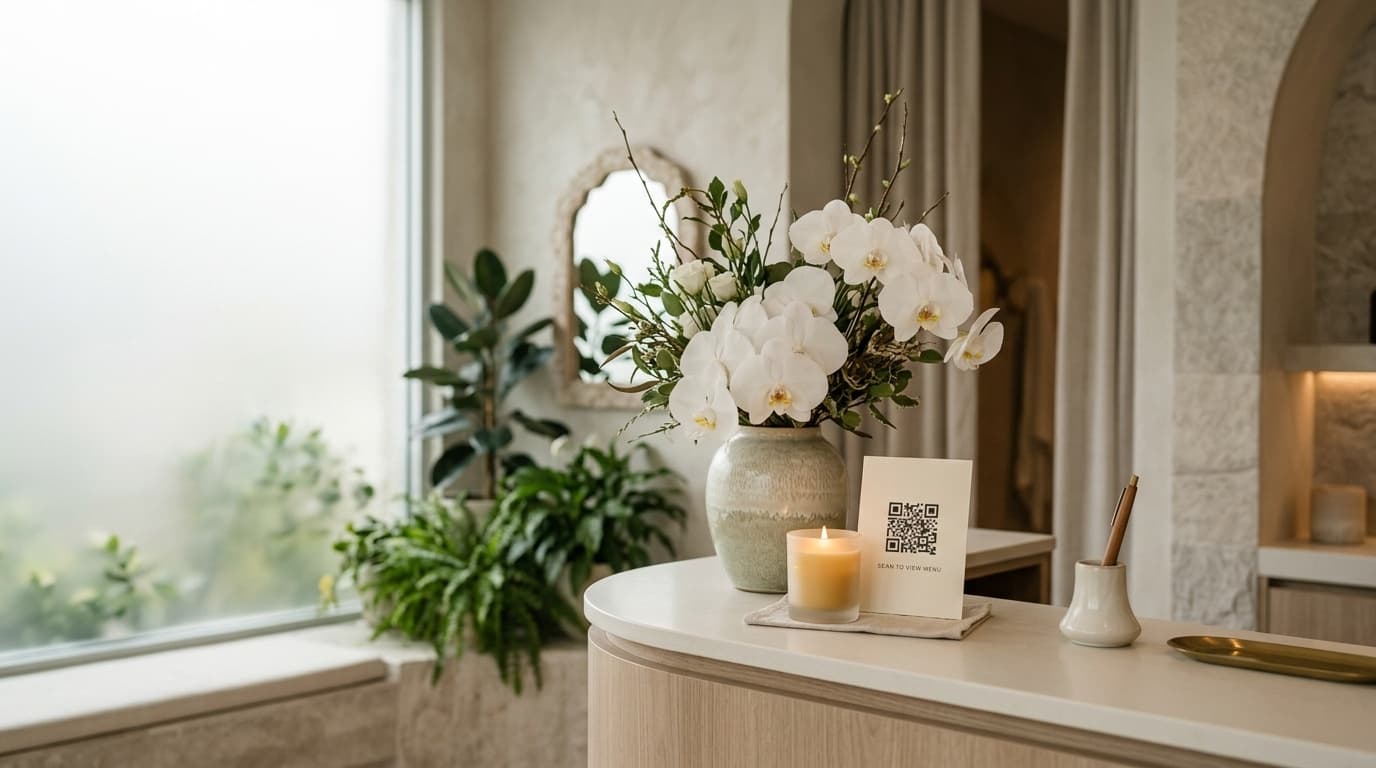
Reception desk cards: Small, well-designed tent cards next to the check-in tablet. Visible on arrival and departure, never intrusive.
Changing room mirrors: A tasteful card at mirror height in the changing rooms. People are already in a reflective mood after class — this is a natural moment.
Locker areas: Small adhesive cards at eye level, designed to match your studio's aesthetic.
Post-class email or SMS: A weekly or post-session message to your members with a direct review link. Make the click one tap away.
Water stations: Near water and towel areas, where clients naturally pause and linger.
The key is making the QR code feel like a natural part of the experience. Frame it positively: "Loved your session today? Share the good news."
Gamification in a Wellness Context: More Natural Than You Think
Wellness studios often hesitate at anything that feels commercial or transactional. But gamification — when done thoughtfully — aligns perfectly with the wellness ethos.
Your clients are already on a personal growth journey. They track progress, celebrate milestones, and appreciate recognition. A spinning wheel reward isn't a gimmick — it's an extension of the progress loop they're already engaged with.
A tool like Ludofy lets you connect your Google review link to a digital fortune wheel. Clients who leave a review can spin to win a reward: a free class, a 10% discount on products, a wellness kit, or a motivational message that reinforces their journey. This approach converts passive members into active advocates — not because they're being incentivised, but because the gamified moment creates something memorable and genuinely enjoyable.
It's the kind of innovation that gets talked about between members, in WhatsApp groups, in the studio changing room. Organic word-of-mouth driven by a digital moment.
Responding to Reviews: Why It's Non-Negotiable
Responding to reviews signals two things simultaneously: to Google that your listing is active and engaged, and to potential clients that you actually read and care about feedback.
For positive reviews: Thank the client specifically. If they mentioned an instructor by name, acknowledge it. If they described a specific class type or personal breakthrough, reference it. A personalised response takes 30 seconds and shows that every piece of feedback is read.
For critical reviews: Stay calm and professional. Thank them for taking the time. Acknowledge the issue without being defensive. Offer to resolve it offline by providing your email or a direct contact. Never argue in public. A critical review handled with grace often converts skeptics into loyal clients — they see that you respond to difficulty with the same composure you teach in class.
A good rhythm is to check and respond to reviews twice a week. It takes 15 minutes and has a disproportionate impact on how your studio is perceived by people reading your Google profile before their first class.
Building a Year-Round Review Strategy
Most studios collect reviews in bursts — January for New Year resolutions, September for the back-to-routine rush — then go quiet for months. This inconsistency hurts your Google ranking, because the algorithm rewards fresh, recent reviews over a large but aging bank of testimonials.
Build a simple review rhythm:
- January: Run a "new year, new practice" campaign with every new intake
- March and April: End-of-winter campaign targeting your longest-tenured members
- September: Back-to-routine push for returning members after summer
- November: Loyalty campaign before the holiday season slows attendance
Set a team goal: five new reviews per month is a manageable, sustainable target. At that pace, you'll build a profile that compounds in authority every quarter.
The Long Game: Reputation as Studio Infrastructure
Your yoga or pilates studio may offer the best instruction in your city. But if Google doesn't know it — if potential clients searching at 7am on a Wednesday can't see 150 reviews telling that story — the best teaching in the world is invisible.
Review collection is not a marketing tactic. It is the digital infrastructure that makes everything else you do visible. Every class you teach, every instructor you hire, every renovation you make to the space — all of it has more impact when there's a system capturing what your members actually experience and publishing it where future members can find it.
Ludofy was built to make that system effortless: a QR code at the front desk, a gamified moment that members enjoy, and a steady stream of authentic reviews that builds your reputation month by month. For studios that want to grow without spending on ads, this is the most reliable path forward.