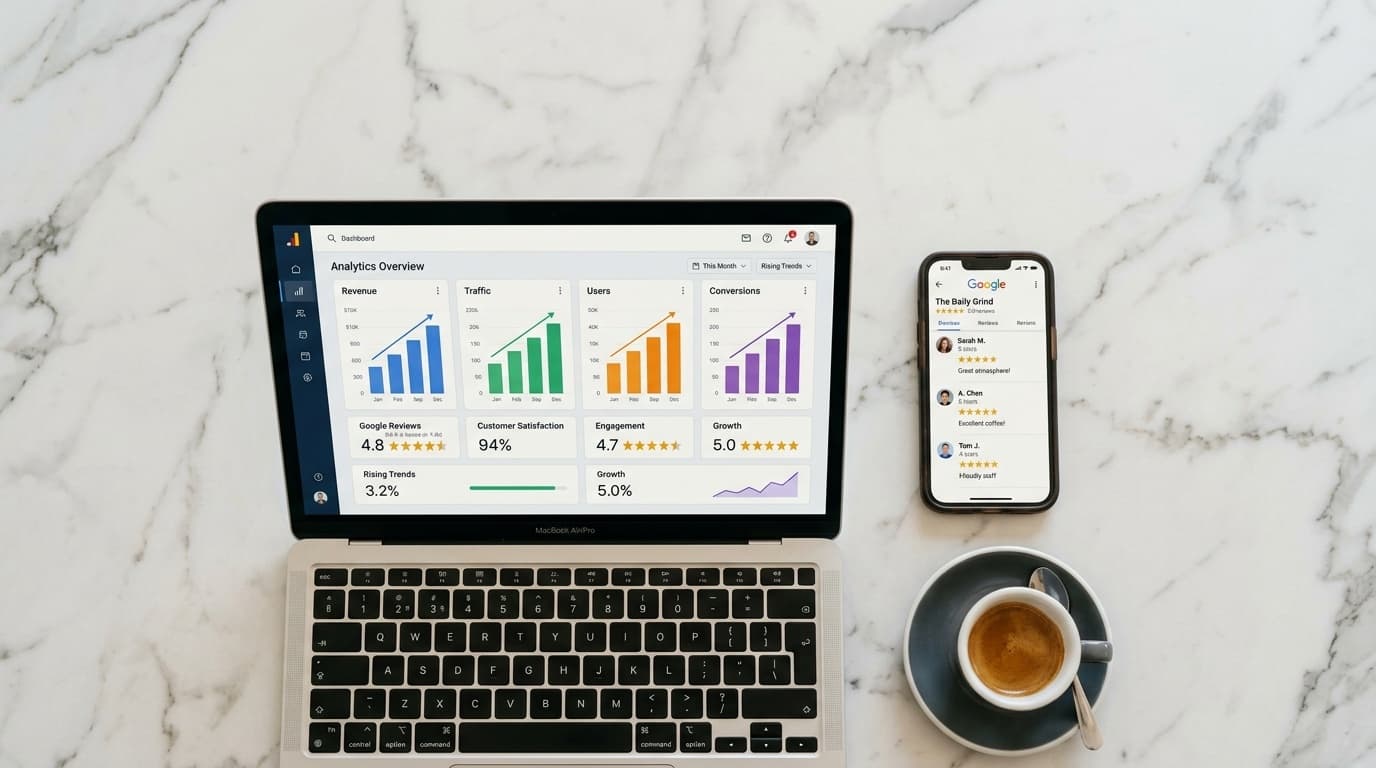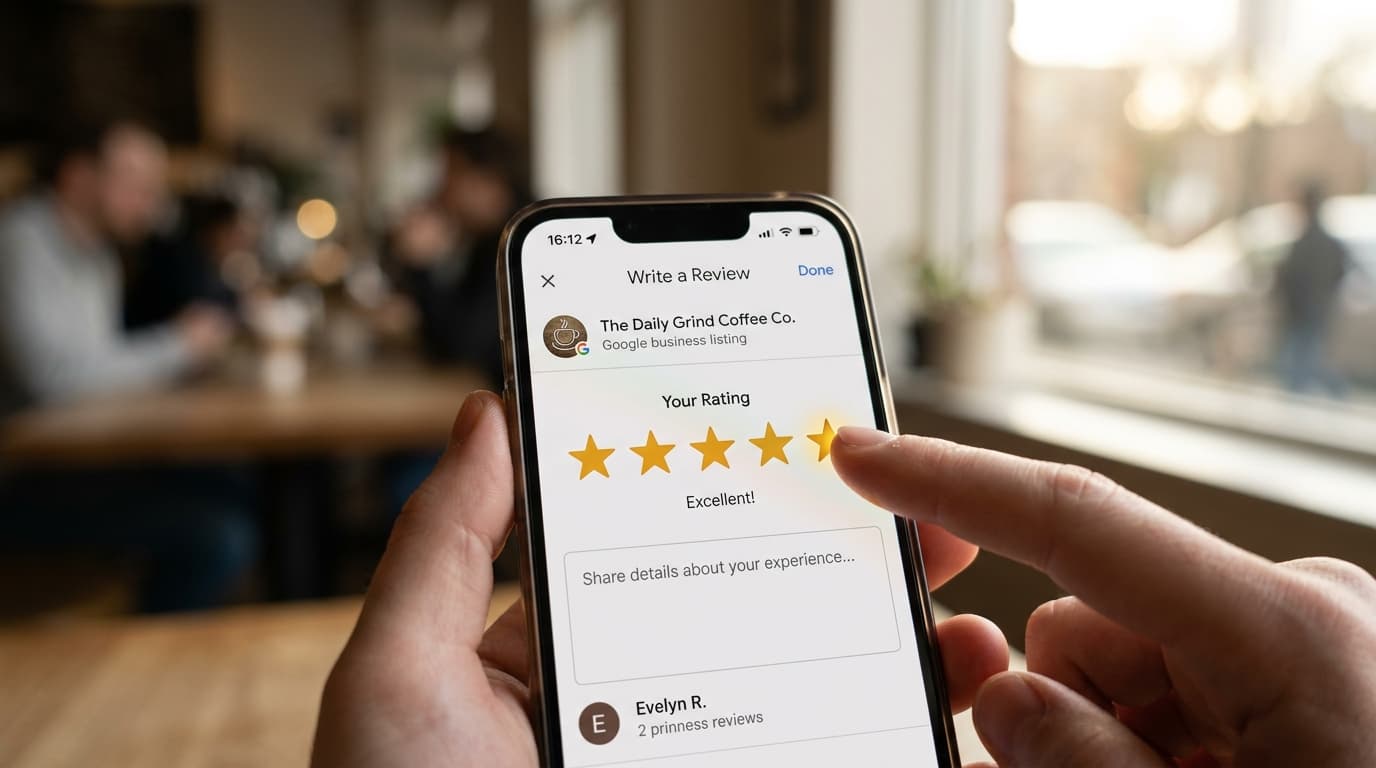
The Playing Field Is Not as Uneven as You Think
Walk down any high street and you will see McDonald's, Starbucks, Zara, and a dozen other chains. Each brand has a marketing team, a national budget, and millions of transactions generating reviews automatically. It is natural to assume they dominate Google Maps.
But look closer at the local search results for "best coffee near me" or "great restaurant tonight," and you will regularly see independent businesses outranking chains — not despite having fewer resources, but because of what those resources cannot buy.
Authenticity, speed, and human connection are competitive advantages in the Google Reviews economy. And they belong to independent operators by default.
Why Chain Businesses Underperform on Google (By Design)
Standardization Is a Weakness in Review Culture
Chains are built on consistency. Every Subway sandwich should taste the same. Every Holiday Inn room should feel the same. That standardization is a brand promise — and it is exactly what kills review quality.
Generic experiences produce generic reviews: "Fine. Nothing special. Like any other location." These reviews do not inspire trust. They do not drive decisions. They are background noise that potential customers scroll past without registering.
An independent wine bar, on the other hand, might receive reviews like: "The owner spent twenty minutes helping us choose the perfect natural wine for our anniversary dinner. She remembered our names when we came back three weeks later." That review does not just attract customers — it creates desire.
Corporate Review Policies Create Lag
When a chain receives a negative review, the response typically goes through multiple layers: local manager, regional marketing, corporate communications, external agency. By the time a response appears — if one appears at all — the damage is done, and the reply often reads like it was drafted by committee (because it was).
Independent businesses can respond the same day, with genuine personalization, turning a 2-star complaint into a public demonstration of exceptional service standards.
4 Natural Advantages Independent Businesses Hold
1. Reviewers Remember You Personally
When a customer has a meaningful interaction with the owner or a long-term staff member, they are far more likely to leave a review — and to write something worth reading. National chain employees are trained to be polite; independent business owners are often passionate about what they do, and that passion is contagious.
A customer who chats with you about where your coffee beans come from is three to five times more likely to leave a review than someone who orders at a touchscreen kiosk.
2. You Can Move Faster Than Any Chain
A chain restaurant testing a new review collection strategy might take three months from idea to execution: stakeholder approval, compliance review, pilot program, rollout.
You can install a gamified review station tomorrow morning.
Tools like Ludofy let you set up a QR-based fortune wheel at your counter in an afternoon. Customers scan, spin for a chance to win a small reward (a coffee, a discount, a treat), and are naturally guided to leave a Google review. The result: a review collection surge that accelerates as long as the game is running. That agility is something Starbucks cannot replicate at the individual location level.
3. Your Negative Review Responses Are a Marketing Asset
Here is a counterintuitive truth: how you respond to negative reviews may matter more than accumulating five-star reviews in the first place.
Research consistently shows that 89% of consumers read businesses' responses to reviews, and 45% say they are more likely to visit after seeing a thoughtful response to a negative review. A well-crafted personal response — acknowledging the issue, explaining what changed, inviting the customer back — turns a complaint into social proof.
As an independent owner, your name might literally be on the door. When you respond with genuine accountability and warmth, readers sense it. Chain responses, by contrast, almost always feel corporate — because they are.
4. You Can Create Moments Worth Reviewing
Chains deliver a defined product. You can deliver an experience.
The birthday dessert you did not charge for. The recommendation that sent a tourist to an incredible local market they would never have found. The handwritten note tucked into a gift bag. These moments are not just goodwill — they are review triggers. They create the emotional surplus that makes people reach for their phones after they leave.
Building Your Review Superiority: A Practical Roadmap
Step 1: Audit the Competitive Landscape (Including Chains)
Before building your strategy, understand where you stand. Search your location on Google Maps and note:
- Total review count for each nearby competitor (chain and independent)
- Average star rating
- Date of the most recent review (freshness)
- Recurring themes in their positive and negative reviews
This map shows you where the market is underserved. If the local McDonald's is consistently criticized for slow service, that is your opening. If the nearby hotel chain gets complaints about impersonal staff, that is your differentiator to amplify.
Step 2: Install a Systematic Collection Process
The single biggest difference between a business with 50 reviews and one with 500 is not customer volume — it is having a system. Independent businesses often rely on customers to take the initiative spontaneously. That works occasionally. A system works every time.
The most effective model:
- Positioning: A QR code stand at the point of payment (the warmest moment of the transaction)
- Engagement: A gamified mechanic such as a spin-to-win wheel that makes the act of reviewing feel rewarding rather than burdensome
- Consistency: The same process running seven days a week, regardless of which staff member is on shift
Step 3: Respond to Every Review Within 48 Hours
This one discipline puts you ahead of most chains and the majority of independent competitors alike. Google's algorithm rewards active engagement. Customers reward it with trust.
Keep responses personal and specific — reference something in the review itself. "Thank you, Olivia — we are glad you enjoyed the lamb tagine, it is our chef's grandmother's recipe!" is worth ten times more than "Thanks for the kind words! See you next time."
Step 4: Deploy Your Reviews as Marketing Content
A well-written 5-star review is free marketing copy. Frame it and hang it by the entrance. Post it to your Instagram story. Add it to your website's homepage. This social proof amplification loop — where reviews drive more customers who leave more reviews — is how independent businesses compound their advantage over time.
The Velocity Edge: Recent Reviews Beat Total Reviews
A chain might have 1,000 reviews accumulated over ten years. If you have collected 200 reviews in the past six months, Google's algorithm — and most consumers — will favor your listing.
Review freshness is a confirmed ranking signal for Google Maps. A business receiving regular new reviews appears more active, more trustworthy, and more relevant to searchers than one whose review history peaked years ago.
This is exactly why gamification tools like Ludofy create sustainable competitive advantages for independents: they maintain a steady stream of new reviews week after week without requiring the owner to personally chase every customer.
Closing: The Independent Operator Who Wins Is the One Who Shows Up
National chains have the budget. You have the speed, the authenticity, and the ability to create experiences worth remembering.
The independent businesses that consistently outrank chains on Google Maps share one characteristic: they treat review collection as a system, not an afterthought. They respond promptly. They create moments. They use tools that work while they are focused on running their business.
The gap between you and the chain down the street is not about resources. It is about whether you have decided to compete. Ludofy was built for the operators who have — and who want their Google ranking to reflect the quality they already deliver every day.