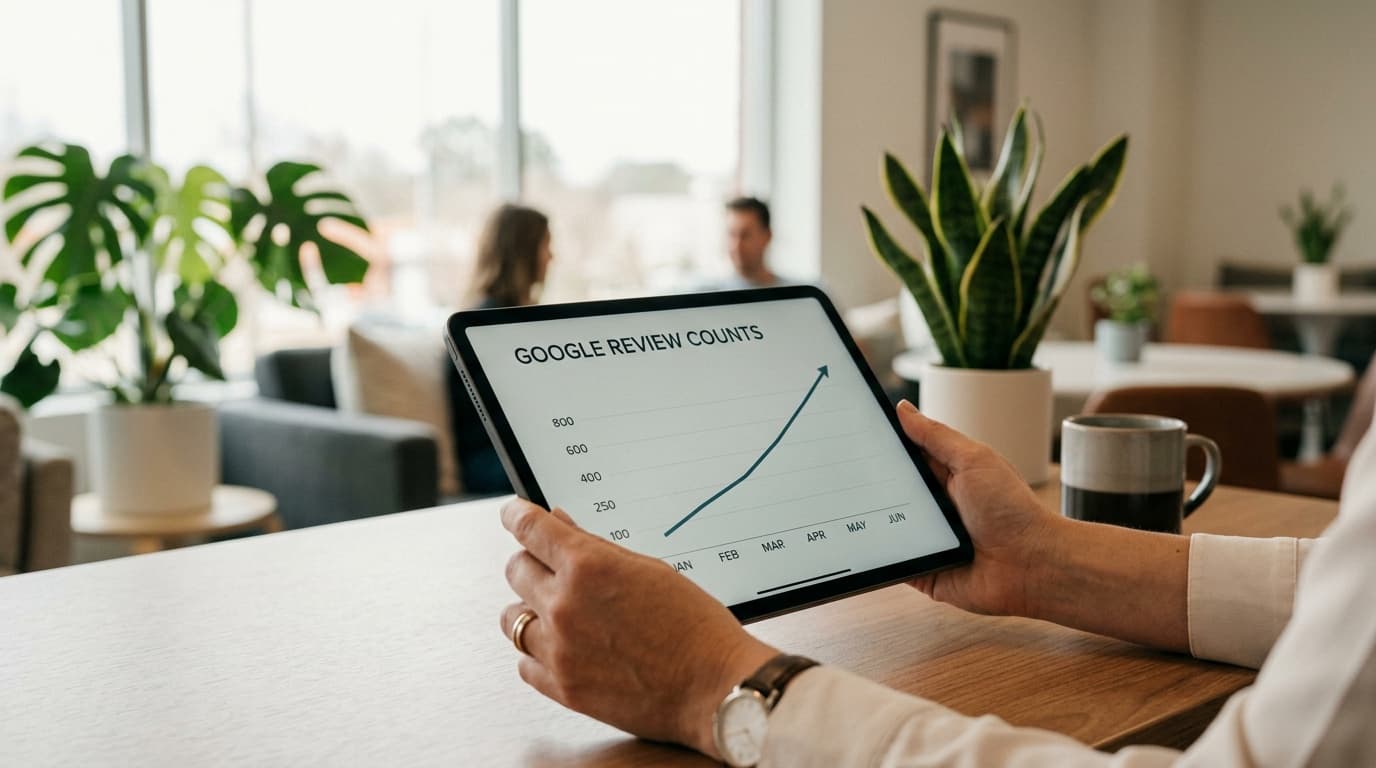
Most local businesses operate on a predictable rhythm: peak periods when foot traffic spikes and the phone rings constantly, and slower months when the opposite is true. Restaurant owners know December and Valentine's Day. Hotel operators know summer and school breaks. Retail stores know the stretch from Black Friday through Christmas.
Almost every operator focuses their energy on surviving peak season — hiring extra staff, managing inventory, keeping service quality consistent under pressure. What most don't do is treat peak season as the single best Google review collection opportunity of the year.
That's a significant strategic miss. Here's why — and how to fix it.
Why Peak Season Is Your Best Review Opportunity
The math is straightforward. If you typically serve 200 customers per day during slow months and 400 during peak season, you've doubled your potential reviewer pool. Even if your conversion rate stays exactly the same, peak season produces twice the review volume.
But the conversion rate doesn't stay the same — it tends to go up. Customers who visit during a special occasion, a holiday meal, or a vacation are often more emotionally engaged with the experience. They're already sharing photos, tagging locations, and primed to talk about where they've been. A great experience during the Christmas holidays or a summer birthday dinner lands differently than the same meal on a quiet Tuesday in October.
There's also the first-visit factor. Peak seasons often bring customers who have never been to your business before — tourists, out-of-town visitors, people following word-of-mouth recommendations from friends. First-time visitors who have a strong experience are among your most motivated reviewers. They searched for you, chose you, and got more than they expected. Those are the reviews that actually get written.
The Pre-Season Preparation Window
The four to six weeks before a peak period is the time to tune your review infrastructure. Most operators use this window for staffing and inventory. It's also when small setup decisions pay significant dividends.
Audit your Google Business Profile. Check that hours, photos, contact details, and your business description are up to date. A complete, accurate profile performs better in local rankings and builds trust before customers even walk through the door.
Record your current baseline. How many reviews are you collecting per week right now? Write that number down. It's your benchmark for measuring whether your peak season effort is working.
Update your physical placement. Peak season often changes your space — patio seating opens, waiting areas get fuller, checkout queues run longer. Every one of these is a chance to place a QR code where customers have thirty seconds of idle time. Tent cards on tables, a sign at checkout, a card at the front desk — position them where the actual foot traffic concentrates during your busy period.
Refresh your reward. If you're running a gamified review mechanic, update the prize to match the season. A summer dessert, a Christmas discount, a Valentine's Day offer — the novelty of a seasonal reward increases scan rates and gives customers an extra reason to engage right now.
In-Season Execution
The operational reality of peak season is that staff are stretched. Any review collection system that depends on staff memory or consistent verbal asks will underperform when the team is at maximum capacity. This is precisely why physical, automated systems matter more during peak periods, not less.
A QR code on every table and at the checkout counter requires nothing from staff after initial placement. The customer sees it, scans it, plays the game, and leaves a review — without anyone needing to ask. That independence from staff execution is what makes the system scale with volume.
Capture the moment of peak satisfaction. A restaurant customer is most motivated to leave a review at the end of a great meal, before leaving the venue. A hotel guest is most engaged in the final morning of a good stay. A retail customer is most receptive right at checkout after a successful purchase. Position your QR code exactly where satisfaction peaks and where customers have a brief window of unstructured time.
Monitor in real time. Log into your review dashboard weekly during the season. Watch for positive trends — volume climbing — and for negative patterns that repeat: wait times, service quality under load, a dish or product that keeps coming up. A surge in reviews is simultaneously a marketing asset and an operational diagnostic.
Managing High Review Volume
When review velocity increases, a few things shift. More reviews mean more variation in content — some brief and simple, some detailed and keyword-rich. Both have value. Volume and recency are the primary ranking drivers; you don't need every reviewer to write three paragraphs.
Responding to reviews becomes more demanding during peak periods. Keep responses sincere but efficient. A short, genuine reply — "Thank you so much, we're so glad you could join us for the holidays, we hope to see you again soon" — outperforms a generic template and signals to future readers that the owner is genuinely engaged.
Treat negative reviews as data, not damage control. A business collecting 200 reviews in six weeks will receive some critical feedback. If a recurring theme appears — slow service, noise levels, a specific item missing the mark — that's your operation telling you something before it compounds into a bigger problem.
Building the Off-Season Buffer
The reviews collected during peak season don't evaporate in January. They remain on your profile, sustaining your review count and supporting your average rating. But Google's algorithm weights recency: a review from three months ago carries less signal than one from last week.
This means peak-season reviews create a buffer. If you collect 200 reviews in December, your profile maintains momentum through February and March. But the effect fades over time. The goal is to maintain a minimum collection floor during off-peak months — even ten reviews per week is substantially better than zero.
A year-round system with seasonal optimization is the most effective approach. Use the QR gamification mechanic continuously, adjust the reward to match the current context (a January promotion, a spring menu update, a summer special), and think of peak season as a volume amplifier on top of a consistent baseline — not as a separate annual campaign.
Seasonal Review Windows by Business Type
Different business types have different peak windows. Being intentional about which periods carry the most leverage lets you concentrate your setup effort where it matters most.
Restaurants: December holiday dining, Valentine's Day, Mother's Day, and summer terrace season are the highest-opportunity windows. New Year's Eve and holiday weekends also produce elevated foot traffic and memorable, review-worthy experiences.
Hotels and accommodation: School holidays drive leisure travel peaks. Local festivals, conferences, and events drive shorter but intense bursts. Pre-booking season — when travelers are planning ahead — is also worth targeting for building your review foundation before demand arrives.
Retail: The November–December holiday shopping window is the single largest review opportunity for most retail operators. Back-to-school in late summer and Valentine's Day are secondary peaks worth intentional preparation.
Gyms and fitness studios: The January rush driven by New Year's resolutions is the highest-volume window. The pre-summer run from April through June is the second peak. Both periods attract first-time visitors who are often highly motivated to share strong early experiences.
Salons and spas: Pre-wedding season in spring and early summer, the weeks before Christmas, and Mother's Day all generate an especially engaged, satisfied clientele. These are also moments when customers are most likely to recommend you to friends — a review posted now can drive bookings for months.
Turning Peak Seasons Into a Durable Competitive Advantage
The businesses that dominate local search rankings through summer didn't just get lucky. They collected aggressively during previous peak seasons, maintained a consistent baseline through quieter months, and watched their totals compound year over year. Their profiles stay fresh, their ranking holds even during slow periods, and the gap between them and less-disciplined competitors grows wider every year.
Treating peak season as a deliberate review sprint — built on year-round infrastructure — is how you create a local search position that becomes genuinely difficult to close.
Ludofy is designed for exactly this. The QR code and fortune wheel mechanic runs continuously in the background, capturing reviews from every shift, every day. During peak periods, it simply converts more of the increased foot traffic already flowing through your door. The result is a review velocity that outpaces competitors during your busiest weeks, and a profile that stays competitive through every month that follows.