Every restaurant operator eventually has this debate with themselves: TripAdvisor or Google Reviews? For a long time, the answer was "both, equally." That balance has shifted. In 2026, the platforms serve distinct audiences — and for most restaurants, one matters dramatically more than the other for day-to-day foot traffic and revenue.
This article breaks down what each platform does well, where the gap has widened, and how to allocate your energy for the biggest return.
What TripAdvisor Still Does Well
TripAdvisor isn't irrelevant — it just has a narrower, more specific use case than it did five years ago.
International tourist traffic
TripAdvisor remains the dominant platform for foreign travelers planning meals in advance. An American, Australian, or Japanese tourist researching restaurants in Paris, London, or Bangkok will often check TripAdvisor before making a reservation. This audience tends to be high-spending, intent-driven, and loyal to the platform's interface.
If your restaurant is in a destination location — a city center, a tourist district, or near major attractions — TripAdvisor reviews still influence a meaningful portion of your business, particularly in the summer and holiday travel peaks.
Structured review format
Where Google collects an overall star rating and open text, TripAdvisor breaks ratings into food quality, service, value, and atmosphere. For restaurants that consistently excel on specific dimensions, this structured format can work in your favor — especially when travelers filter by criteria rather than relying on a single overall score.
Aggregator visibility
Strong TripAdvisor rankings sometimes surface on Booking.com, Expedia, and similar travel platforms. For hotel restaurants or destination fine dining establishments, this cross-platform presence adds a layer of visibility that Google alone doesn't replicate.
Why Google Reviews Has Pulled Ahead
For local customer acquisition — the daily business that fills seats on an ordinary Tuesday — Google Reviews has become the clear leader, and the gap continues to widen.
Google Maps integration is the decisive factor
When someone searches "sushi restaurant near me" or "best brunch spot downtown," Google serves a Local Pack of three results directly on the search page — complete with star ratings, hours, directions, and a click-to-call button. Those ratings come exclusively from Google Reviews. TripAdvisor does not appear in that Local Pack. If your review count on Google is thin, you are effectively invisible in the highest-intent local search results that drive walk-in traffic.
The user base is orders of magnitude larger
BrightLocal's 2025 Local Consumer Review Survey found that 87% of consumers use Google to evaluate local businesses, compared with around 32% for TripAdvisor. TripAdvisor's audience is predominantly tourist-skewed. Your regular local customers — the ones who fill seats Monday through Thursday — are almost exclusively on Google.
Revenue correlation is direct and measurable
The Harvard Business School study on review platforms remains the benchmark: a one-star increase on Google correlates with a 5–9% revenue increase for the average restaurant. This effect traces back directly to Google Maps prominence — a customer deciding between two nearby options will pick the higher-rated one on the map in front of them, without thinking twice.
Lower friction produces higher review volume
Your customers find you on Google, navigate to you via Google Maps, and in many cases pay through a Google-linked interface. Asking them to leave a review there is a single tap from within an app they're already using. TripAdvisor requires a separate dedicated account — either creating one or logging in. That extra step is enough to kill conversion for the vast majority of casual customers.
Review velocity is rewarded in the ranking algorithm
Google's local search algorithm actively favors businesses that receive reviews consistently over time. A restaurant averaging 10–15 new reviews per month will outrank a competitor who received 100 reviews in January and nothing since. This recency signal creates a compounding advantage for operators who build a systematic collection process. TripAdvisor's algorithm doesn't reward recency with the same direct local SEO benefit.
The Side-by-Side Reality
| Factor | Google Reviews | TripAdvisor |
|---|---|---|
| Local search visibility | Essential | Minimal |
| International tourist traffic | Good | Excellent |
| Ease of leaving a review | Very easy | Moderate |
| Direct impact on Maps ranking | High | None |
| Local customer base reach | Dominant | Niche |
| Revenue impact correlation | Strong (HBS study) | Moderate |
Should You Drop TripAdvisor Entirely?
No — but the allocation of your effort should be lopsided.
Prioritize Google Reviews for 80% of your effort if your customers are primarily local, if you depend on walk-in traffic or "near me" searches, or if you haven't yet reached 100 Google Reviews. This is where the return on investment is highest and most direct. Every hour spent chasing TripAdvisor reviews during this phase is an hour not spent building the asset that drives daily reservations.
Maintain TripAdvisor as a passive channel. Keep your profile current with accurate hours and recent photos, and respond to new reviews as they arrive. Don't run active campaigns to drive TripAdvisor reviews unless you're in a high-tourism area explicitly targeting international visitors, or if your existing TripAdvisor ranking is already strong enough to be worth protecting.
Don't ignore your full Google Business Profile. Fresh photos, correct hours, responding to every review, posting updates about specials or events — the algorithm weighs the whole profile, not just review count. Operators who treat Google Business Profile as a living presence compound their Maps ranking advantages over time.
How to Build a Google Review Collection System That Works
The mistake most operators make is treating review collection as occasional — a verbal reminder at the end of service, a card on the table, a note on the receipt. Verbal asks convert at 2–5%. You need a system that runs continuously, without depending on staff memory or enthusiasm, and without feeling intrusive to customers.
QR code at the point of payment
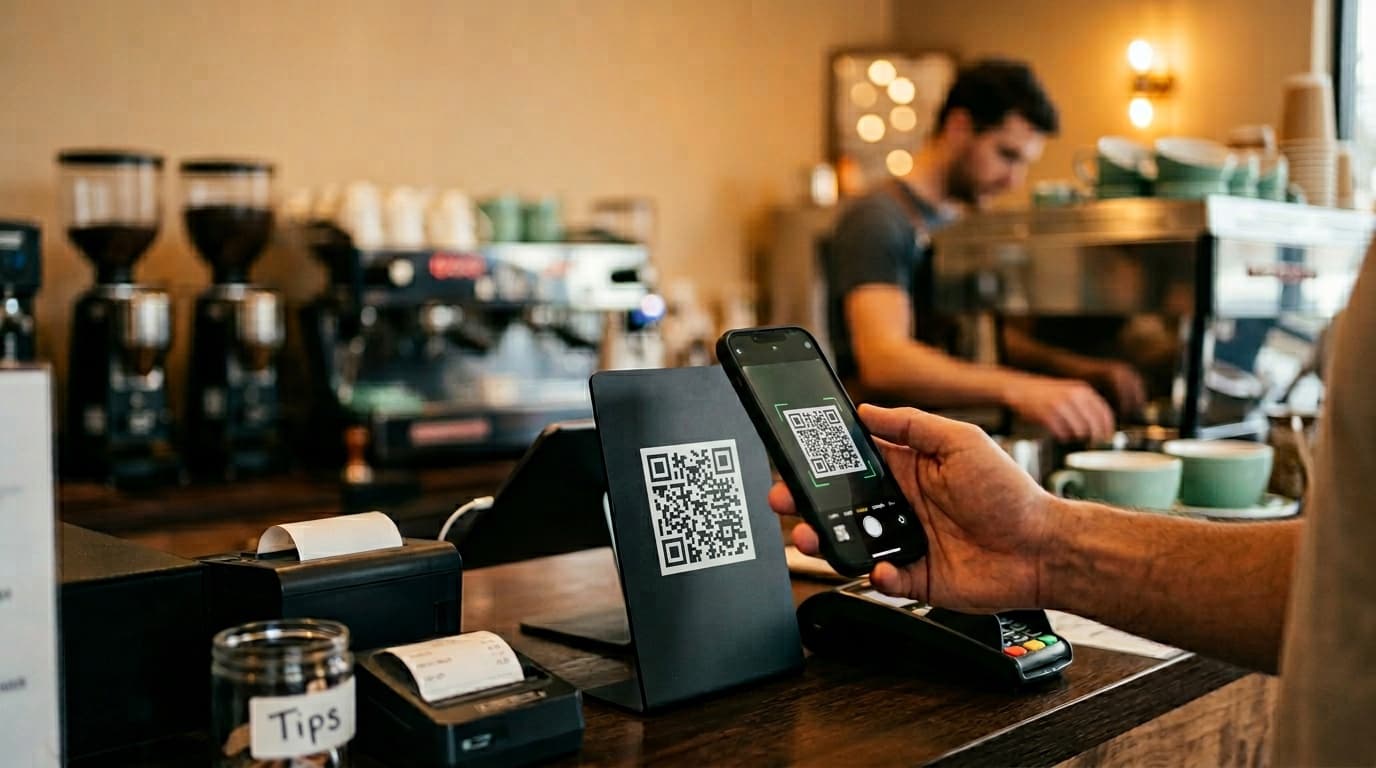
A QR code on the receipt, the table tent, or the payment terminal placed in front of the customer at the moment they're most satisfied — right after a good meal — removes all friction. The customer is primed; the only question is whether the path to leaving a review is easy enough to take.
Gamification after the review
This is the mechanism that separates operators who collect 20 reviews a month from those who collect 200. When customers leave a Google review and then immediately spin a digital fortune wheel to win a prize — a free dessert on their next visit, a discount, a coffee — conversion rates jump from 5% to 20–30%. One in five customers who walks out the door leaves a review. Not because you asked repeatedly, but because the process was fast, fun, and rewarding.
Consistency over campaign spikes
A review collection mechanism that runs passively, every service, every day, compounds over time. A burst of reviews in June followed by silence in July produces a weaker long-term ranking signal than a steady 15 reviews per month all year. Build the system once; let it work continuously.
Where Ludofy Fits In
Ludofy is built around exactly this mechanism: a QR code–triggered fortune wheel that rewards customers immediately for leaving a Google Review. Customers scan, leave a review, spin the wheel, and walk out with a prize — all in under 90 seconds, with no staff involvement required.
Restaurants using Ludofy typically add 200–300 Google Reviews per month. The compounding effect of that velocity is the difference between a 4.1-star profile with 80 reviews — which ranks poorly in Maps — and a 4.8-star profile with 500+ reviews that appears at the top of the Local Pack every time someone searches nearby.
The Bottom Line
TripAdvisor has earned its place for destination restaurants and establishments that actively serve international travelers. For neighborhood restaurants, cafés, quick-service operations, and most hospitality operators whose primary customers are local, Google Reviews is the engine of visibility and revenue growth.
Build your Google review collection system first. Make it systematic, make it passive, and make it rewarding for customers to participate. Once that engine is running consistently, maintaining your TripAdvisor presence costs almost nothing — and you'll be in a strong position across both platforms. The opportunity cost of doing it in reverse — perfecting TripAdvisor while neglecting Google — is measured in empty seats.