You've set up a Google review QR code. You've printed it. But reviews aren't flowing in the way you expected. Nine times out of ten, the problem isn't the QR code itself — it's where you put it.
Placement is one of the highest-leverage decisions in your entire Google review strategy. A code in the wrong spot can sit for weeks without a single scan. The same code, moved to the right location, can generate ten new reviews per week with zero extra effort from your team.
This guide covers the best placement strategies by business type, with the reasoning behind each choice.
The Three Rules of Effective QR Code Placement
Before getting into specific spots, here's the framework that separates a QR code that works from one that collects dust.
Rule 1: Catch the customer at peak satisfaction. The window when someone is most likely to leave a review is narrow. It's during or immediately after their experience, while the feeling is still fresh. If your QR code only appears after they've left your premises, you've missed it.
Rule 2: Eliminate friction. A QR code that's hard to find, too small to scan comfortably, or surrounded by competing visual noise will not be scanned. One QR code per surface. Large enough to read from arm's length. Clear call to action. That's the whole brief.
Rule 3: Give the customer a reason to pause. A QR code alone says nothing. Add one line of copy — "Loved your experience? It takes 10 seconds." — and the interaction starts. Placement without copywriting only does half the work.
All three need to be present. A QR code in the front window catches the right moment (the customer just finished), but the wrong context (they're in motion, phone in pocket). Result: zero scans.
Best Placements for Restaurants and Cafés
The Payment Moment — Top Choice for Food Businesses
When a customer reaches for their card, they're mentally closing the loop on their experience. This is the single most valuable moment to ask for a review. The customer is already in evaluation mode; you're not interrupting anything.
Put a QR code card in the bill sleeve or payment holder. Keep it simple: the code and one short line of text. Don't add your Instagram link or WiFi password — one action only. The conversion rate on this placement consistently outperforms everything else for sit-down restaurants.
Table Tent Cards
A small tent card in the center of each table exposes your QR code throughout the entire meal, not just at the end. By the time the bill arrives, the customer has seen it two or three times and the idea has settled. Familiarity reduces hesitation.
One risk: if the tent card is cluttered with multiple messages, the QR code competes for attention. Keep it dedicated. One card, one QR code, one message.
Counter Display
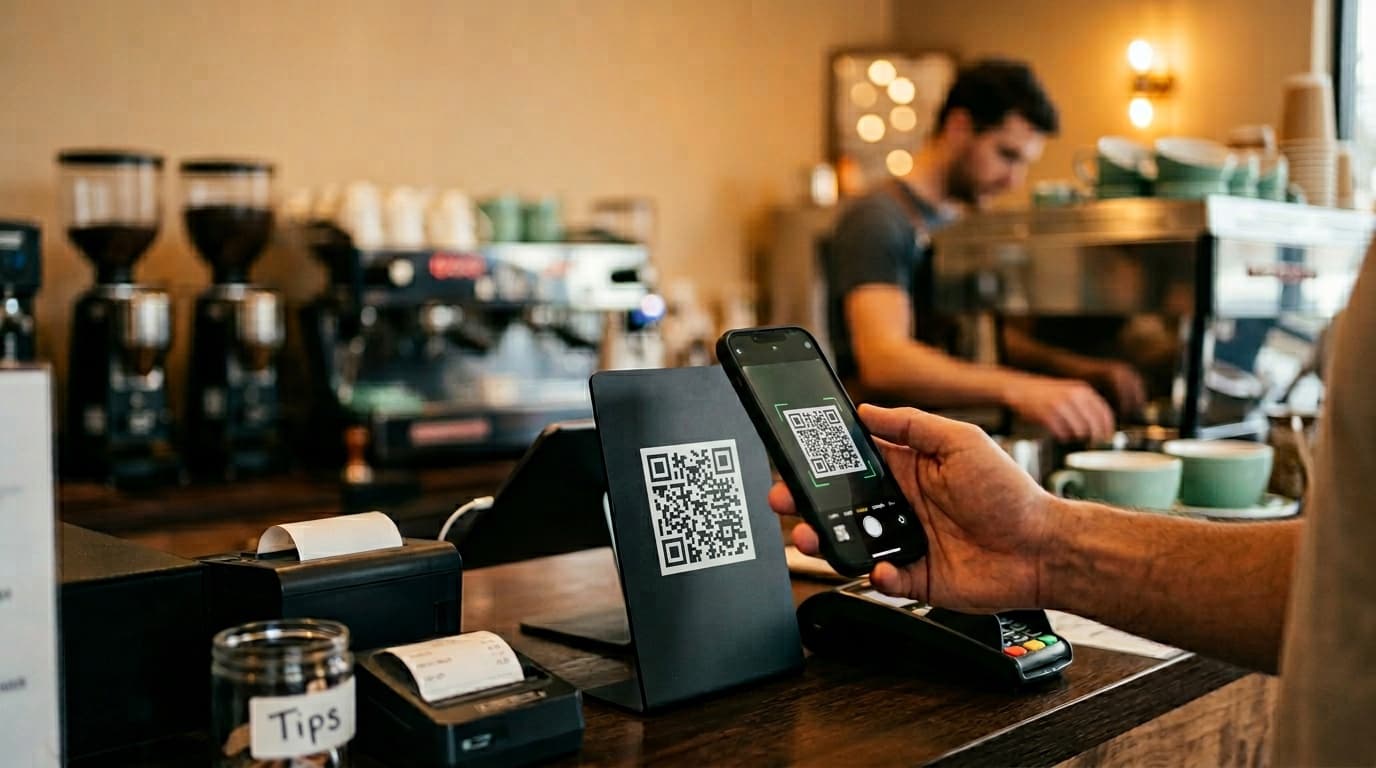
For cafés, bakeries, and bars with a service counter: position your QR code at eye level, facing the customer while they order or wait. Those fifteen seconds of idle attention are valuable.
A small acrylic stand works well. Replace the insert whenever the URL changes — QR codes are static, so a broken link months later will frustrate customers and lose reviews you could have had.
Exit Point
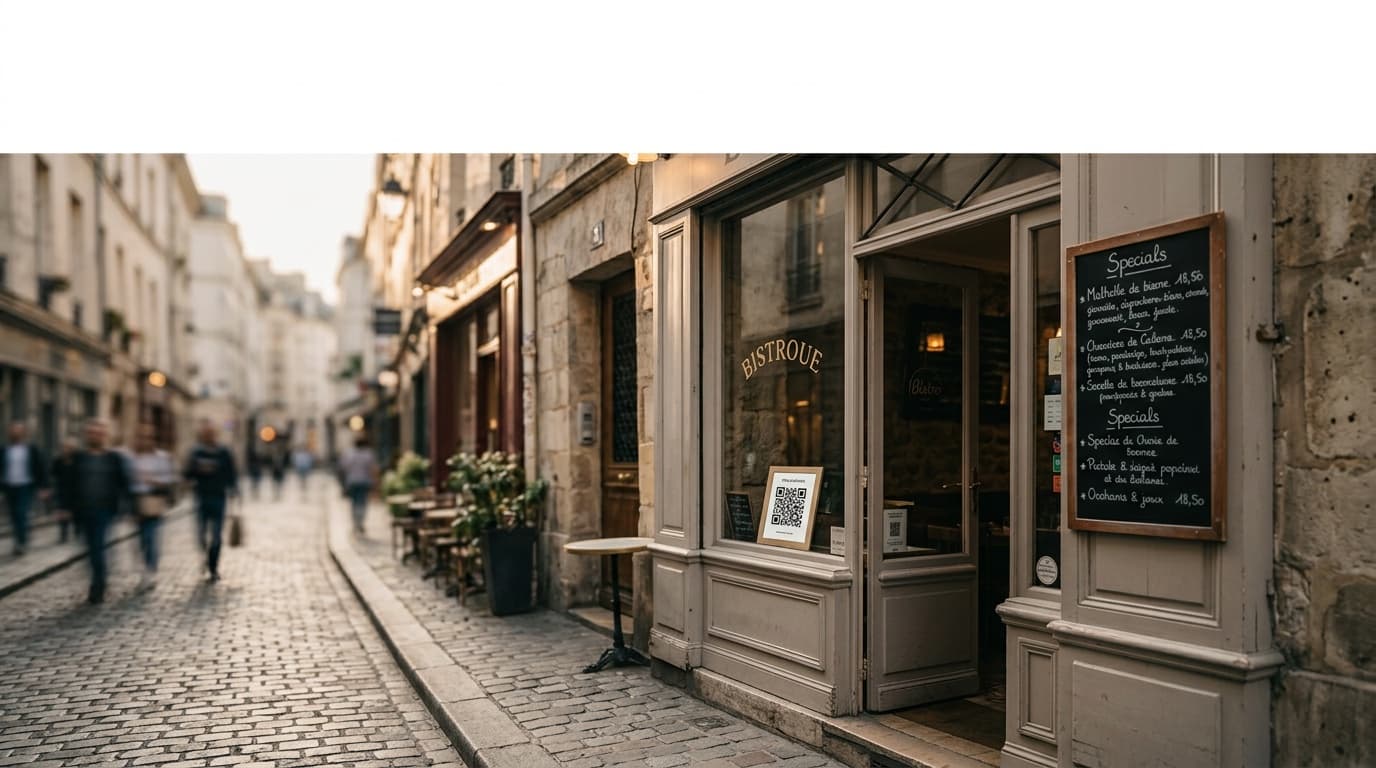
A QR code near the door — on the door itself, or a small sign beside the exit — catches customers who are leaving satisfied but haven't thought to review yet. This is the last touchpoint before they walk into their day and forget about you.
The weakness of exit placement: customers are in motion. Compensate with a short, punchy line right above the code: "Before you go — your opinion matters to us." That sentence does more work than any design element.
Best Placements for Retail Shops
Point of Sale — Counter Display
Checkout is your highest-traffic moment of standing attention. Customers are still, looking at the counter, often waiting a beat while the transaction processes. A QR code on the counter facing the customer — or on a small stand beside the card reader — fits naturally into that interaction.
Shopping Bags and Packaging
A sticker or printed QR code on your bags or packaging means customers take it home. The scan may happen hours later, which can be an advantage: the customer is relaxed, not rushed, and the purchase is still fresh. This format works especially well for gift items and premium products where the emotional connection to the purchase persists.
Receipts
A QR code printed directly on the receipt guarantees that every customer leaves with one. Low cost, unobtrusive, and reliable over time. For neighborhood shops with regulars, receipt-based codes build steady review volume without requiring any staff action.
Waiting Area — For Service-First Retail
For businesses where customers sometimes wait (specialized fitting rooms, repair services, custom orders): a poster or framed display in the waiting area converts idle time into review opportunity. Customers are standing still, phone already in hand, looking for something to do.
Best Placements for Hotels
Front Desk at Check-Out
Check-out is the hotel equivalent of the restaurant payment moment. The guest is mentally reviewing their stay (they've packed, they're leaving) and they have thirty seconds of idle attention while the transaction finalizes.
A QR code card on the counter facing the guest is the baseline. Better: a small card handed personally by the front desk agent with a warm thank-you. The human gesture increases the likelihood that the guest follows through.
In-Room Placement
A QR code on the bedside table or inside the welcome kit reaches guests during their stay — before check-out, before the mental fatigue of departure. Timing it for the morning of check-out (housekeeping can set it out) works particularly well.
Departure Receipt or Envelope
A small printed card tucked inside the receipt covers any guest who missed the counter display. Low effort, useful as a fallback. Don't rely on it as your only placement, but it earns its keep as part of a layered approach.
Best Placements for Service Businesses
Waiting Room — Salons, Clinics, Auto Repair
Any business where clients sit and wait has one of the best organic QR code environments available. Clients are idle, phone in hand, looking for something to do. A poster or framed A5 display with a QR code and an invitation converts that waiting time into review volume.
Payment Counter
Same logic as retail: the payment moment is natural territory. A small stand on the counter facing the client, with the QR code and one sentence, is sufficient. Don't overcrowd it.
Post-Service Follow-Up
For service businesses that collect contact details: a follow-up message (SMS or WhatsApp) sent within the hour of completing the service, with a review link, is one of the highest-converting approaches. The placement here isn't physical — it's temporal. The customer is home, the service is fresh in their mind, and they have a private moment to act.
How Many Placements Is Enough?
High-performing local businesses typically run two or three simultaneous placements: one during the experience (table tent or waiting area), one at payment, and one at the exit. Each additional touchpoint increases the probability that a satisfied customer becomes a reviewer.
Beyond three active placements, there's a risk of appearing desperate. Choose deliberately. Coverage beats saturation.
What Placement Can't Fix
Good placement amplifies the number of happy customers who convert into reviewers. It doesn't generate satisfaction where there isn't any, and it won't rescue a broken customer experience.
The other thing placement alone can't do: make the review journey engaging. If your QR code leads directly to a Google review form, you'll see reasonable conversion — but friction is still there. The customer still has to open Google Maps, find your profile, and decide what to write.
If the scan instead leads to a gamified experience — a digital prize wheel where the customer spins for a reward before leaving their review — conversion rates typically double or triple compared to a direct link. The act of reviewing becomes part of a fun moment rather than a chore.
This is what Ludofy is built around: a fortune wheel connected to your Google Business profile that makes the review request feel like a reward. Customers scan, spin, win something (a discount, a free item, a mystery prize), and complete their review in the same flow. The result: more scans, more reviews, and customers who leave remembering the moment as a positive surprise.
Strategic placement combined with an engaging post-scan experience is what separates businesses that struggle to reach fifty reviews from businesses that reach five hundred. Start with one high-priority placement — the payment moment — and measure your weekly review count for thirty days before adding more. Data beats instinct here.