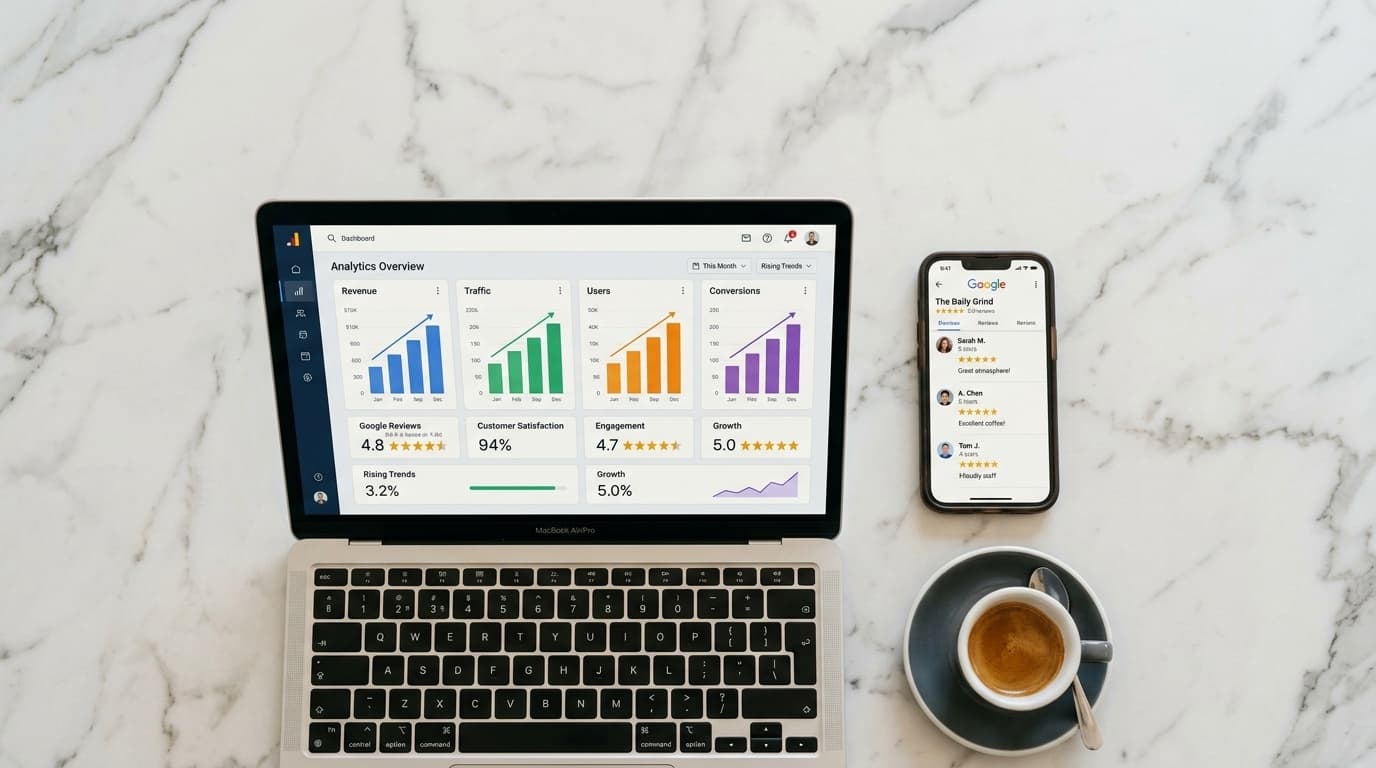
You open Google Maps and search your neighborhood. Your business: 52 reviews. The restaurant two blocks away: 438 reviews. Same price range, similar food. But anyone searching online sees them first — and chooses them.
This scenario plays out every day for thousands of independent business owners. The frustrating part? The gap usually has nothing to do with the quality of your product or service. It has everything to do with how consistently your competitor collects reviews — and the systems they've put in place to make it happen.
Let's break down exactly why they're pulling ahead, and what you can do to close the gap.
Reason 1: They Have a System, You're Relying on Hope
The most common mistake small business owners make is treating Google reviews as something that "just happens" when customers are happy enough. Your competitor understands something different: reviews are a predictable output of a deliberate process.
Businesses that consistently collect reviews have a defined moment in the customer journey where they ask — every single time. Not sometimes. Not when the mood is right. Every. Time.
This might be at checkout, when handing back a receipt, after a service appointment wraps up. The exact moment varies by industry, but the consistency doesn't. When you have no process, you rely on the 1–3% of customers who would have reviewed you anyway. When you have a system, you capture 15–25% of satisfied customers.
That's a 10x difference in output — compounding over months.
Reason 2: They Ask at the Exact Right Moment
Timing is everything. Asking for a review too early (before the customer has experienced your service) or too late (days after, over email) produces mediocre results. The optimal moment is immediately after the emotional peak of the customer experience.
For a restaurant, that's when the bill arrives and your guest is still warm from a great meal. For a salon, it's the moment your client looks in the mirror and loves what they see. For a hotel, it's checkout — when the stay is fresh and positive feelings are high.
Your competitors have identified these windows and built their ask around them. They're not sending emails the next day hoping someone clicks through. They're capturing the moment in real time.
Reason 3: They Make It Embarrassingly Easy
Even a happy customer won't review you if there's friction. Think about how long the typical Google review process feels:
- Open Google Maps
- Search for the business
- Find the review section
- Click "Write a Review"
- Select stars
- Write something
That's six steps. Most people abandon halfway. Your competitor has removed most of these steps.
A QR code placed on the table, at the counter, or on a receipt takes the customer directly to the Google review form in seconds. No searching. No navigating. One scan, and they're there.
This reduction in friction alone can double or triple your review conversion rate. The technology has been available for years — but many independent businesses still haven't implemented it.
Reason 4: Their Staff Actually Does It
You might have already told your team to ask for reviews. But have you made it part of the workflow in a way that actually sticks?
High-performing businesses train their teams specifically on when and how to ask — and critically, they remove the awkwardness. Nobody enjoys asking a customer to "please go online and leave us a review." It feels like begging.
What your competitor may have done instead: they've reframed the ask. Rather than an appeal, it becomes a natural part of the checkout ritual. A QR code on the receipt. A small tent card on the table. The staff mentions it once, casually, without pressure. The customer decides freely.
When you remove the social friction from the ask, compliance rates improve dramatically — for both staff and customers.
Reason 5: They Use Gamification to Drive Participation
This is where the gap between conventional approaches and modern review strategy becomes most visible.
Some forward-thinking businesses have introduced a gamification element into their review collection. Instead of a dry "would you like to leave us a Google review?", they offer something memorable: spin a wheel for a chance to win a reward.
The mechanic works like this: a customer scans a QR code, is invited to spin a digital fortune wheel, sees what prize they might win (a discount, a free coffee, a priority reservation), and after spinning, is directed to leave a Google review to claim their reward.
The result? Participation rates that outperform every other review collection method. Customers enjoy the interaction. They talk about it. The business gets more reviews, and the customer walks away with a positive emotional association — not a guilt trip.
This is exactly the mechanic that powers Ludofy, and it explains why businesses using it consistently outpace their competitors on Google Maps.
Reason 6: They're Consistent Over Time
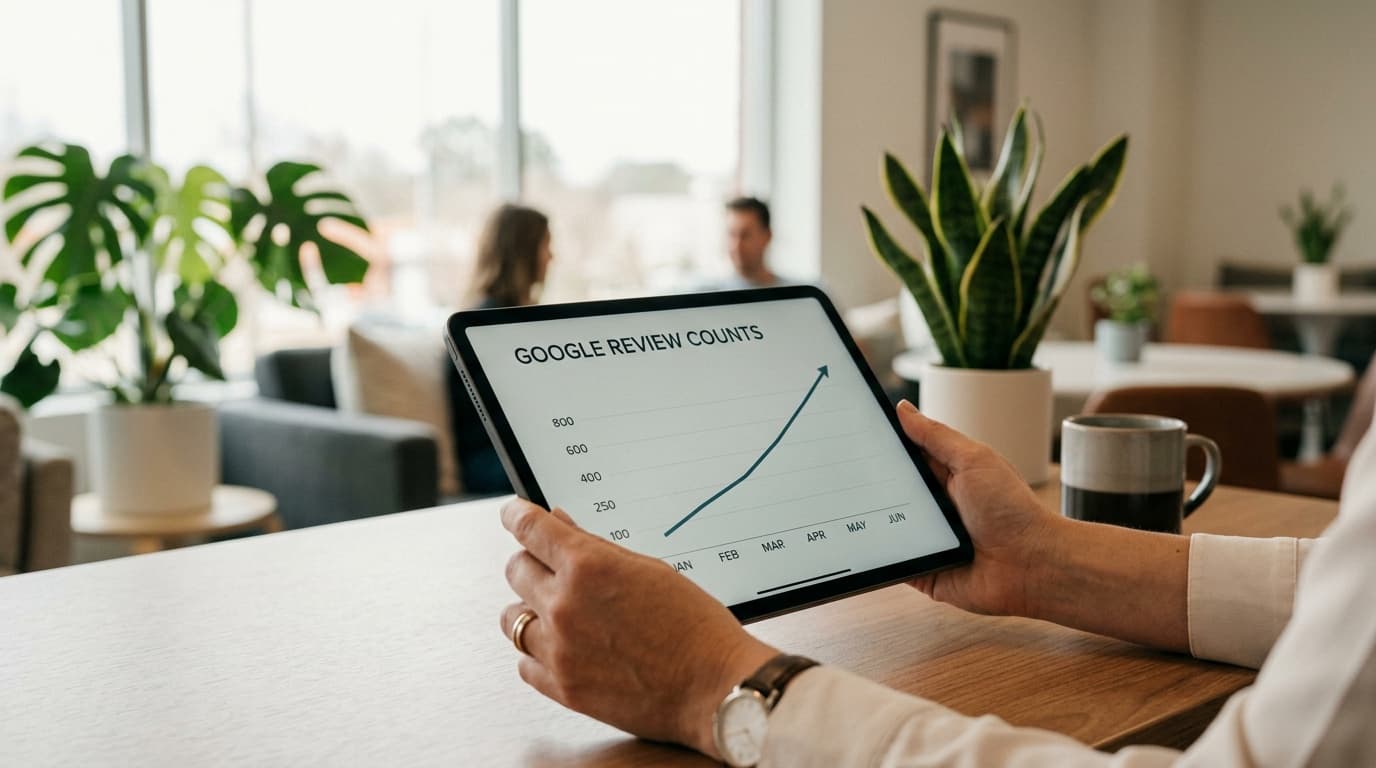
One burst of 30 reviews three years ago won't help you today. Google's algorithm favors businesses with a steady, recent stream of reviews. Your competitor didn't get to 400 reviews in a week — they built it gradually, month after month, by never letting their collection process lapse.
Review velocity — how frequently new reviews arrive — is a ranking signal. A business receiving 15 reviews a month will often outrank one with more total reviews but no recent activity.
Consistency is what turns a strategy into a competitive moat.
How to Close the Gap Starting Today
The lead your competitor has built is not permanent. Reviews accumulate in real time, and a well-executed strategy can generate momentum quickly.
Here's where to start:
- Identify your highest-emotion moment — when in your customer journey is satisfaction at its peak? Build your review ask around that moment.
- Create one QR code that links directly to your Google review form and place it where customers naturally pause.
- Brief your team on one simple, casual mention — not a hard ask. Remove the pressure from the interaction.
- Track your weekly count — knowing your baseline makes growth visible and motivating.
- Consider gamification — if your current approach isn't moving the needle, a fortune wheel mechanic changes the game entirely.
The Gap Is Closable
Your competitor didn't get lucky. They built a system — and systems can be replicated, improved, and beaten. The businesses that will dominate their local Google Maps results over the next 12 months are the ones investing now in consistent, frictionless, motivating review experiences for their customers.
Ludofy gives independent businesses exactly that: a QR code-powered fortune wheel that turns passive customers into active reviewers — without awkward asks, without staff training headaches, and without technical complexity. Place the QR code, and let the wheel do the work.
The gap to your competitor is smaller than it looks. You just need a reason to start closing it.